Today's Summary
August 9’s most useful conversation is not a single blockbuster trailer. It is the collision of three forces reshaping production and discovery: AI game-creation tools moving from demos into real workflows, indie teams fighting for attention under tougher ownership and pricing pressure, and platforms competing over how cheaply a player can start. From Roblox’s mobile-first Build tool and agentic Studio push to Summer Engine’s AI-assisted Godot-style pipeline, Blender MCP prototyping, gamescom indie exposure, and the lingering aftershocks of EA’s privatization and Xbox access experiments, the industry is reorganizing around speed, access, and proof.
Editor's Viewpoint
The hottest social argument in game development right now is deceptively simple: who can turn an idea into a playable session fastest, and who can make that session cheap enough to try. AI tools are no longer a side hobby for tech demos. Roblox is pushing creation onto phones. Summer Engine is selling reviewable game code rather than black-box magic. Blender-connected assistants are becoming practical for greybox and asset bootstrap. Indies are watching all of this while still having to survive storefront noise, platform policy, and rising living-room costs.
That is why today’s priority stack is practical. First, compress prototype latency. Second, design the first free or low-friction hour carefully. Third, keep human judgment on fun, systems, and responsibility. The teams that win the next quarter will not be the ones posting the flashiest AI clip. They will be the ones who convert tool speed into a clearer, more testable game.
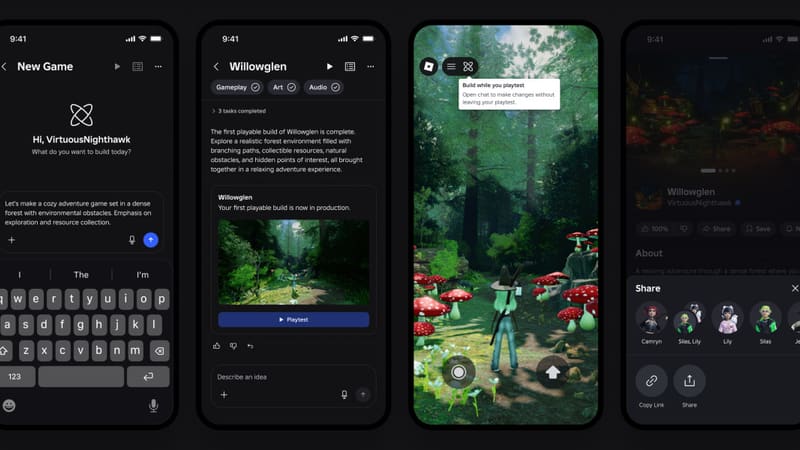
Roblox pushes mobile-first AI creation with Build
Roblox has unveiled Build, a mobile-first AI game creation tool that lets users generate basic games from text prompts directly inside the Roblox app. The social reaction is immediate and polarized: creators see a lower barrier for first prototypes, while critics worry that prompt-to-playable pipelines will flood discovery with disposable experiences. Both sides are partly right. The meaningful shift is not that phones can make games. It is that creation is being moved to the same surface where players already spend time.
For independent developers, Build is less a replacement for disciplined production and more a pressure test. If a platform can turn a sentence into a rough session in minutes, the value of slow pre-production has to be re-argued. The winners will use tools like this to explore ideas faster, then apply human taste to systems, feel, and retention. The losers will confuse a generated first build with a finished product.
Key Points
- Mobile creation — Text-to-game generation now lives inside the Roblox app.
- Social debate — Speed and discovery quality are colliding in public.
- Prototype effect — First-playable latency is collapsing for casual creators.
- Indie lesson — Fast starts still need strong judgment after the first build.

Roblox Studio goes agentic: plan, build, and test inside one workflow
Roblox’s Studio agentic push continues to shape creator conversations because it reframes AI from autocomplete into an operator that can help plan, build, and test. That language matters. An agent that only writes scripts is a convenience. An agent that can participate in the loop of construction and verification is a production change. Social feeds are full of creators comparing what agents can scaffold versus what still breaks under real play.
The practical takeaway for developers is to redesign workflows around checkpoints. Let agents generate structure, assets, or test cases, but keep explicit review gates for gameplay feel, economy balance, safety, and performance. Agentic Studio is powerful precisely because it can move quickly. That speed is useful only when the human remains responsible for what ships.
Key Points
- Agentic framing — Roblox is selling end-to-end assistance, not just code hints.
- Plan-build-test — The promise is a shorter loop across production stages.
- Creator scrutiny — Social demos are already stress-testing reliability claims.
- Process redesign — Teams need review gates as agents gain more initiative.

Summer Engine sells AI game making with reviewable code, not a black box
Summer Engine is gaining attention in AI game-development circles by promising 2D and 3D creation with AI assistance, reviewable GDScript, creator testing, and export workflows. That combination is why it is traveling on social media. Developers are tired of mysterious one-click demos that cannot be inspected, versioned, or repaired. A tool that leaves readable code is easier to trust as part of a real pipeline.
This is an important maturity signal for AI game tools. The market is shifting from spectacle to stewardship. If an assistant cannot leave work a human can maintain, it is a toy. If it can, it becomes infrastructure. Indies comparing Summer Engine with traditional Godot or Unity workflows should judge it on export reliability, debugging clarity, and whether the generated project still makes sense after the first weekend of changes.
Key Points
- Reviewable GDScript — Inspectability is the product differentiator.
- Creator testing — The pitch includes evaluation, not only generation.
- Export path — Real pipelines need target-dependent outputs.
- Market shift — AI tools are being judged like production software.
Blender MCP keeps climbing as the practical bridge from prompt to game asset
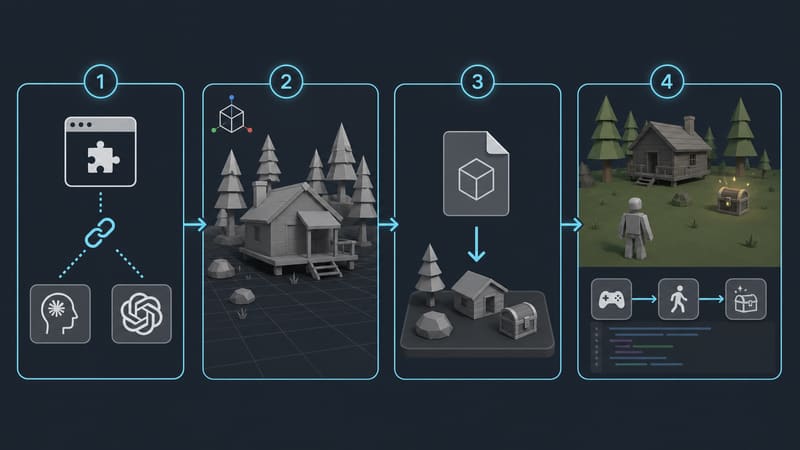
Blender MCP remains one of the most shared practical AI workflows among indie developers because it solves a painful middle step: getting from a description to a named, exportable scene. Guides for low-poly props, dungeon greyboxes, and engine export continue to circulate because they map cleanly onto real production. The social conversation has moved past “can AI make a cabin?” and into “can I get a clean GLB into Godot or Unity tonight?”
That is the right question. Asset generation only matters when it shortens the path to a playable test. Developers getting value from Blender MCP are using it for greybox, placeholders, and iteration speed, then applying human cleanup for collision, scale, and art direction. The tool is not replacing craft. It is compressing the boring distance between idea and evidence.
Key Points
- Greybox utility — Fast scene assembly is the real win.
- Export mindset — Social tips now focus on engine handoff quality.
- Named objects — Production hygiene matters as much as visuals.
- Human cleanup — Collision, scale and taste remain non-negotiable.
NVIDIA keeps pushing RTX and neural rendering as the next production baseline
NVIDIA’s ongoing RTX and neural-rendering messaging is resonating with developers because it reframes AI not as a content gimmick but as part of the rendering and production stack. Ray tracing, neural upscaling, and AI-assisted authoring are being sold as the new baseline for visuals and performance rather than optional showpieces. On social channels, technical artists are less interested in keynote poetry and more interested in whether these tools reduce iteration cost in real engines.
The strategic implication is clear. AI in games is splitting into two lanes: creation tools that help people make content faster, and runtime systems that help games look and run better. Teams that only chase one lane will misread the market. The durable advantage is learning where AI belongs in production versus where it belongs in the shipped player experience.
Key Points
- Neural rendering — AI is entering the graphics baseline, not just the asset factory.
- Production cost — Developers care about iteration speed as much as peak fidelity.
- Two AI lanes — Creation tools and runtime systems solve different problems.
- Engine reality — Adoption depends on practical integration, not demos alone.
gamescom’s indie track becomes a pressure valve for discovery-starved teams
As gamescom season builds, the indie track is getting disproportionate social attention because discovery feels harder than production for many small teams. Studios are not only asking how to build faster with AI. They are asking where a finished or nearly finished game can still be seen by publishers, press, and platform scouts. The indie expo format matters because it converts months of work into conversations that storefront algorithms may never provide.
This is the other half of the AI-tools story. Faster production is worthless if nobody finds the game. Smart teams are pairing shorter prototype cycles with deliberate visibility plans: festival submissions, creator kits, focused trailers, and show-floor demos. In 2026, shipping is not the finish line. Being encountered is.
Key Points
- Discovery pressure — Indies are optimizing for being seen, not only for building.
- Show utility — gamescom remains a rare high-signal meeting surface.
- Pipeline pairing — Fast tools need equally intentional marketing paths.
- Seasonal urgency — August attention windows are now part of production planning.

EA’s private-company status keeps reshaping how developers read big-publisher risk
Electronic Arts is now a private company after the investor-group deal closed, and the social conversation has moved from the transaction itself to the operating consequences. Developers and observers are asking which franchises will be protected, which experiments will be cut, and whether private capital discipline will make large publishers more focused or simply more austere. That uncertainty is already part of career and partnership calculus.
For indies and mid-size teams, the lesson is environmental. When a major publisher leaves public markets, signals get harder to read from the outside. Roadmaps, hiring, and collaboration opportunities may change without the old quarterly theater. Build plans that do not depend on one giant partner’s mood. Diversify platforms, audiences, and funding assumptions.
Key Points
- Deal closed — EA’s private status is now an operating fact.
- Signal loss — Outside observers get fewer public breadcrumbs.
- Portfolio pressure — Focus and austerity can arrive together.
- Indie posture — Reduce dependence on any single publisher weather system.

Xbox Helix talk keeps library continuity at the center of platform strategy
The leaked Xbox Helix discussion — that a future console could run every Xbox generation if publishers opt in — continues to dominate platform debates because it turns nostalgia into a product architecture problem. Players want the library. Microsoft wants the retention. Publishers want control and commercial terms. Compatibility is no longer just an engineering flex. It is a negotiation over what ownership means across hardware generations.
Developers should treat this as a design constraint, not only a headline. Live services, rights packaging, certification, and long-tail support all change if platforms re-open old catalogs as a core reason to upgrade. The social heat around Helix is really heat around trust: will the games people already bought remain meaningful?
Key Points
- All-generation ambition — The promise is bigger than ordinary backwards compatibility.
- Publisher opt-in — Catalog reality depends on commercial participation.
- Trust surface — Players are judging platforms by library continuity.
- Dev implication — Long-tail support and rights structure become strategic.

Ad-supported cloud streaming remains the purest expression of the cheap-start war
Microsoft’s test of free, ad-supported cloud streaming for owned games remains a major talking point because it attacks the same problem AI tools attack from the other side: the cost of beginning. AI tools reduce the cost of making. Ad-supported sessions reduce the cost of trying. Together they explain the week’s obsession with friction.
For developers, the important detail is the narrowness of the experiment. Owned games only. Capped sessions. Ads before play. This is not unlimited free Xbox. It is a probe into whether attention can subsidize the first hour. If that model spreads, game design and monetization will have to account for more trial-like entry points across platforms.
Key Points
- Cheap starts — Ads are being tested as a key to owned-game streaming.
- Narrow scope — Caps and ownership limits keep the experiment measurable.
- Design effect — More trial-like entries change onboarding expectations.
- Strategic rhyme — Access experiments and AI production tools both target friction.
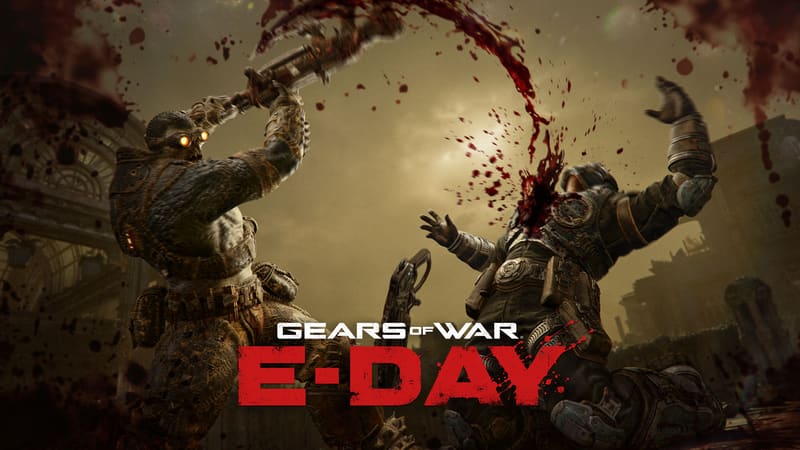
Gears of War: E-Day’s multiplayer beta keeps proving that playable events beat abstract futures
While AI tools and platform memos dominate developer timelines, Gears of War: E-Day’s multiplayer push is a reminder that public sentiment still turns on playable contact. Horde Siege, Versus updates, and the open-beta window matter because they create weekends, clips, and arguments grounded in feel rather than strategy decks. Social media rewards what can be shown in motion.
That lesson applies to AI-assisted indies as much as to Xbox. A generated greybox is interesting. A five-minute slice that friends can play is persuasive. The industry’s attention economy is brutal but consistent: if people cannot touch it, they will not believe it for long.
Key Points
- Playable proof — Betas convert claims into shared experience.
- Mode identity — Multiplayer systems need public stress tests.
- Attention rule — Motion and feel outrun abstract announcements.
- Indie parallel — Ship a tiny slice before selling a grand AI pipeline.

Double Fine’s cuts still haunt the romance of independence
Tim Schafer’s announcement of Double Fine layoffs remains a grim reference point in indie and studio conversations because it punctures a comforting story. Leaving a platform owner can restore identity and still remove the buffer that kept people employed. Social media likes the romance of independence. Production realities are colder.
This matters in an AI-tool boom. Faster software does not automatically create safer studios. If anything, cheaper production can raise output expectations without improving funding stability. Teams adopting AI should pair tool gains with honest runway math. Survival is still a staffing problem before it is a prompting problem.
Key Points
- Independence risk — Freedom and fragility often arrive together.
- Labor truth — Structural changes still end as job cuts.
- AI caveat — Faster production does not guarantee safer employment.
- Planning duty — Runway and scope control remain leadership work.
Social media’s real consensus: tools are exciting, trust is the bottleneck
Across developer social channels, the emerging consensus is more mature than the hype cycle suggests. People are excited by Roblox Build, agentic Studio features, Summer Engine, Blender MCP, and neural rendering. They are also exhausted by undisclosed AI assets, broken exports, fake “one prompt finished game” claims, and platforms that raise prices while speaking the language of access. The bottleneck is no longer imagination. It is trust.
That is the editorial center of today’s development culture. Show the workflow. Keep the code reviewable. Label generated content honestly. Make the first playable hour easy to try and hard to misunderstand. Whether you are an AI-tool founder, an indie solo, or a platform strategist, the audience is asking for receipts more than miracles.
Key Points
- Receipt culture — Developers and players want inspectable results.
- Hype fatigue — One-prompt fantasies are losing credibility.
- Trust stack — Disclosure, reliability and access terms matter together.
- Practical standard — A clear playable loop beats a viral unfinished render.