Today's Summary
August 12's game conversation is about attention, trust, and ownership: Helldivers 2 meets Warhammer 40,000, ArtStation and Sketchfab change hands, Gamescom becomes a crucial discovery window, indie developers debate whether a first game deserves full marketing, and AI tools face a harder test than producing impressive demos. The common thread is scarcity. More games can be made, more assets can be generated, and more catalogs can be streamed, but players still have limited time and creators still need credible places to show their work.
Editor's Viewpoint
The industry's most valuable resource in August is not content. It is believable attention. Helldivers 2 can create a global conversation by joining two communities that already understand each other's tone. ArtStation and Sketchfab can trigger anxiety with a change of ownership because artists are not only storing files there; they are storing reputation, work history, and expectations about AI. Small developers asking whether to market a first game are confronting the same fact from below: finishing is no longer enough.
This changes how teams should use AI. Faster code, concept art, and prototypes are useful, but they increase supply inside an attention market that is already saturated. The winning workflow is therefore not “generate more.” It is “test sooner, show clearer evidence, and earn trust repeatedly.” Build a playable slice that communicates one strong idea. Explain what was made by people and what was assisted by tools. Collect feedback before scaling production. Secure your audience relationship somewhere you control instead of relying on one platform's feed. In 2026, production speed is an advantage only when it produces a more credible reason to care.
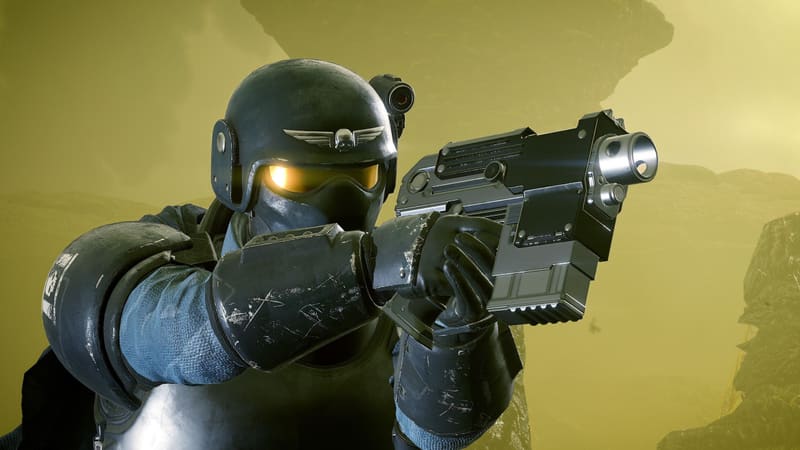
Helldivers 2 x Warhammer 40,000 turns a crossover into today's social event
The Castellan's Creed Legendary Warbond arrives today with three recognizable Warhammer 40,000 weapons and two Imperial Guard armor sets. The release has travelled far beyond ordinary update chatter because the two properties share a comic-militarist language that fans immediately know how to remix. Memes, loadout arguments, lore comparisons, and speculation about the Illuminate have kept the crossover visible for days before launch.
For live-game teams, the useful lesson is fit. A licensed collaboration works best when it adds new verbs and social material without forcing either audience to ignore the host game's identity. The Warbond is also a monetization test: enthusiasm for the fantasy sits beside debate about Legendary pricing and weapon balance.
Key Points
- Launch day — The Warbond goes live across PC, PS5, and Xbox.
- Community fit — Both fandoms share an immediately readable tone.
- Playable value — Weapons matter more than cosmetic recognition alone.
- Price scrutiny — Excitement does not erase monetization questions.
KitBash acquires ArtStation and Sketchfab, and inherits a trust problem
KitBash, the company behind KitBash3D and Greyscalegorilla, is acquiring ArtStation and Sketchfab from Epic Games. The announcement promises a more connected creative ecosystem, but the social response is less interested in corporate optimism than in practical continuity: portfolio URLs, marketplace economics, 3D embeds, licensing, moderation, and the future of creator data.
This is game-development infrastructure even when no engine is involved. Studios recruit through ArtStation, evaluate artists through portfolios, and prototype with models distributed through Sketchfab. Any ownership change therefore touches hiring and production at once. KitBash's first job is not adding features. It is proving that creators will retain control, visibility, and dependable access to years of work.
Key Points
- New owner — Two major creator platforms leave Epic's portfolio.
- Production impact — Hiring, portfolios, and 3D asset discovery are affected.
- Continuity first — Creators want firm answers about links, licenses, and data.
- Trust burden — The acquisition begins under close community scrutiny.
Artists ask whether new ownership will change the AI rules
The largest wave of discussion around the sale concerns AI policy. ArtStation's current terms say creator work will not be licensed or used to train generative AI, while Sketchfab maintains NoAI and CreatedWithAI labels. Artists want to know whether those protections will survive, become clearer, or weaken under the new owner. That uncertainty is amplified by long-running frustration with AI imagery in professional portfolio feeds.
Game studios should pay attention because source transparency is becoming part of asset quality. A model or concept image without clear provenance can create legal, reputational, and pipeline risk. The practical response is to record where assets came from, preserve license information, and make AI disclosure visible inside production rather than waiting for a storefront form.
Key Points
- Policy focus — AI training and labeling dominate artist reactions.
- Existing protections — NoAI and CreatedWithAI already shape expectations.
- Studio risk — Unclear provenance can follow an asset into production.
- Operational answer — Track source, license, and generation history from day one.

Gamescom becomes the last clean attention window before the release crush
With 18 major games packed into eight weeks and Grand Theft Auto VI looming over November, Gamescom's August 25 Opening Night Live has become unusually important. Publishers need one more global stage before crowded release calendars fragment attention. Independent teams face the same pressure with fewer owned channels and much smaller media budgets.
The event is not merely a trailer festival this year. It is a scheduling instrument. A strong demo, creator session, or memorable five-second visual can determine whether a project enters fall with momentum or disappears between larger campaigns. Developers attending Gamescom should optimize for a specific audience action: wishlist, demo download, press appointment, or creator follow-up. General awareness is too vague to justify the cost.
Key Points
- Crowded calendar — Major launches compress the available attention window.
- GTA effect — November's giant changes decisions months in advance.
- Indie exposure — Small teams need a clear action behind every appearance.
- Playable proof — Demos and creator footage can outlast a trailer spike.
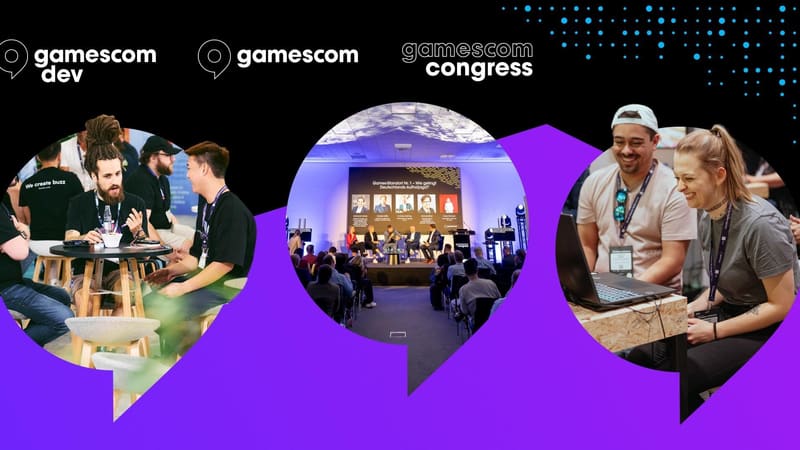
Gamescom programming admits indie marketing is now a production discipline
A gamescom dev session dedicated to low-budget, high-impact marketing targets solo developers and small studios from regions where paid campaigns are rarely realistic. Its promise includes social strategies that turned development stories into millions of organic impressions. The session's existence is revealing: community building is no longer treated as work that begins after a game is ready.
For small teams, marketing should produce information as well as reach. A short clip tests whether the hook is visible. A demo tests whether interest survives contact. A mailing list or Discord tests whether attention can become a durable relationship. Treating these activities as production checkpoints makes promotion less performative and gives design decisions better evidence.
Key Points
- Budget reality — The session is built for teams without large ad spend.
- Development stories — Process can become a discovery asset.
- Feedback loop — Marketing material should test the game's core promise.
- Owned audience — Convert feed attention into a direct relationship.
Should a first game get a real marketing push? Indie developers say yes, with limits
Today's practical indie discussion asks whether a developer should promote a first game that is unlikely to become a commercial success. The question captures a familiar fear: marketing can feel embarrassing when the work is visibly early. Yet skipping it also removes the chance to learn positioning, store-page design, audience targeting, and launch communication.
The sensible answer is to market the project as seriously as its scope deserves. Do not spend money the game cannot repay, but do create a trailer, useful screenshots, a readable Steam page, and a small outreach list. Those assets are not vanity. They are part of learning how strangers understand the work. A first launch can be commercially modest and still establish a repeatable publishing process.
Key Points
- First-game fear — New developers worry that promotion overstates unfinished craft.
- Learning value — Marketing teaches skills that development alone cannot.
- Scope discipline — Keep spending proportional to realistic returns.
- Portfolio effect — A professional launch process compounds into the next project.
Two months, 162 wishlists, and the problem with busy marketing
An indie horror developer reports 162 wishlists after two months of posting clips, Shorts, TikToks, Reddit updates, and development material. The thread keeps drawing responses because it distinguishes activity from signal. Publishing frequently across many channels can still fail if the game's visual promise is unclear, the audience is too broad, or posts feel like advertisements instead of moments people want to share.
The important metric is not only wishlist count. Track which clip earned profile visits, which visit reached the store page, and which store-page visitor converted. That chain reveals whether the problem is content, targeting, or the product presentation itself. For solo teams, one repeatable format on one suitable channel is often more informative than maintaining five exhausted feeds.
Key Points
- Activity trap — More posts do not automatically create stronger demand.
- Funnel diagnosis — Measure movement from clip to page to wishlist.
- Hook clarity — The game must communicate visually before copy can help.
- Channel focus — One learned audience can beat five shallow presences.
New research frames AI as an indie access tool, but not a success machine
A new paper examines AI as a democratizing force during a period when independent output is expanding and the AAA sector remains under pressure. Its most useful distinction is between participation and success. Tools can help more people plan, prototype, and enter game development, but the underlying evidence does not show that AI disclosure or assistance guarantees shipped quality or meaningful revenue.
That distinction matches today's social conversation. Developers value coding help, reference generation, and faster iteration, while remaining skeptical of “one prompt, complete game” claims. Teams should measure AI by reduced time to a tested decision, not by how much material it can produce. A tool is valuable when it helps reject a weak mechanic earlier or polish a strong loop sooner.
Key Points
- Participation grows — AI can reduce barriers to beginning development.
- Outcome gap — More projects do not imply more commercial successes.
- Evidence limit — Disclosure records use, not authorship or quality.
- Better metric — Measure time saved on validated decisions.
AI is changing why programmers choose game development
A career discussion compares game development with general software engineering after AI changed what one programmer finds enjoyable about coding. The thread matters because the usual advice — choose ordinary software for stability and games for passion — is becoming less tidy. Automation can remove repetitive work from either field, but it can also remove the exact implementation tasks that made programming satisfying.
Game work still offers immediate sensory feedback, design ownership, and a close connection between code and player experience. It also retains lower average pay and greater employment volatility. For people entering the field, the best test is not an abstract career forecast. Build a small game to completion, participate in a jam, and observe which parts of the work remain rewarding after the novelty ends.
Key Points
- Motivation shift — AI changes the texture of everyday programming work.
- Game feedback — Code becomes visible through movement, sound, and player response.
- Risk remains — Creative satisfaction does not remove industry instability.
- Small test — Finish a project before making a career-level commitment.

Take-Two's streaming forecast reopens the ownership debate
Take-Two chief Strauss Zelnick expects commercial game streaming to become meaningful within three years. The forecast is plausible as hardware prices rise and publishers seek audiences beyond dedicated consoles and PCs. Social reaction, however, immediately returns to ownership: what happens when a licensed catalog changes, a service closes, or a connection cannot deliver the game people paid to access?
Streaming can expand a game's reachable market, especially for cinematic blockbusters with expensive hardware requirements. Developers should still avoid treating it as neutral distribution. Latency, session length, bandwidth, save portability, and platform contracts affect design and customer trust. The strongest future is likely additive: streaming for convenient access, local versions for dependable ownership, and clear promises about progression between them.
Key Points
- Three-year view — Take-Two expects streaming to become commercially significant.
- Hardware pressure — High device costs make remote access more attractive.
- Ownership anxiety — Players distrust access that can disappear.
- Design impact — Latency and session limits are product constraints.
Unity's own data says AI is most useful behind the scenes
Unity's 2026 development report remains a useful reality check for today's louder AI debate. Among surveyed developers using back-end AI tools, coding assistance leads at 62 percent and writing or narrative work follows at 44 percent. Respondents emphasize efficiency and better decisions rather than autonomous authorship. That profile looks much closer to ordinary production support than to social-media demos of complete generated games.
The implication for independent teams is to start with repetitive, reviewable work. Ask AI to explain an unfamiliar system, draft tests, organize content, or propose alternatives. Keep the parts that establish identity — game feel, visual direction, economy, and final narrative judgment — under deliberate human control. Quiet gains across a year matter more than one spectacular generation clip.
Key Points
- Coding leads — Assistance is concentrated in practical back-end work.
- Writing follows — Narrative support is common but not universal.
- Efficiency claim — Developers value faster work and decisions.
- Indie strategy — Automate reviewable tasks before identity-defining ones.
Today's indie showcase reveals what small teams actually need
The current IndieDev showcase contains the unglamorous reality behind industry headlines: a solo developer launching the open-world theft simulation No Knock after 15 months, another building an AI storytelling game called Runebook, and many creators asking for wishlists, Steamworks advice, feedback, or a few meaningful comments. Social media is not one giant audience. It is thousands of tiny exchanges that can keep a project moving.
This is why the day's attention story matters. Developers do not merely need reach; they need the right next response. A bug report may be more valuable than a like. Ten genre-matched playtesters may matter more than a thousand passive views. The strongest calls to action are specific, easy, and appropriate to the project's stage.
Key Points
- Launch reality — Small games arrive through sustained solo effort.
- Mixed workflows — AI-assisted and conventional projects share the same feed.
- Useful engagement — Feedback and wishlists solve different needs.
- Specific asks — Tell the audience what helpful action comes next.