Today's Summary
June 20 is about control and trust: preservation activists push game shutdowns into lawmaking, GTA 6 pre-orders turn the release calendar into a market stress test, Xbox studio uncertainty keeps developer risk in view, Epic ties Unreal Engine 6 to Fortnite identity and AI debates, while Steam and Switch 2 news show how crowded discovery and platform planning have become.
Stop Killing Games pushes preservation into lawmaking
The Guardian reports that Stop Killing Games has moved from player frustration into organized policy work, with campaigners pushing governments to require end-of-life plans when publishers shut down online titles. The movement grew from anger over games becoming unplayable after servers close, and it is now operating across the US and Europe with petitions, legal work, and meetings around digital fairness.
For studios and publishers, the pressure is no longer just reputational. The campaign is testing whether games sold as products should remain playable after commercial support ends. That could affect backend design, server tooling, licensing plans, and store copy. Even if strict legal mandates do not arrive quickly, publishers may need clearer shutdown notices, private-server options, or preservation-friendly technical plans before players and regulators demand them.
Key Points
- EU debate - Regulators are discussing end-of-life conduct rather than ignoring the issue.
- US pressure - California legislation would require access options for some purchased games.
- Developer lesson - Online architecture now has consumer-rights and preservation consequences.

GTA 6 pre-orders set up the year's biggest launch test
The Sun reports that Grand Theft Auto VI pre-orders are set to open on June 25, putting Rockstar's November launch back at the center of the industry calendar. Pricing and edition details remain the biggest unanswered questions, especially as market chatter continues around premium editions, console bundles, and whether the game could stretch the standard $70 ceiling.
For other publishers, the practical issue is timing. GTA 6 is not just a major release; it is a gravity well for player attention, marketing spend, retail placement, and platform storefront visibility. Once pre-orders open, the market will get a clearer signal on demand, bundle appetite, and how aggressively competitors should move their own late-2026 release dates.
Key Points
- Pre-order signal - June 25 becomes the next measurable demand checkpoint.
- Pricing watch - Edition strategy may influence wider premium pricing debates.
- Calendar pressure - Competitors need to position around a November attention spike.
Senua reveal becomes a rescue signal for Ninja Theory
Windows Central reports that Microsoft showed Senua at the Xbox Games Showcase partly to draw investor interest to Ninja Theory, even as the studio was reportedly already marked for a sunset or separation from Xbox. The result is a harsh signal for developers: a major showcase reveal can now coexist with active uncertainty around the team making the game.
The story matters because it separates project hype from studio stability. Senua was positioned as a richer, more connected Hellblade follow-up, but the fate of the game and its team now depends on buyers, restructuring, and whether Xbox can preserve creative value while cutting portfolio risk. For workers, it is another reminder that visibility does not guarantee safety.
Key Points
- Studio risk - A trailer can function as investor bait, not only audience marketing.
- Worker uncertainty - Ninja Theory staff reportedly hope a buyer appears.
- Xbox reset - The division continues to prioritize large franchises and cost control.
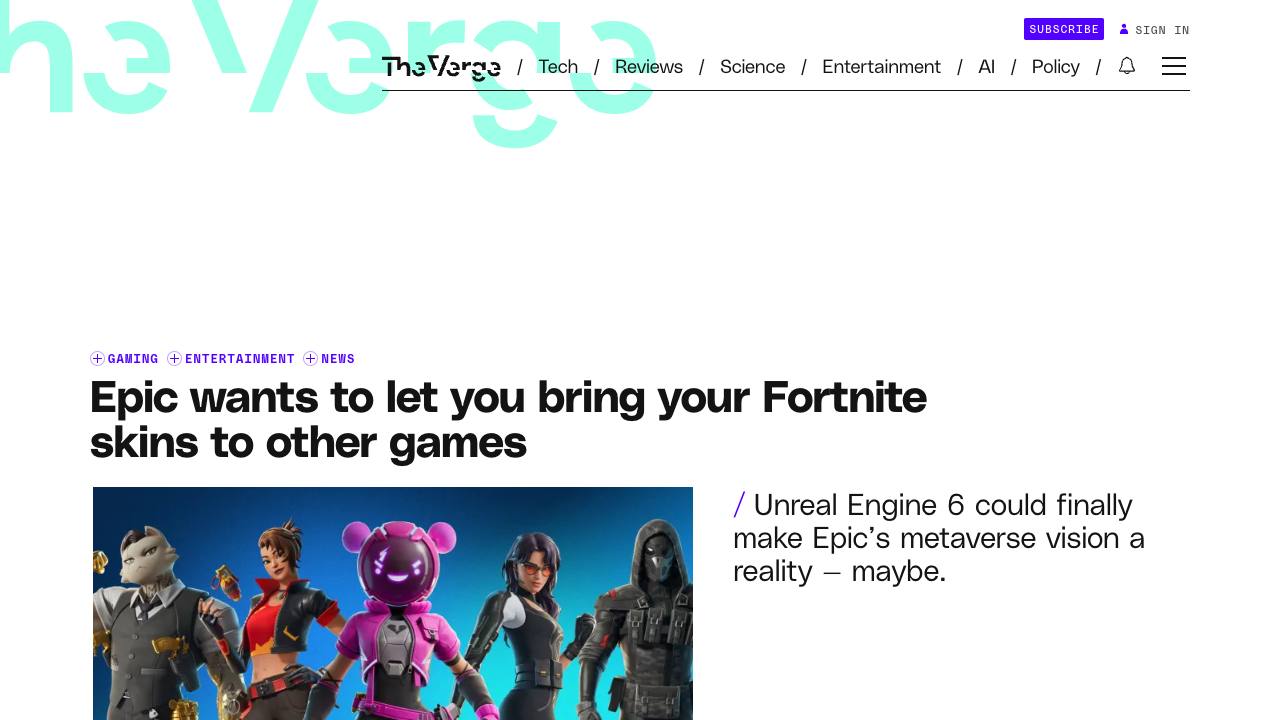
Epic positions Unreal Engine 6 as a Fortnite identity layer
The Verge reports that Epic wants Unreal Engine 6 to let developers support Fortnite skins in other games and create cosmetics that can also work back inside Fortnite. That makes UE6 more than an engine upgrade. It becomes a proposed identity and commerce layer that connects player purchases across separate experiences.
The opportunity is obvious: players could carry more value from items they already bought, and developers could benefit from a familiar ecosystem. The tradeoff is dependency. Supporting Fortnite-linked identity means extra implementation work and closer alignment with Epic's marketplace, account, and content systems. UE6 is still years away, but the strategic direction is clear.
Key Points
- Interoperability - Epic wants purchases to move across games.
- Adoption question - Developers still need incentives to support the system.
- Engine strategy - UE6 is being framed as platform infrastructure, not only tooling.
Vampire Survivors creator reviews Fortnite crossover after AI backlash
GamesRadar reports that Poncle is reviewing its planned Vampire Survivors crossover with Fortnite after Epic openly discussed generative AI use in its art concepting process. The timing is awkward: Epic announced several Fortnite collaborations during State of Unreal, then developer concerns around AI assets immediately complicated one of the most indie-friendly crossovers in the slate.
For game teams, this is a brand-trust issue as much as a tools issue. Many studios are experimenting with AI internally, but public partnerships can expose them to community backlash if players believe a collaboration supports labor replacement or low-quality asset generation. The next phase of AI adoption may be less about technical capability and more about consent, disclosure, and partner reputation.
Key Points
- Partner risk - AI tooling can make crossovers harder to approve.
- Community signal - Indie audiences may scrutinize how licensed content is produced.
- Disclosure pressure - Studios need clearer policies before announcing collaborations.
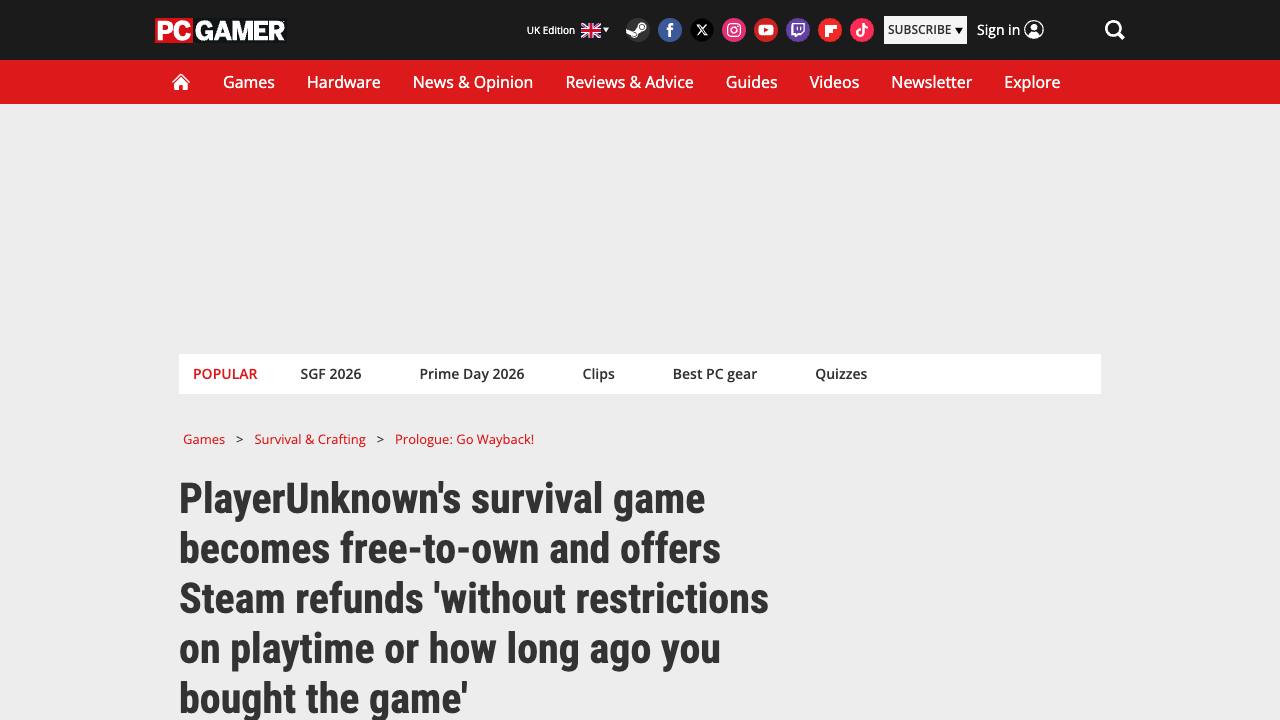
Prologue exits Early Access as a free unfinished release
PC Gamer reports that Prologue: Go Wayback! has left Early Access in an unfinished state, become free to own, and is offering unusually broad refunds to paying players. PlayerUnknown Productions halted development after layoffs, but chose to move the game out of Early Access so future players would not misread the store page as a promise of continuing development.
The decision is painful but unusually transparent. It shows one possible path for a troubled Early Access project: stop charging, clearly mark the end of active development, and give previous buyers a way out. At the same time, the studio is keeping its Melba world-generation engine alive with a smaller team, showing how technology bets can survive after a specific game plan collapses.
Key Points
- Refund policy - Buyers can request refunds regardless of playtime or purchase age for a limited period.
- Store honesty - Leaving Early Access avoids implying future updates.
- Tech continuity - Melba engine work continues even as the game stops.
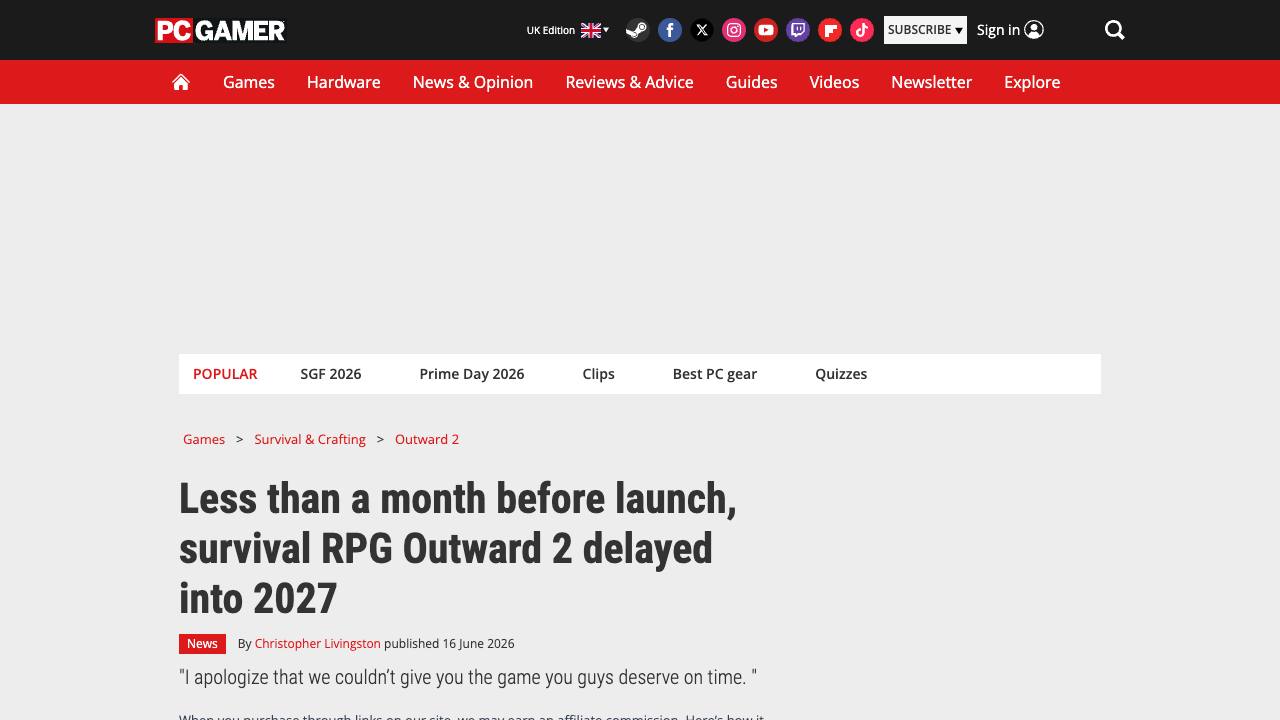
Outward 2 slips into 2027 after beta feedback
PC Gamer reports that Nine Dots Studio has delayed Outward 2 from its planned July 2026 window into 2027. The survival RPG had recently been in open beta, making the delay feel sudden, but studio leadership said sticking to the old plan would risk delivering a version that did not meet player expectations.
For developers, the lesson is that public testing can create both confidence and pressure. A beta can prove there is demand, but it also surfaces the gap between a promising build and a launch-ready product. Delaying so close to release is expensive, yet it may protect a sequel whose audience values friction, exploration, and systems depth over simply arriving on time.
Key Points
- Beta signal - Player feedback appears to have changed the release decision.
- No new date - The Steam page now points broadly to 2027.
- Quality tradeoff - A delay may protect a niche sequel from a weak launch.
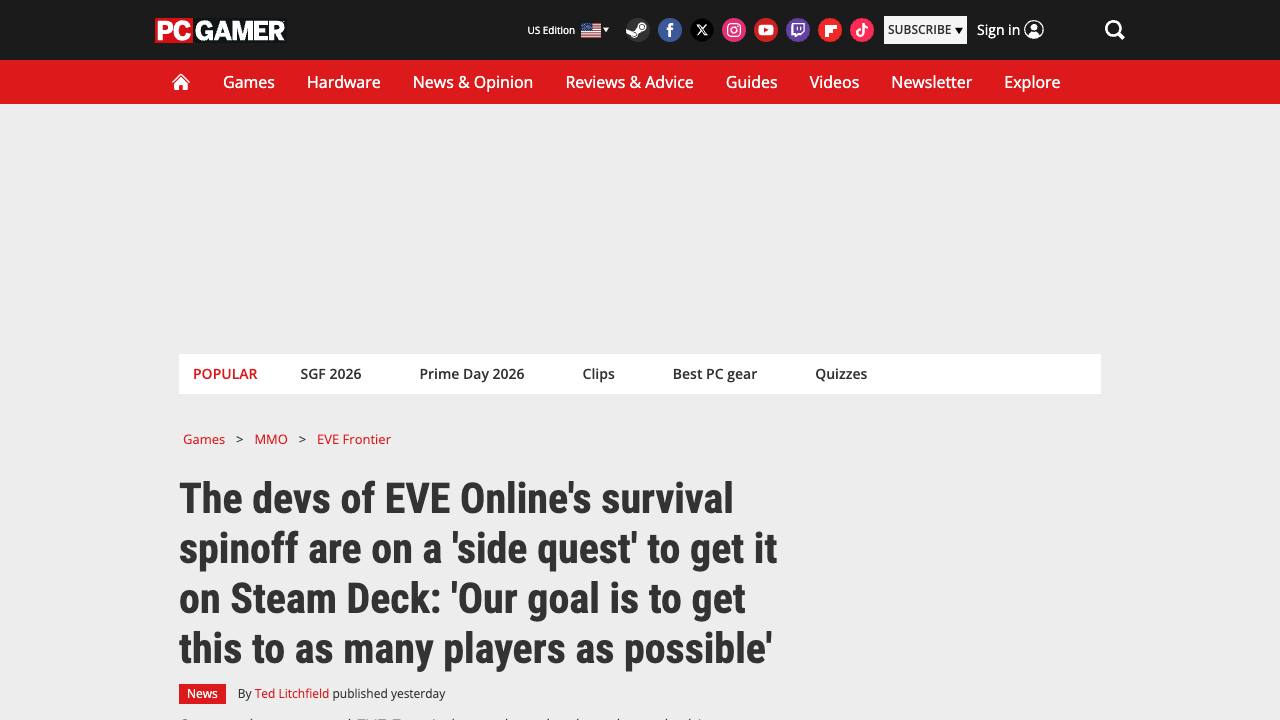
EVE: Frontier team experiments with Steam Deck support
PC Gamer reports that the team behind EVE: Frontier is informally testing Steam Deck support after adding driving controls and gamepad support. The developers describe it as a side quest rather than a formal roadmap item, but the technical path looks plausible because the game already runs through Proton and does not face the same Linux anticheat barriers as many online games.
The wider signal is that handheld PC compatibility is becoming a practical platform discussion even for complex multiplayer projects. For studios, Steam Deck support can expand reach without a full console port, but it still requires interface tuning, launcher work, performance budgets, and control schemes that make sense away from a desk.
Key Points
- Access goal - The team wants the game available to as many players as possible.
- Technical fit - Proton support makes Deck experiments realistic.
- Design work - Controls and launcher friction still matter for portable play.
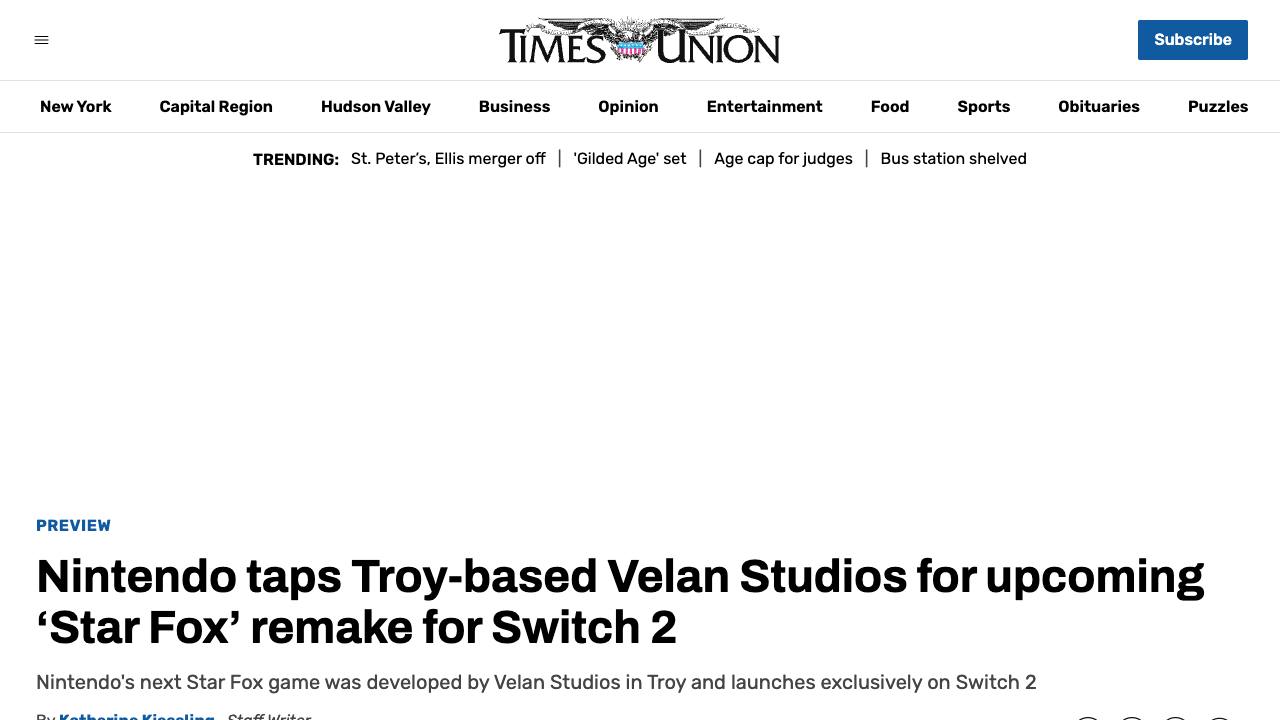
Velan's Star Fox remake gives Switch 2 a near-term exclusive
Times Union reports that Nintendo tapped Velan Studios to develop the upcoming Star Fox remake for Switch 2, with launch set for June 25. The remake revisits Star Fox 64 with expanded levels, updated character designs, a multiplayer battle mode, and a free demo already available on Nintendo's new hardware.
For Nintendo, the story is useful because Switch 2 needs a steady cadence of exclusives beyond launch-window hardware excitement. For Velan, it is another high-trust collaboration after Mario Kart Live: Home Circuit. A recognizable franchise, a moderate price, and a demo-first approach give Nintendo a clean way to keep the Switch 2 conversation active before bigger fall releases arrive.
Key Points
- Exclusive timing - Star Fox lands shortly after the early summer Switch 2 wave.
- Studio trust - Velan continues a close relationship with Nintendo.
- Demo strategy - A playable sample can reduce risk for a revived franchise.
Steam Next Fest's 4,347 demos expose discovery overload
PC Gamer counted 4,347 demos in the current Steam Next Fest, enough that sampling each one for 30 minutes would take more than 90 straight days. The number is funny, but it also captures the central problem for developers using demo festivals as a visibility tool: participation is easy, discovery is not.
For indies, Next Fest remains one of the best chances to turn curiosity into wishlists, but the event now rewards preparation more than simple presence. Teams need strong capsule art, a clear hook in the first minute, creator outreach, a polished demo loop, and post-event follow-up. The festival is still valuable, but the audience has more options than any single player can meaningfully process.
Key Points
- Scale problem - Thousands of demos compete in the same short window.
- Wishlist pressure - A demo needs immediate clarity to convert attention.
- Marketing lesson - Festival participation must be paired with external traffic.