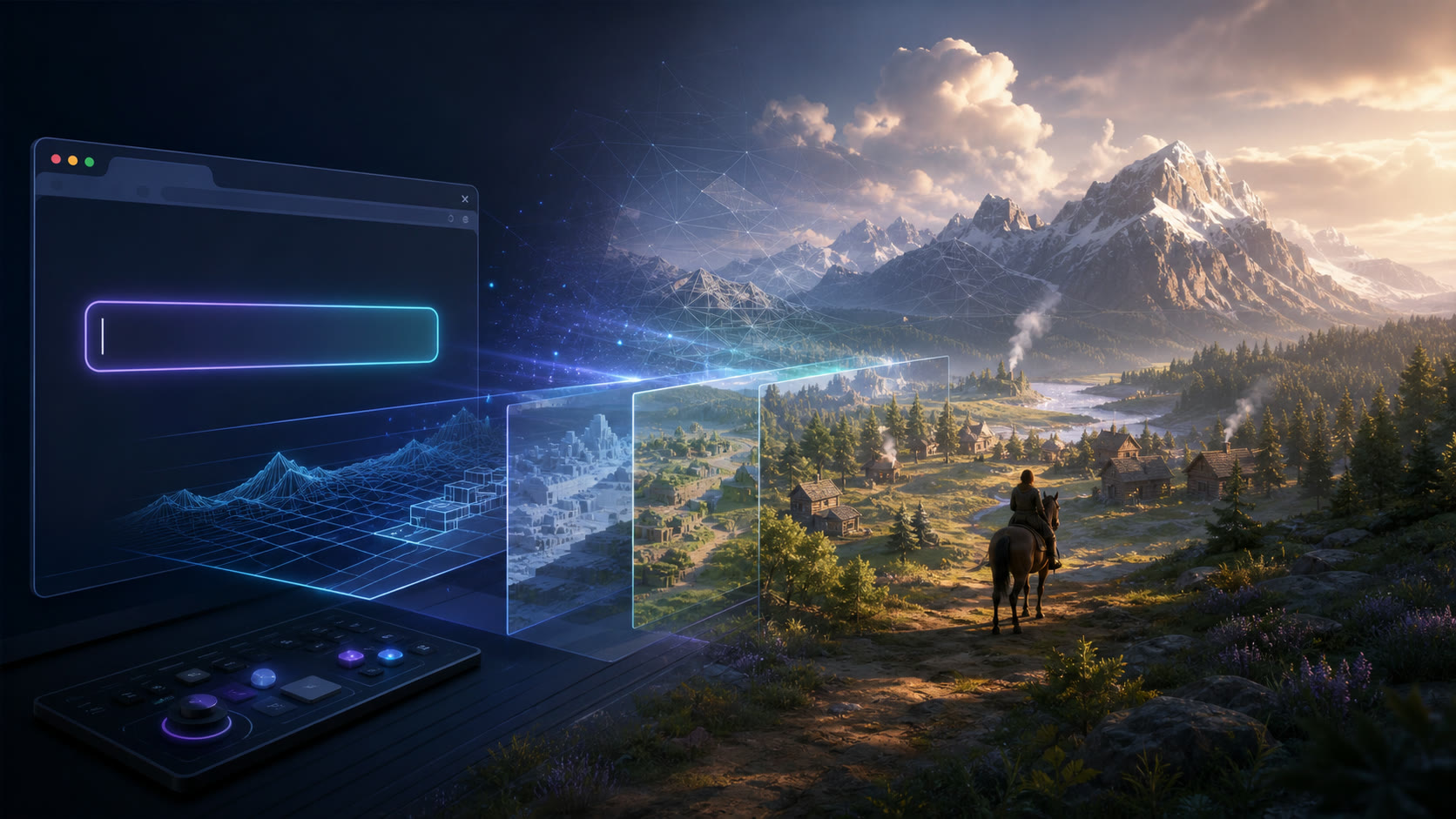
For years, “AI made a game” usually meant one of three things: a text adventure, a rough 2D clone, or a carefully edited video that hid how little of the result was actually playable. Kimi K3 changed the temperature of that conversation in a single launch day. Social feeds filled with horseback worlds, cyberpunk traversal, voxel arenas, fighting games, first-person shooters, and other interactive 3D scenes that looked far beyond the usual one-screen prototype.
The immediate reaction was predictable. Some viewers called it the end of game development as we know it. Others dismissed the demos as another round of vibe-coded spectacle. Both responses are too simple.
Kimi K3 has not turned a paragraph into a finished commercial game. What it has done is more specific and, in the long run, more important: it has made a complicated, visually inspectable 3D prototype a credible test of general-purpose AI capability. A model that can survive that test has to do more than write code. It has to coordinate spatial reasoning, rendering, interaction, assets, performance, tool use, and repeated visual correction over a long run.
That is why the demos matter even when the games themselves are rough.
The breakthrough is not “one prompt, one finished game.” It is “one agent, one evolving playable world.”
What Kimi K3 actually showed
Moonshot AI describes Kimi K3 as a 2.8-trillion-parameter model with native vision and a context window of up to one million tokens. The company positions it for long-horizon coding, knowledge work, reasoning, and visual creation. For game development, the key phrase is “vision in the loop”: the model can work on code, inspect screenshots of the running result, and continue revising what it sees.
The flagship example is a procedural browser-based 3D exploration game built with Three.js, WebGPU, and GPU compute. According to Moonshot, K3 generated the environment and used a separate 3D asset tool for the rider and horse. The result includes forests, a village of log cabins, snowy mountains, and changing weather. Moonshot also explicitly lists external animated character models and terrain data, an important detail that keeps the example from being misread as every pixel and polygon emerging from the language model alone.
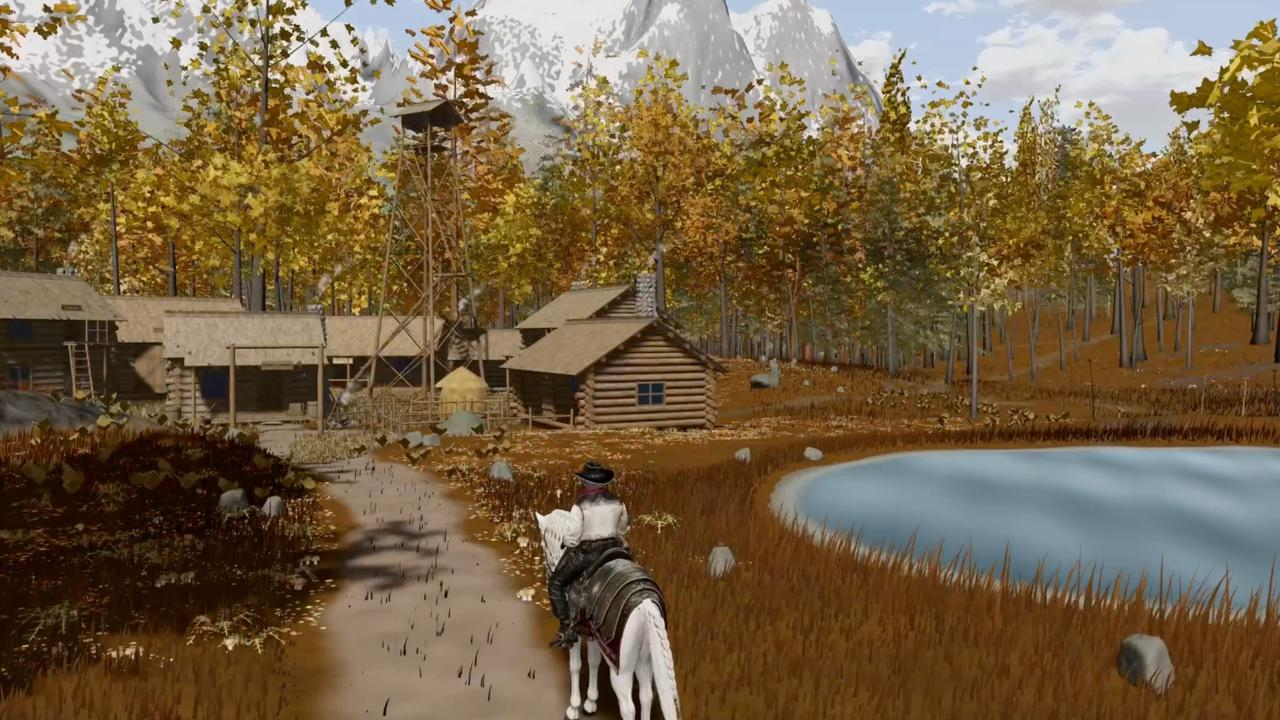
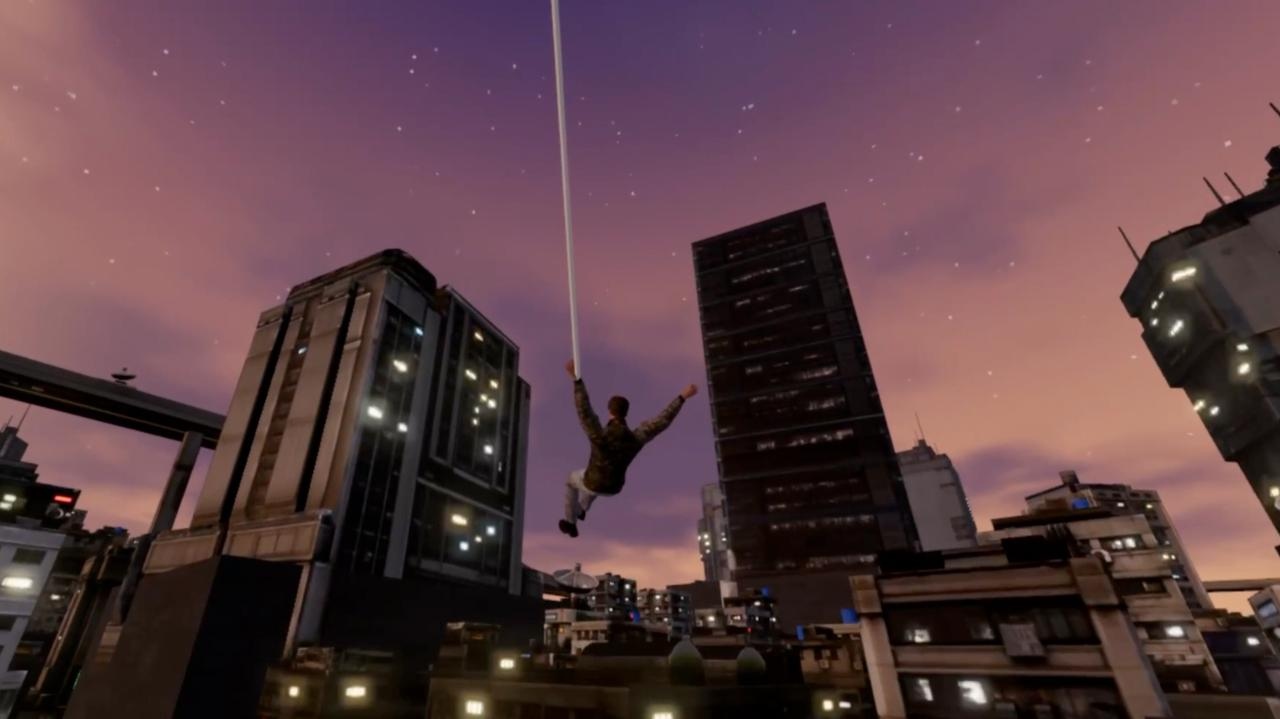
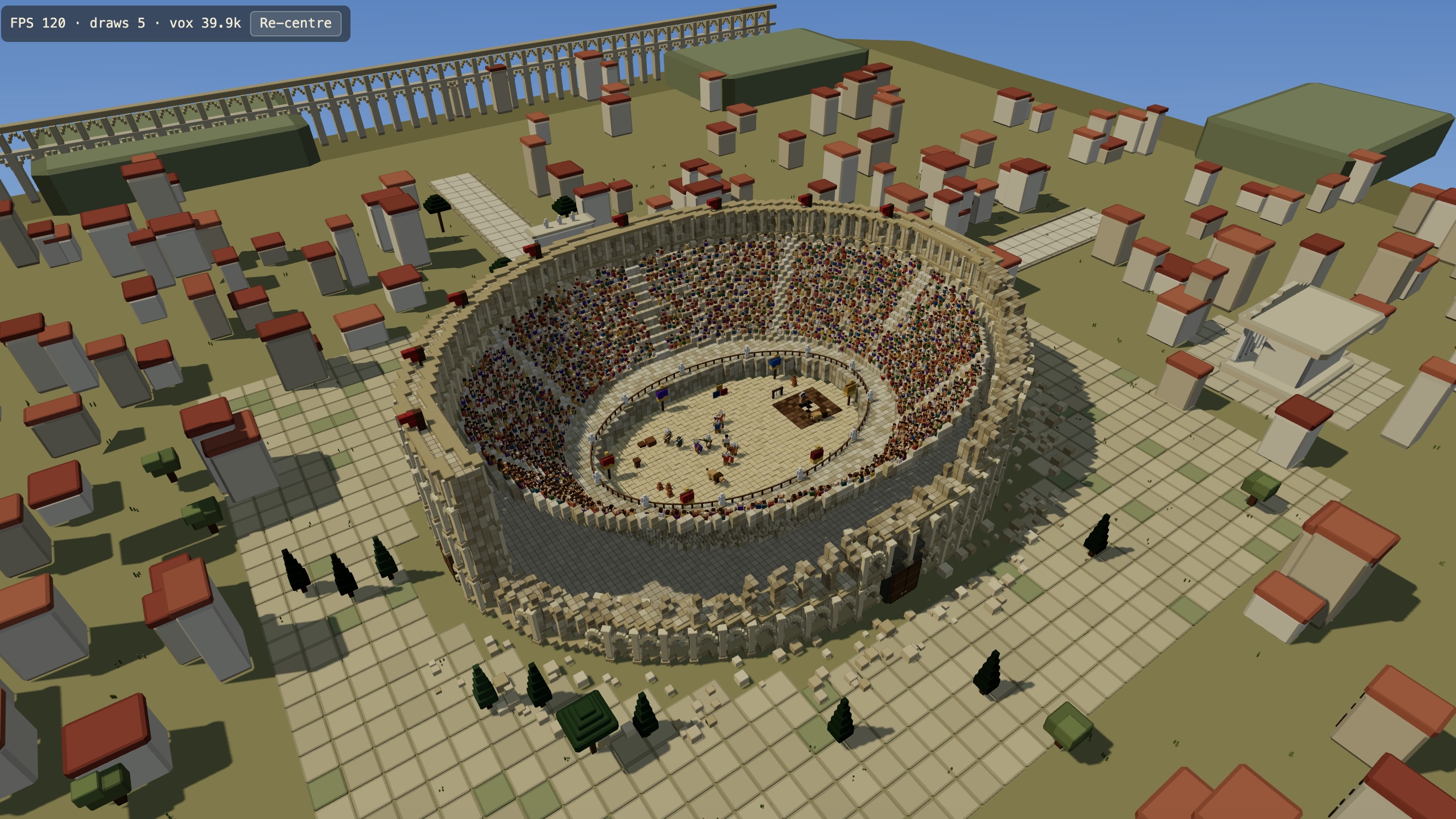
The wider gallery matters because it is not one lucky scene. Moonshot presented different camera systems, art directions, world layouts, and interaction styles. The cyberpunk web-swinging demo asks for movement, momentum, city geometry, camera behavior, and a large enough environment to sell speed. The voxel colosseum asks for a completely different set of constraints: dense repeated geometry, crowd-like detail, broad visibility, and stable performance.
That range does not prove each demo is deep. It does suggest the underlying ability is more general than a memorized template.
Why 3D games are becoming the new AI benchmark
A polished landing page can hide many mistakes. It is mostly static, the ideal camera is chosen in advance, and the user follows a limited path. A game refuses to be that cooperative. The player can turn around, jump into a corner, run the camera through a wall, hold two inputs at once, or stare at the ugliest object in the scene.
That makes a playable 3D world a brutal evaluation. The model has to keep several systems coherent at once:
- Spatial reasoning: objects need believable scale, placement, collision, and navigation.
- Real-time code: the scene must update continuously without collapsing under its own complexity.
- Interaction design: controls, camera behavior, feedback, and goals have to make sense together.
- Visual judgment: the model must notice clipping, unreadable contrast, awkward framing, and broken layouts.
- Long-horizon consistency: a late fix cannot casually destroy the systems created earlier.
- Tool coordination: code, assets, browser previews, screenshots, and build tools all have to stay connected.
This is why a 3D game tells us something that a coding benchmark alone cannot. A benchmark can verify whether a patch passes tests. A game reveals whether dozens of individually plausible decisions combine into an experience a person can actually control.
In that sense, the player is the final test harness.
The social reaction contains both the promise and the warning
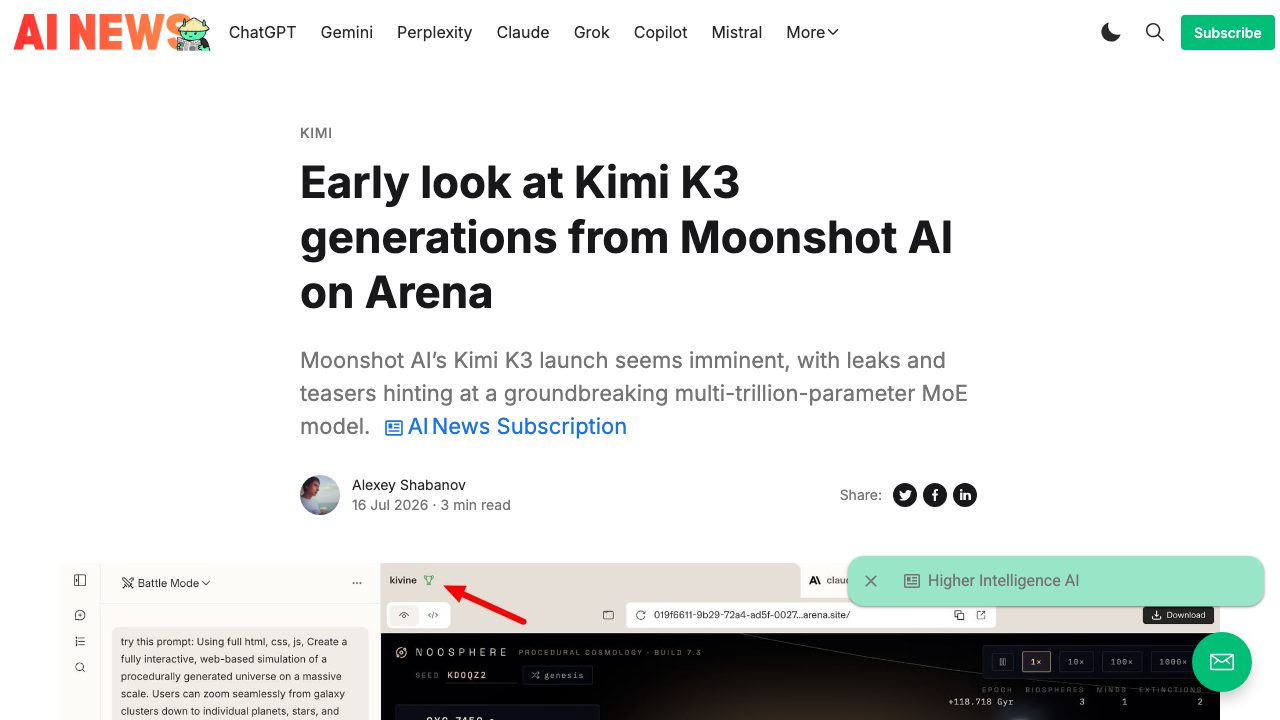
Early community comparisons were enthusiastic about K3's visual detail and willingness to keep working. Testers shared elaborate universe simulations, 3D scenes, and animated worlds. One widely circulated report called the output among the best the tester had seen from the prompt. Another user described a run that continued for four hours before producing its result.
Those same posts also exposed the cost. A comparison collected by TestingCatalog reported a 35-minute generation time for one strong front-end result. In another head-to-head, K3 produced a more elaborate and visually rich universe, while a competing model finished faster and delivered sturdier interface components.
This is not a footnote. Iteration speed is part of game development quality. A beautiful first pass that takes half an hour may be valuable for a concept demo, but a designer who needs to test ten versions of a jump, camera, or combat rhythm will feel that delay immediately. Game feel is discovered through repetition. Slow generations put distance between a decision and the developer's ability to judge it.
Reality check
Viral clips select for the most visible success. They rarely show failed runs, manual cleanup, reused assets, browser compatibility problems, or how many revisions happened before recording. Treat launch-day demos as evidence of a new ceiling, not proof of the average result.
A prototype is not a game, and a scene is not a production pipeline
The biggest mistake in the current discussion is collapsing four different outcomes into one word: “game.” A generated scene can be explorable without having a meaningful loop. A prototype can have a loop without being balanced. A vertical slice can feel polished without surviving two hours of play. A commercial game also needs saving, settings, accessibility, onboarding, content pacing, testing, platform compliance, updates, and support.
| Stage | What the viral demo can prove | What remains unproven |
|---|---|---|
| 3D scene | The model can assemble and render a coherent world. | The world is fun, navigable, optimized, or original. |
| Playable prototype | Inputs, camera, movement, and basic rules work together. | The loop stays interesting after the first few minutes. |
| Vertical slice | One polished section can represent a larger vision. | The team can produce the rest consistently and affordably. |
| Released game | Players can buy or access a complete experience. | The game will retain players, remain stable, and support updates. |
K3 appears to move the first two stages forward dramatically. That is already enough to change prototyping. It is not enough to erase the remaining stages.
Moonshot's own limitations are unusually relevant to games
Moonshot's release notes identify three limitations that map directly onto game production. First, K3 can become unstable if a tool fails to preserve its full thinking history or if the model is switched into the middle of an existing session. Long-running game work depends on continuity, so a fragile history chain can turn yesterday's working system into today's unexplained regression.
Second, the model can be excessively proactive. That sounds useful until an agent “improves” a control scheme, adds a mechanic nobody requested, replaces an asset, or expands the scope while fixing a small bug. Game projects are full of subjective choices. A productive assistant needs permission boundaries as much as initiative.
Third, Moonshot acknowledges a noticeable user-experience gap compared with the strongest proprietary models. The community comparisons point in the same direction: K3 can be visually ambitious while still producing weaker controls, panels, or interaction details.
These are not reasons to ignore the model. They are a better description of where human direction still matters.
What an indie developer should test instead of chasing the demo
If you have access to K3, the useful experiment is not “make me an open-world RPG.” That prompt invites spectacle and gives you no clear way to judge success. A better test creates pressure around one small playable decision.
- Define a 60-second loop. Ask for one action, one obstacle, one failure state, and one reason to retry.
- Fix the camera and controls early. Do not let visual expansion hide a bad movement model.
- Set a performance target. Name the browser, screen size, frame-rate goal, and device class.
- Require visual inspection. Have the model run the game, capture screenshots at several states, and explain what it will correct.
- Track every external asset. Record what was generated, downloaded, licensed, or adapted.
- Ask for three small revisions. A model's value appears in iteration, not only in the first reveal.
- Play it yourself. No automated report can tell you whether steering, jumping, aiming, or restarting feels right.
That workflow makes the model prove the capability that matters: responding to evidence from the running game. It also keeps the human in the role that is hardest to automate—the person who decides what the experience should feel like.
Why the July 27 weight release matters
K3 is available through Kimi's products and API now, while Moonshot says the full model weights will arrive by July 27. That date may matter more to game tooling than the launch-day clips. Weights allow outside teams to inspect the model, adapt serving systems, test specialized workflows, and build tools that are not limited to a single hosted interface.
There is an obvious constraint: a 2.8-trillion-parameter model is not a casual local download. Moonshot recommends large multi-accelerator deployments for efficient inference. Most independent developers will encounter K3 through hosted services or partners rather than a machine under their desk.
Still, open weights change who can experiment with the edges. Engine makers, asset-pipeline companies, browser-game platforms, and research teams can test whether K3's visual loop can be made faster, more predictable, and more tightly connected to real development environments.
The real shift: games are becoming a model interface
The most interesting future is not a feed filled with one-click clones. It is a development environment where a person can describe a mechanic, play the rough version, point at what feels wrong, and watch the agent revise code and visuals together. The game becomes a shared object between human and model: not a document to finish, but a world to inspect.
Kimi K3 makes that future easier to see because its best demos are spatial, dynamic, and willing to run for a long time. The model is not only answering. It is building something that can answer back through movement, collision, camera behavior, and performance.
That does not make game designers obsolete. It raises the value of design judgment. When prototypes become cheaper, choosing the right prototype becomes harder. When anyone can generate a large world, the rare skill is knowing which ten seconds deserve another week.
So yes, the 3D demos are impressive. But the important question is not whether Kimi K3 can make something that looks like a game. It is whether developers can use its visual feedback loop to reach a better game faster—and whether the model can keep listening once the spectacle wears off.
Frequently Asked Questions
Can Kimi K3 create a complete 3D game from one prompt?
It can create ambitious playable prototypes, but current public examples do not prove that one prompt can produce a complete commercial game. Production still requires design, testing, optimization, content, accessibility, and maintenance.
What makes Kimi K3 different for game development?
The notable combination is long-horizon coding, spatial reasoning, native vision, and visual iteration. K3 can build a scene, inspect screenshots of it, and continue refining the result.
What are Kimi K3's main limitations?
Early reports highlight long runtimes and weaker interface quality in some comparisons. Moonshot also lists history sensitivity, excessive proactivity, and a user-experience gap among the model's current limitations.
Is Kimi K3 open source?
Moonshot calls K3 an open model and says the full weights will be released by July 27, 2026. Until those weights arrive, independent inspection and deployment remain limited.