March 2026 did not look like a market in retreat if you only watched what players could see. Our latest Game Daily roundup was full of familiar confidence signals: Xbox rolled out a partner showcase with 19 games and seven world premieres, Hades II locked in an April 14 console date with Game Pass support, and S.T.A.L.K.E.R. 2 announced a major expansion for summer. Crimson Desert, despite mixed reviews, still sold three million copies. Meta said Quest usage had hit an all-time high in 2025. On the consumer side of the business, there was still motion, still appetite, and still a lot to sell.
But almost every one of those momentum signals sat beside a harder business story. The GDC 2026 State of the Game Industry report said 28% of respondents had been laid off in the last two years, rising to 33% in the United States. Two-thirds of AAA respondents said their companies had layoffs. Epic cut more than 1,000 jobs while shutting down Fortnite modes it had previously used to expand the platform’s reach. Meta talked up Quest activity while continuing to operate under a Reality Labs loss measured in the tens of billions. Even Nintendo’s Switch 2 pricing update was framed less as a celebration of demand than as a statement about costs.
That contradiction is no longer a short-term oddity. It is becoming the central operating truth of the games business. Demand still matters, of course, but it no longer guarantees hiring, expansion, or even basic stability. In late March 2026, the industry looked like two different markets at once: one in which players were still buying, subscribing, and showing up for big announcements, and another in which management teams were cutting experiments, compressing risk, and recalculating what counts as sustainable growth.
What March 2026 clarified
- Strong releases and high player activity are not enough to protect teams from cuts.
- Platforms now talk about pricing, distribution, and margins much more openly.
- Live-service sprawl is being rolled back faster when side bets underperform.
- The next phase of the business looks smaller, stricter, and less forgiving than the last growth cycle.
Demand Never Disappeared. That Is What Makes the Current Cycle So Jarring.
The most important thing to understand about this moment is that the consumer side of gaming has not gone flat in any simple way. Xbox Partner Preview did not look like a publisher or platform holder scraping together leftovers. It showed 19 upcoming games, including seven world premieres, and said 14 of them would be playable day one with Game Pass Ultimate. That is a big pipeline by any recent standard. It also suggests that platform ecosystems still believe content density works as a retention and acquisition tool, even when the surrounding market narrative is cautious.
The calendar underneath that showcase looks active too. Supergiant said Hades II would arrive on PlayStation 5, Xbox Series, and PC on April 14, with Game Pass availability layered on top. GSC Game World followed with Cost of Hope, a S.T.A.L.K.E.R. 2 expansion promising dozens of hours of nonlinear play. These are not symbolic updates from dormant brands. They are the kind of releases and add-ons that keep players inside ecosystems, keep storefronts active, and keep press cycles moving. If you judged health by output alone, you would still call this a busy market.
Sales support that reading. Pearl Abyss steadied investor nerves when Crimson Desert crossed three million copies, despite a mixed critical response. That detail matters because it cuts against the old idea that only consensus prestige can generate meaningful demand. The game did not need universal praise to prove there was still room for large-scale commercial traction. What players were doing in March 2026 was not the behavior of an audience that had abandoned premium games, expansions, or platform subscriptions.
“Our investment in Meta Quest and games for Quest remains very high.”Chris Pruett, Meta
VR told the same story from another angle. Meta said Quest usage reached “an all-time high” in 2025, with more than 100 titles crossing $1 million in gross revenue and in-app purchases up more than 10%. Even subscriptions moved, with Horizon+ reportedly passing one million subscribers. There are plenty of caveats around what those numbers mean for any single studio, but the broad point is unmistakable: audiences are still present, and in some parts of the market they are highly monetizable. The puzzle is not where demand went. The puzzle is why that demand keeps failing to translate into security for the people building the business.
Epic Games Showed How Even a Giant Platform Can Decide That Momentum Is Not Enough.

If one company should have looked insulated from this logic, it was Epic. Fortnite remains one of the largest entertainment platforms in games, and Unreal Engine still sits at the center of an enormous production ecosystem. Yet Epic still cut more than 1,000 employees in March 2026, and the company paired those cuts with a symbolic retreat: Rocket Racing, Ballistic, and Festival Battle Stage were all put on the path to shutdown. Those mode closures matter because they were not random side projects. They represented the kind of expansion strategy many companies spent the last several years chasing.
That is what makes the layoffs so revealing. Epic was not announcing cuts because it had no audience. It was cutting because management no longer believed that broad platform scale, live-service adjacency, and creator-economy ambition justified the same spending profile. Tim Sweeney said a downturn in Fortnite engagement that began in 2025 had left the company spending more cash than it was bringing in. That sentence is more revealing than any headline number. It says the threshold for “healthy enough” has moved. For a business this large, profitability discipline can now override the reputational shield of success.
“We failed to build something awesome enough to attract and retain a large player base.”Fortnite Status account, via Game Developer
That logic also explains why the company was comfortable pruning modes that once looked strategic. Rocket Racing and Fortnite Festival were not isolated curiosities; they were products shaped by the acquisitions of Psyonix and Harmonix and by a wider belief that Fortnite could keep absorbing distinct game experiences under one roof. When Epic decided some of those bets were no longer worth carrying, it showed how quickly the center of gravity has shifted. The goal is no longer endless adjacency. The goal is a tighter core business that can defend margins.
“This will not get any easier.”Piers Harding-Rolls, Ampere Analysis
That warning is bigger than Epic itself. If one of the industry’s most visible platforms can still turn inward while Fortnite remains globally relevant, then the old comfort phrase, “good products will protect good teams,” looks much weaker than it did a few years ago. What March 2026 revealed is that platform power can buy time, distribution, and attention, but it does not guarantee tolerance for expensive experiments. In the current cycle, the ability to cut fast is becoming as important to executives as the ability to launch big.
The GDC 2026 Report Made It Clear That This Is Systemic, Not Just a Story About One Company.
The GDC 2026 State of the Game Industry report matters because it moves the conversation beyond anecdotes. One in four respondents had been laid off within the last two years. In the United States, the figure rose to one in three. Half said their current or most recent employer had conducted layoffs in the previous 12 months. Those are not numbers you get from a business suffering in one segment while the rest hums along. They suggest a labor market reset that cuts across company size, platform focus, and business model.
The studio breakdown makes the pattern even clearer. Two-thirds of AAA respondents said their companies had layoffs. One-third of indie respondents said the same. That split does not mean large and small teams are experiencing the same level of pain, but it does show the problem is not confined to one part of the pipeline. AAA can no longer absorb uncertainty with sheer scale, and indie cannot claim insulation through agility alone. Everyone is operating closer to a line than they were when pandemic-era growth convinced leadership teams that volume would keep bailing them out.
The student data in the same report may be the most unsettling signal of all. Seventy-four percent of surveyed students said they were worried about job prospects in games. They pointed to the lack of entry-level openings, competition from laid-off workers who already have experience, and AI-led displacement. That concern is not just emotional spillover from a bad news cycle. It is a sign that the industry’s future pipeline is already being shaped by present-day retrenchment. A market can still launch games and grow usage while quietly becoming much less attractive to new talent.
“The effects of recent layoffs continue to spread across the industry.”GDC 2026 State of the Game Industry
Meta’s Quest business slots neatly into that wider picture. Its usage and spending signals are real, but so are the closures and layoffs around them. That is why the platform’s success feels important but not reassuring. It confirms that the audience has not vanished. It also confirms that management teams no longer treat audience momentum as a reason to keep every team intact. The center of the business has moved from “grow with the wave” to “capture what works, cut what doesn’t, and do it faster than last time.”
Pricing and Platform Strategy Now Speak the Language of Cost Structure More Openly Than Before.
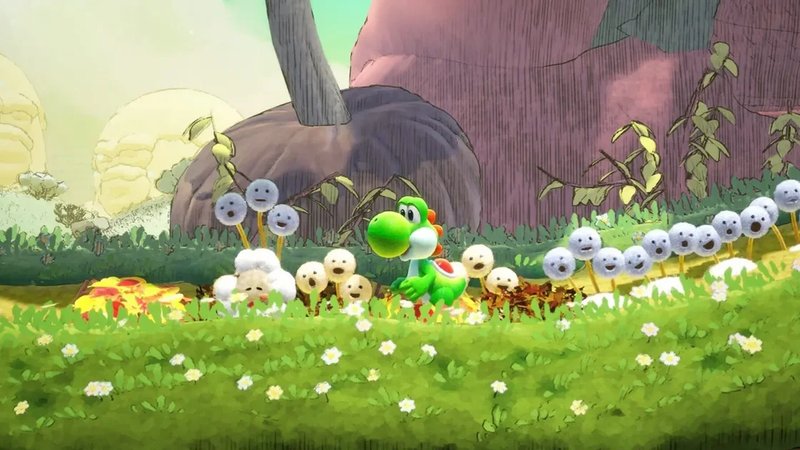
Nintendo’s Switch 2 pricing change may look smaller than a layoff headline, but it belongs to the same story. The company said digital versions of new Switch 2 titles in the United States would cost less than physical versions and framed that decision as one that “simply reflects the different costs associated with producing and distributing each format.” That wording is unusually direct. It does not romanticize player choice or celebrate a new sales tactic. It makes a cost argument in plain language.
That matters because platform strategy is often the cleanest place to see what executives think the next few years will demand. If digital pricing is being presented this openly through a margin-and-distribution lens, then the industry is telling players something without always saying it outright: the economics of game sales are being renegotiated in public. The format you buy, the storefront you use, the subscription you join, and the expansion cadence you accept are all becoming part of a tighter financial model. Consumer demand is still being pursued, but it is being boxed into more disciplined channels.
Xbox’s March showcase reinforces that reading from the other side. Fourteen games playable day one through Game Pass is still an audience promise, but it is also a platform economics move. Hades II launching into Game Pass is both a content beat and a retention tool. S.T.A.L.K.E.R. 2 expansion news keeps a premium game in the cycle while the platform relationship does part of the distribution work. What looks like momentum to players often doubles as efficiency to platform holders. That dual function helps explain why launches can feel energetic while staffing decisions feel conservative.
“Simply reflects the different costs associated with producing and distributing each format.”Nintendo statement, via GamesIndustry.biz
The bigger point is that pricing, release timing, and subscription placement are no longer separate from the labor story. They are part of it. When companies talk more directly about distribution costs, platform packaging, and underperforming modes, they are also describing why fewer bets are allowed to sit idle and why teams attached to weaker bets face more risk. Late March 2026 showed the business becoming more explicit about those tradeoffs, not less.
The Next Phase of the Market Looks Smaller, Sharper, and Less Patient.
Put all of those March signals together and a pattern emerges. Big games can still sell. Platform showcases can still dominate a day’s conversation. VR can still put up usage records. But companies are less willing to let those wins subsidize broad experimentation or slow-moving support structures. The new operating model looks narrower. Keep the strongest releases moving. Use subscriptions and platform visibility to concentrate demand. Retire adjacent bets quickly. Keep talking about the future, but spend like the present is unstable.
That helps explain why the industry can feel energetic and exhausted at the same time. To readers, March 2026 looked full of reasons to stay bullish on the medium itself. To workers, it looked like another proof point that the business has separated product energy from employment confidence. The same month that gave players more announcements, more dates, and more reasons to preload games also delivered fresh evidence that teams are expected to do more inside tighter structures. Success is still rewarded, but tolerance for anything short of clear success has shrunk dramatically.
There is also a reputational consequence to this split. Players can see the contradiction now. They see publishers celebrate pipeline density while news breaks about layoffs. They see platform owners trumpet usage while studios close. They see companies ask for more patience, more subscription commitment, or more digital adoption while saying those same adjustments are necessary because costs remain too high. Once that pattern becomes visible enough, it changes how growth stories are received. “Healthy demand” stops sounding like reassurance and starts sounding like a question: healthy for whom?
The likely answer, at least for the near term, is that growth will increasingly be captured by platforms, flagship products, and leaner structures rather than broadly shared across teams. That does not mean the industry is in collapse. It means it is entering a colder phase, one where momentum survives but certainty does not. March 2026 was important because it made that distinction impossible to ignore. The market is still alive. The audience is still there. The jobs picture, however, is now being governed by a much stricter logic than demand alone.
Conclusion
For years, the easiest way to read the game business was through product energy. If release calendars were strong, platform engagement was high, and consumer spending still showed life, the industry could plausibly tell itself that the rest would follow. March 2026 made that reading look outdated. The audience side of gaming remains active, but management teams are increasingly making decisions as though growth is temporary, costs are stubborn, and underperforming experiments deserve very little patience.
That does not reduce the value of all the consumer-facing momentum we saw in late March. Xbox Partner Preview mattered. Hades II’s console rollout mattered. S.T.A.L.K.E.R. 2’s continued support mattered. Meta Quest’s usage record mattered. Crimson Desert’s three million sales mattered. What changed is the assumption that these facts should naturally spill into broader stability. They do not. Not anymore. They are now inputs into a harder filtering process rather than signs that expansion can keep going unchecked.
The paired lesson for players and developers is uncomfortable but useful. Do not mistake visible excitement for structural calm. The game industry still knows how to launch, market, and monetize at scale. It is simply doing those things inside a business climate that has become far more selective about what deserves protection. That is the real story of March 2026, and it will likely shape the months that follow.
Frequently Asked Questions
Why are game companies still laying people off if players are still spending and playing?
Because audience strength does not automatically solve a company’s margin pressures, portfolio complexity, or cost structure. March 2026 showed that companies can still cut staff while launches land, platforms grow, and spending remains visible.
What made March 2026 such a revealing month for the games business?
It combined strong consumer signals with fresh retrenchment. The same period delivered Xbox Partner Preview, Hades II’s console date, a new S.T.A.L.K.E.R. 2 expansion, Meta Quest usage records, and Crimson Desert’s sales milestone, while layoffs and mode shutdowns continued.
What did the GDC 2026 report add to this picture?
It showed the problem was not isolated. The report found 28% of respondents had been laid off in the last two years, half said their employer had layoffs in the last 12 months, and two-thirds of AAA respondents said their companies had layoffs.
Why does Switch 2 digital pricing belong in the same conversation as layoffs?
Because it shows how openly companies are now talking about production, distribution, and cost differences. That same financial discipline shapes release strategy, platform packaging, and which teams or products get continued support.
Sources
- GDC 2026 State of the Game Industry Reveals Impact of Layoffs, Generative AI, and More
- Game Developer: Some Fortnite modes are being sunsetted following mass layoffs
- Game Developer: Analyst says Epic Games layoffs send a clear signal
- GamesIndustry.biz: Meta Quest usage reaches all-time high in 2025 despite studio closures and layoffs
- GamesIndustry.biz: Nintendo Switch 2 digital games to cost less than physical versions in US
- Xbox Wire: Xbox Partner Preview, March 2026 recap
- Gematsu: Hades II coming to PS5, Xbox Series on April 14
- Gematsu: S.T.A.L.K.E.R. 2 expansion Cost of Hope announced
- GamesIndustry.biz: Crimson Desert studio Pearl Abyss's share prices stabilize as sales top 3 million