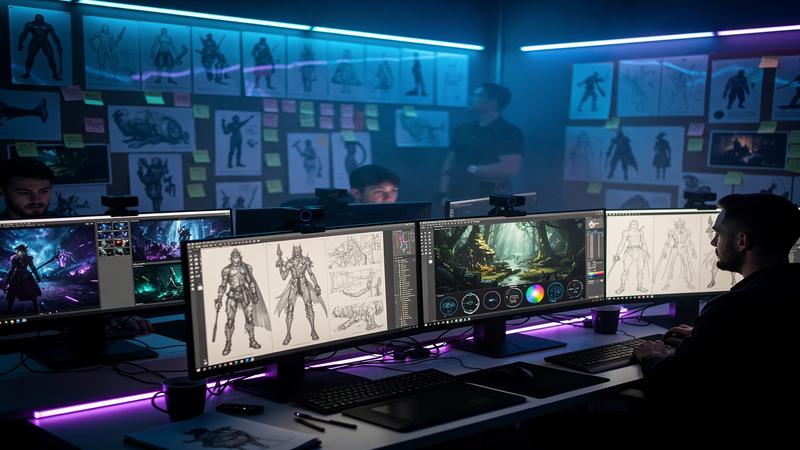
Something shifted in the game industry around 2023, and by 2026 the consequences are impossible to ignore. The shift wasn't a single announcement or a corporate directive—it was thousands of quiet decisions, made in studios from Kyoto to São Paulo to a spare bedroom in Edinburgh, to open a browser tab and type a text prompt instead of reaching for a stylus. Generative AI image tools had become cheap, fast, and disturbingly capable, and the game development world—always resource-constrained, always deadline-pressed—started putting them to work.
Today, according to the Game Developers Conference State of the Industry Report for 2026, 36% of individual game developers personally use generative AI tools, and 52% of gaming companies have deployed them in some capacity. The numbers tell a story of rapid, almost frictionless adoption. But the same report contains a figure that cuts against the optimism: 52% of game industry professionals say generative AI is having a negative impact on the industry—up from 30% just one year earlier, and 18% the year before that. This is not a technology controversy that's cooling down. It is one that is accelerating, and the stakes—jobs, creative integrity, legal liability, player trust—are getting higher by the month.
This article examines the full picture: why studios and indie developers are betting heavily on AI-generated assets, what that means for the artists and voice actors whose livelihoods are at stake, how players are responding with their wallets and their outrage, and whether the industry has any realistic path to a framework that doesn't require choosing between innovation and exploitation.
From Concept to Code: How AI Entered the Dev Pipeline
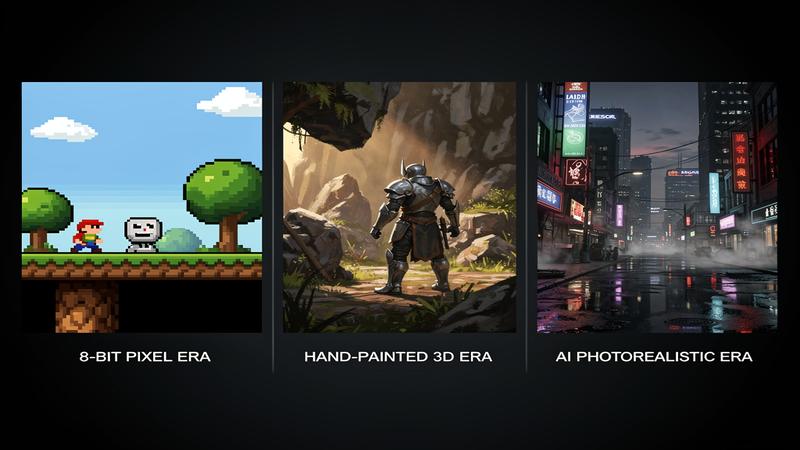
The arrival of AI in game development didn't begin with a manifesto or a product launch. It began with concept art. When Stability AI released Stable Diffusion as open-source software in August 2022, and Midjourney opened its doors to the public in the same year, game developers—accustomed to working with limited budgets and tight deadlines—immediately recognized what these tools could do. A concept artist who previously spent two days iterating on a character design could now generate fifty variations in an afternoon. Whether that was a blessing or a harbinger depended entirely on who you asked.
The tools evolved rapidly. By mid-2024, Midjourney v6 was producing images that routinely fooled even experienced artists at first glance. Platforms like Scenario.gg emerged specifically targeting game developers, offering fine-tuned models trained on game art styles and seamlessly integrated into production pipelines. Ubisoft partnered with Scenario.gg to generate more than 10,000 AI-assisted avatar cosmetics for the animated series tie-in Captain Laserhawk: A Blood Dragon Remix—an early signal that major publishers weren't merely experimenting but operationalizing.
The range of use cases has expanded steadily. Studios initially deployed AI for placeholder assets—temporary textures or concept sketches to fill gaps during development before human artists completed final versions. Then came texture generation, where AI tools could produce tileable surface maps in seconds. Then environment concept work, then UI mockups, then NPC portrait generation. Each incremental step felt modest. The cumulative result, by 2026, is that AI touches some part of the creative pipeline at a majority of commercial game studios—even at those that publicly deny it.
It's worth understanding that most studios use these tools in hybrid workflows rather than outright replacement. A concept artist might use AI to generate ten rough compositions in the morning, select the most promising one, then spend the day refining it by hand. A texture artist might use an AI tool to produce a base material, then hand-paint weathering details and fine-tune normal maps. These hybrid workflows complicate the public narrative, which tends toward binary extremes: either AI is replacing artists or it's just another brush in the toolkit. The reality, as usual, lives in the uncomfortable middle—and different companies navigate it very differently.
The Business Case: Why Studios and Indies Are Betting on AI
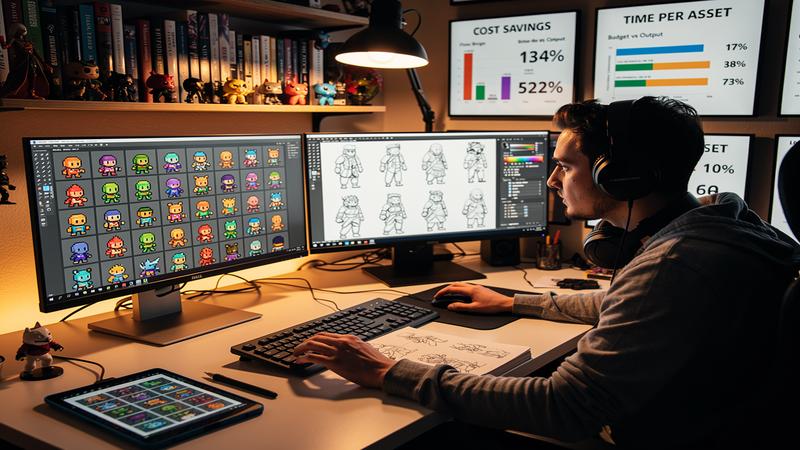
The economic argument for AI-generated assets is not theoretical. It is documented, specific, and compelling to anyone running a studio on a tight budget. Unity's 2025 Gaming Report surveyed developers across the industry and found that 79% hold a positive view of AI tools, with 40% of studios reporting productivity gains of 20% or more after integration. Those numbers don't exist in isolation from the financial pressures facing game development: rising engine licensing costs, increasingly expensive distribution, and a talent market that has spent years driving salaries upward in competitive cities.
The impact on independent developers is even more dramatic. A Q3 2025 survey of more than 2,000 developers found that 66% are using AI tools in their workflows, with 40% using AI specifically for art asset generation and 50% for texture creation. The case study that circulates most often in indie development communities is Lost Lore, a fantasy RPG where the team used AI-assisted tools to generate 17 character concept designs in under one week—a task that would have taken a traditional freelance pipeline roughly 34 business days. The cost differential was similarly stark: approximately $10,000 in AI tool subscriptions and iteration time, compared to an estimated $50,000 for equivalent human-commissioned artwork.
For a two- or three-person studio trying to bring an ambitious vision to life without venture capital, that gap is not marginal—it's existential. AI tools have become a genuine equalizer, allowing small teams to produce visuals that compete with studios many times their size. The Steam ecosystem reflects this: after Valve introduced mandatory AI disclosure requirements in January 2024, the platform actually saw an increase in indie titles entering development, suggesting that the tools are enabling creators who would otherwise have been priced out of production.
Larger publishers have different motivations but equally concrete incentives. A AAA game shipped in 2026 might contain tens of thousands of unique assets—textures, props, background characters, environmental details, UI elements. Even a 10% reduction in per-asset production cost translates to millions of dollars at scale. The generative AI gaming market is projected to reach $7 billion by 2030 ([Newzoo, 2025]), a figure that reflects not just tool licensing revenue but the downstream savings studios expect to capture through faster, cheaper production.
The cautionary data point that often gets buried in these conversations: the same Q3 2025 survey found that 18% of indie projects that relied heavily on AI assets failed during development, with over-reliance cited as a contributing factor. Studios that used AI to skip foundational art direction—rather than accelerate it—found themselves with assets that lacked coherence, that didn't serve the game's tone, and that couldn't be iterated upon because no human artist had developed the underlying visual language. The tools are powerful; they are not a substitute for creative direction.
"AI can generate a thousand images. It takes a human to know which one is right."
The Human Cost: Artists, Unions, and the Fight Back
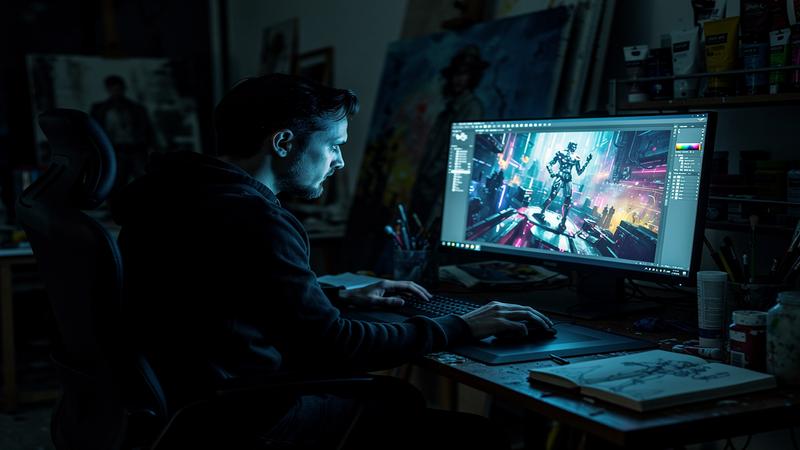
The GDC 2026 report's most striking finding isn't the overall negative sentiment—it's where that negativity is most concentrated. Among visual and technical artists, 64% view generative AI as a negative force. Among game designers and narrative writers, 63%. Among programmers, 59%. These are the people closest to the production pipeline, the workers who can see most clearly what's happening to the jobs around them. Only 7% of respondents hold a positive view of AI's impact on the industry—down from 13% just one year prior. The trajectory is unambiguous.
The most consequential labor action of the era was SAG-AFTRA's video game strike, which began in July 2024 and ran for nearly a year before a settlement was reached in June 2025. The strike's core demands were not just about wages—though the 24%+ pay increases secured in the deal were substantial—but about AI: specifically, the right to informed consent before any performer's voice or likeness could be used to train generative models, and the requirement for additional compensation when AI tools were used to extend or replicate a performer's work.
The case that crystallized the stakes: Epic Games was subsequently charged by SAG-AFTRA for allegedly using AI to replace the work of voice actors in generating new lines for the iconic Darth Vader character in Fortnite. Whether a contracted performer's recorded voice can be processed through an AI model to generate novel dialogue—without their knowledge or additional payment—is the legal question that will define the next decade of the entertainment industry. The SAG-AFTRA deal established that the answer, at least for its members, is no.
Meanwhile, IATSE—the International Alliance of Theatrical Stage Employees—organized 21 motion capture and performance capture workers at 2K Games, a landmark for a category of game industry labor that had long operated outside traditional union protections. The broader unionization momentum is measurable: in the GDC 2026 survey, 82% of US-based respondents said they support unionization in the games industry, and 74% of student respondents—the next generation of developers—expressed concern about their future job prospects in a field increasingly penetrated by AI tools.
A report by Aftermath documented what it described as the experience of working for a studio that mandated AI tool usage: developers described an atmosphere of anxiety, resentment, and creative alienation, with artists required to use tools they found ethically troubling under threat of being seen as obstructionist. "An overwhelmingly negative and demoralizing force," one anonymous developer told the outlet. This account doesn't represent every studio's culture, but it illuminates the difference between AI as an opt-in productivity enhancement and AI as a top-down cost-cutting mandate imposed on reluctant workers.
Player Perception: Does Anyone Actually Care What Made the Art?
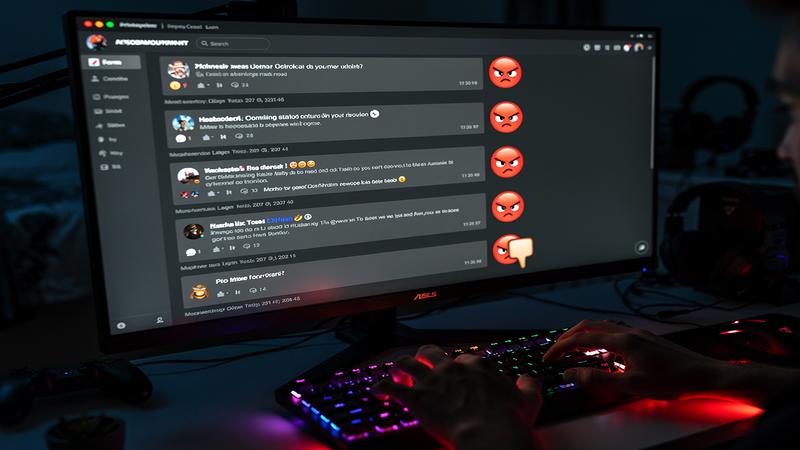
The instinct among some publishers has been to assume that players won't notice, won't care, or will quickly forget. The data from 2024 and 2025 suggests this is a serious miscalculation—at least among the PC and console gaming communities that drive review scores, social media discourse, and word-of-mouth purchasing decisions.
Quantic Foundry surveyed more than 1.75 million gamers in 2025 and found that 62.7% indicated they felt very negatively about the use of generative AI in video games, particularly in the creation of art, music, audio effects, dialogue, and narrative elements. That figure is remarkable for two reasons: the sample size makes it among the most statistically robust data points in the debate, and the intensity—"very negatively," not merely "somewhat concerned"—signals that this isn't a passive preference but an active position that shapes purchasing behavior.
The case of Clair Obscur: Expedition 33 became the emblematic flashpoint of 2025. The French indie RPG swept The Game Awards with nine wins including Game of the Year, earning widespread critical acclaim and genuine player love. But sharp-eyed fans noticed anomalies in certain textures—artifacts and distortions characteristic of AI-generated imagery—and the studio quietly patched them out in subsequent updates without changelog acknowledgment. When producer François Meurisse eventually confirmed that some AI-generated textures had been used in the game, the Indie Game Awards rescinded two honors it had granted the title, citing a hard stance against generative AI. The studio's reputation survived—barely—but the episode established that silent remediation is not the same as transparent communication, and that players notice the difference.
Other studios didn't navigate the moment as gracefully. Jurassic World Evolution 3 from Frontier Developments included AI-generated scientist portrait images that were spotted and called out by the community; the studio removed them in a June 2025 patch after sustained backlash. The Call of Duty: Black Ops 7 team faced significant criticism over AI-generated calling card cosmetics, and Activision was subsequently required to add explicit disclosure language to the game's Steam listing. The pattern across these cases is consistent: undisclosed use, community detection, public outrage, reactive removal or disclosure.
Larian Studios—the developer behind Baldur's Gate 3, one of the most acclaimed games of the decade—navigated the moment by making an early, public commitment. After it emerged that the studio had briefly experimented with AI-generated concept art (which was then handed off to human artists for completion), the community response was sharp enough that Larian pledged to discontinue the practice entirely. The decision appears to have been driven as much by player relations as by internal ethics, but the result was the same: a clear, enforceable policy that preserved community trust.
The audience split matters here. Mobile game players, and to a somewhat lesser extent free-to-play PC game communities, have shown considerably less sensitivity to AI asset usage. The economics of mobile development—where an average title might spend more on user acquisition than on all its artwork combined—makes AI tools an obvious fit, and player expectations around production values are calibrated differently. The controversy is concentrated in the communities around premium, narrative-driven, or creatively ambitious games—exactly the communities most likely to feel that the artistry of the work is part of what they're paying for.
The Road Ahead: Regulation, Coexistence, or Collapse?
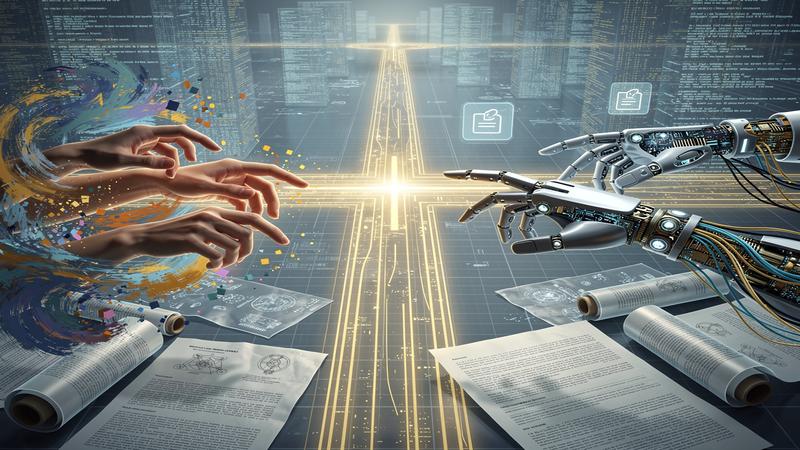
The regulatory environment in early 2026 is best described as embryonic. Valve's Steam disclosure requirement—introduced in January 2024—was a genuine step forward, but it is voluntary in practice (studios self-report), limited in scope (it doesn't require disclosure of AI use in pre-release development, only in shipped content), and carries no enforcement mechanism beyond potential removal from the platform. The EU AI Act, which came into full effect in 2025, establishes frameworks for high-risk AI applications but treats creative content generation as a lower-risk category, leaving significant gaps for the games industry specifically.
The SAG-AFTRA deal stands as the most substantive precedent for what meaningful regulation might look like: consent before use, transparency about when AI is deployed, and additional compensation when a human worker's likeness or voice is used to generate novel content. The challenge is that these protections cover only union members—a minority of the games industry workforce—and apply only to performance capture and voice work, leaving concept artists, texture artists, environment artists, and UI designers without equivalent protections.
Industry self-regulation has largely failed the test so far. The pattern of undisclosed use followed by reactive correction—seen across multiple high-profile cases in 2024 and 2025—suggests that without external accountability, many studios will default to non-disclosure. The argument that "players can't tell the difference" has proven repeatedly wrong, and the reputational damage from discovered non-disclosure typically exceeds what transparent communication would have cost.
The demographic data from GDC 2026 is perhaps the most important long-term signal. 74% of student respondents expressed concern about their future career prospects in an industry increasingly reliant on AI tools. These are the people who will be making games in five and ten years. If the industry fails to develop a framework that makes the profession viable for the next generation—one that includes AI as a tool rather than a replacement—it risks a creative talent crisis that no amount of generative capability can fix. The tools can generate images, but they cannot generate the judgment, taste, and accumulated domain expertise that makes those images worth generating in the first place.
Conclusion
Generative AI in game development is not a passing fad, and it is not, by itself, either salvation or catastrophe. The technology is genuinely transformative—for small studios that can now build things they couldn't before, for large studios that can iterate faster than was previously possible, and for players who will eventually benefit from richer, more varied game worlds. The productivity gains are real. The creative possibilities are real. So, too, are the job losses, the labor violations, the creative shortcuts, and the erosion of player trust that follows from treating transparency as a liability rather than a foundation.
The cases that defined this era—Clair Obscur's silent texture swaps, Epic's Darth Vader controversy, the Call of Duty cosmetics backlash, Larian's community-driven pledge—share a common structure. In each case, the harm was not caused by using AI. It was caused by using AI without honesty. The studios that emerged with their reputations intact were the ones that disclosed, explained, and in some cases walked back decisions under community pressure. That is not a technology lesson. It is a trust lesson.
The 18% → 30% → 52% trajectory of negative industry sentiment is not slowing. The question the games industry must answer in the next two years—before regulatory frameworks force an answer—is whether it wants to build a model of AI integration around consent, transparency, and fair compensation for the workers it displaces, or whether it wants to continue optimizing for cost reduction until the backlash becomes untenable. The second path is cheaper in the short term. History suggests it is considerably more expensive in the long run.
AI-generated assets are now a permanent part of game development. The question is what kind of industry chooses to use them, and on what terms.