Co-op survival · Editorial analysis
GRAIN ROT review: fragile bodies, public lobbies, and the right crew
BestGames Editorial · Checked 2026-10-06 · 9 min read
A wooden body is disposable; a good crew is harder to replace. We examine the extraction loop, solo support, public rooms and the newer Expedition mode before you buy.
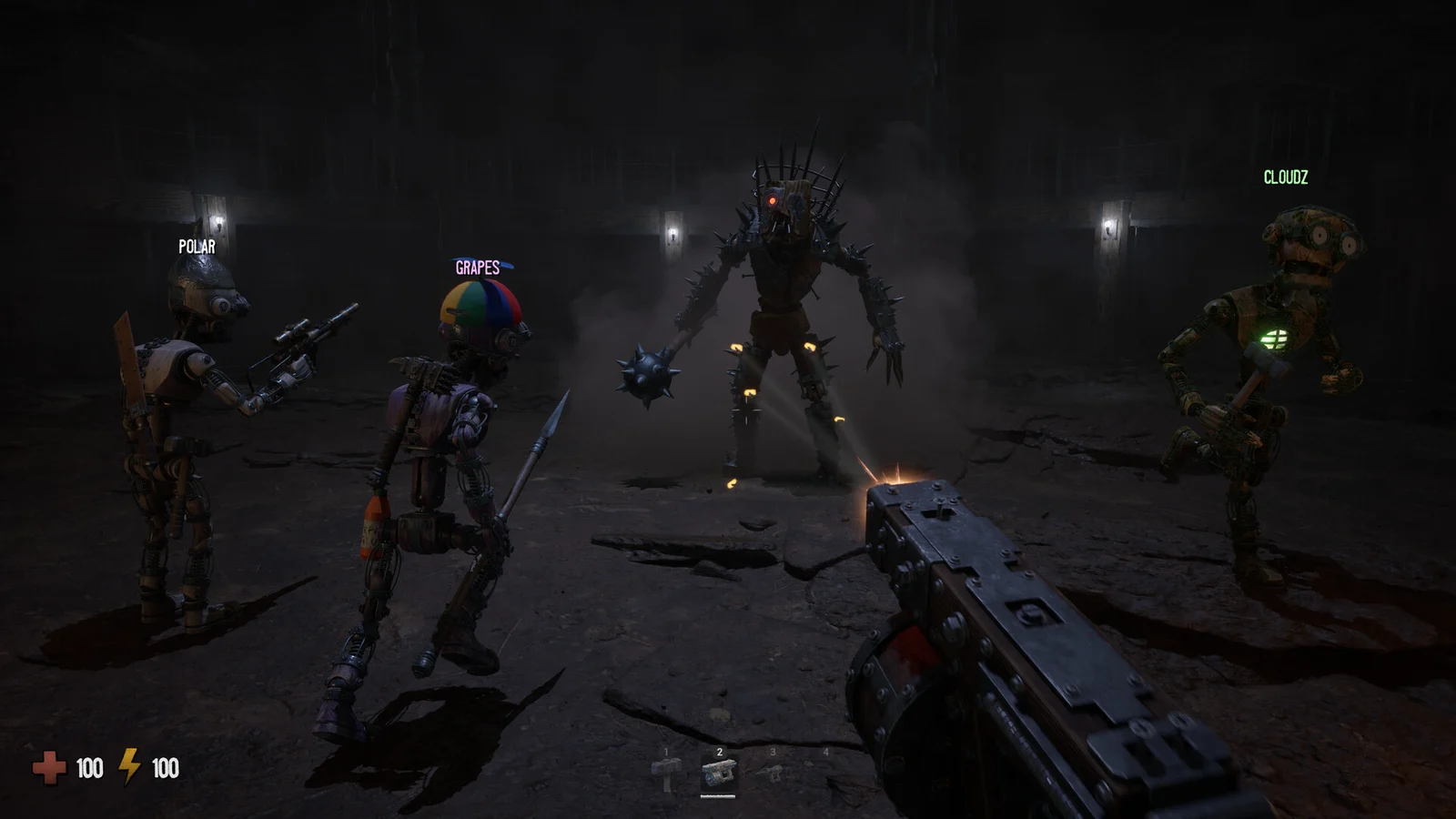
Game at a glance
- Release
- August 7, 2026 · full release
- Developer / publisher
- Beck & Branch Games / Neem Interactive
- Platform
- Windows desktop via Steam
- Players
- Solo and online co-op; around four recommended, not a verified hard cap
- Public rooms
- In-game server browser added after launch
- Latest notes checked
- Patch 1.13 · September 30, 2026
- US price checked October 6
- $9.99 base · $8.49 offer listed through October 8
- Review basis
- Official-source analysis; no hands-on playtest
Facts from: Official Steam listing and screenshot gallery · Developer announcements and patch notes on Steam · Developer launch FAQ (some lobby information superseded) · Official announcement: public lobbies added · Steam support: published system requirements.
Our take
A promising shortlist choice for a willing co-op crew that enjoys shared risk and physics chaos. Watch current unedited gameplay before buying, especially for solo play or Expedition. Our recommendation is provisional because we have not tested the game.
Best suited to: Small groups who enjoy risky scavenging, recovery attempts and a shared home project.
Keep in mind: Paid Windows game; each player needs a copy. Public rooms exist, but we have not measured activity or tested connections.
What stands out
- A broken body can lead to a recovery attempt rather than immediate removal.
- Persistent rebuilding gives extracted resources a purpose.
- Public-room access and Expedition broaden the documented options.
Reasons for caution
- A good fit depends on your crew’s tolerance for mischief.
- Solo support does not establish the quality of solo play.
- Performance, connection quality and lobby activity remain untested.
A wooden body makes every mistake more interesting
GRAIN ROT’s strongest idea is that your body is equipment you can lose. You inhabit a wooden vessel through a Living Spark; destruction releases that Spark rather than immediately removing you from play. The official description combines breakable bodies, physics interactions and expeditions through shifting ruins. That gives the premise a useful distinction from a conventional cooperative shooter: a rescue can involve finding another body, rather than simply waiting beside a fallen teammate.
This is a research-led review of the purchase proposition, not a report from a completed play session. We checked the Steam listing, the developer’s FAQ, its public-lobby announcement and update notes through October 6, 2026. We have not tested combat feel, connection quality, difficulty or frame rates. The images here are official promotional screenshots, not evidence that we played the scenes shown.
Our provisional verdict is that this belongs on a cooperative group’s shortlist if its members enjoy physical chaos and shared risk. A solo buyer should be more cautious. A game can support one player without offering the same appeal to one player: the rescue stories, arguments over loot and accidental disasters described by its design depend on other people. The useful question is whether that kind of disorder sounds entertaining to your particular group.
Evidence: Official Steam listing and screenshot gallery · Developer launch FAQ (some lobby information superseded)
The trip matters because the return changes your home
The documented loop sends players down a cursed elevator, gathering resources and returning to rebuild an Outpost. Furniture can become scrap or gold, while the home base offers improvements and survivors to bring back. The developer’s FAQ distinguishes what you banked earlier from what you carry now: losing the entire crew costs the current expedition’s unbanked haul, rather than erasing all previously secured progress.
That distinction changes how we would evaluate the game. An extraction loop needs a reason to leave and a reason to stop. Bringing useful material home can make a modest expedition satisfying; pushing deeper makes the next decision harder because the cost of losing rises. A persistent home also gives a group something to discuss between outings. It is more concrete than watching a level number go up, provided the rebuilding choices remain interesting after the novelty fades.
We cannot establish how varied the ruins feel over repeated evenings. Nor can a gallery tell us whether hauling objects becomes a chore. Those are the two questions to ask of a current, unedited gameplay recording: does another descent create a new decision, and does transporting the reward add tension or only time? A short highlight reel full of mishaps is a poor way to judge either.
Evidence: Official Steam listing and screenshot gallery · Developer launch FAQ (some lobby information superseded)
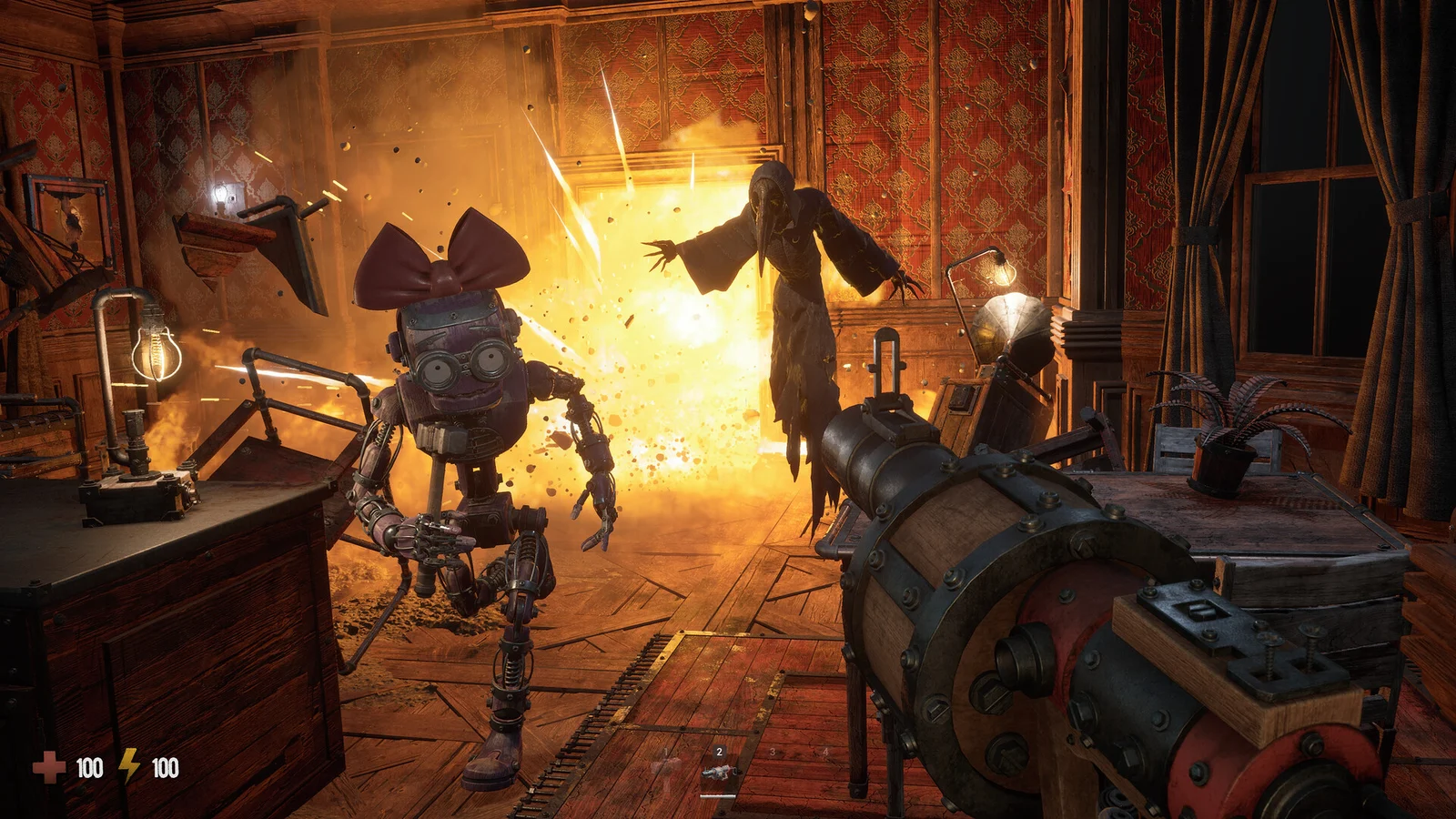
Your crew is part of the buying decision
The launch FAQ says solo play is supported and describes balancing around solo players and small squads. It recommends roughly four survivors for the intended experience, while describing larger groups in terms of what their setups can handle. Four is therefore a recommendation, not a verified hard maximum. Each participant needs their own copy. We would not turn this flexible wording into a promise that a large party will run smoothly.
For a group choosing its next evening game, the important purchase is collective. One enthusiastic buyer does not create a reliable crew. Agree on how many friends will actually play and how they react when somebody wastes a run. If the answer is two willing people, assess the game as a two-person activity; buying for an imagined four-person squad makes disappointment more likely.
The developer openly presents interference with teammates as part of the physics comedy. Our reading is that consent matters more here than mechanical skill. A crew that enjoys harmless sabotage may find the same incident funny that a progression-focused player finds exhausting. Establishing whether an outing is a serious resource run or a messy experiment is a practical way to reduce that friction. This is our suggested group habit, not a tested strategy or an official rule.
For a solo player, the case rests more heavily on atmosphere, scavenging and the survival loop. There is no second person to turn a mistake into a shared joke or assist with recovery. Solo support is useful information, but we would want to watch a recent solo session before recommending a purchase specifically for solitary play.
Evidence: Official Steam listing and screenshot gallery · Developer launch FAQ (some lobby information superseded)
Public rooms exist now: the launch FAQ is out of date here
One fact deserves particular care. The launch FAQ described Steam invitations without public matchmaking. Patch 1.07 subsequently added an in-game public server browser, and the official account published instructions for Public, Friends Only, Invite Only and Private lobbies. A current buying guide should not repeat the launch limitation. Equally, browsing available rooms should not be described as a guaranteed automatic matchmaking service.
That makes the game accessible to someone without an established crew, but it does not remove the social uncertainty. A public room can contain players with different aims, experience and tolerance for mischief. The best room for learning the basics may be different from the best room for a chaotic evening. Before treating public access as a replacement for friends, look for current reports about the hours and region in which you would actually play. We have not measured lobby population or tested joining.
Later update notes also describe passwords, persistent bans and grief-protection settings. These are useful host controls, not proof that every public session will be pleasant. For our shortlist recommendation, a known group remains the stronger case because expectations can be agreed in advance. Public rooms are an additional route into the game, not a reason to assume that the social experience will take care of itself.
If you are comparing information across websites, check the date and the claim together. A correct launch description can become an incorrect present-day recommendation. Here the developer’s newer announcement and shipped patch take precedence over its older FAQ. This is also why we avoid copying the common shorthand that turns an approximately four-player recommendation into a fixed player limit.
Evidence: Developer announcements and patch notes on Steam · Developer launch FAQ (some lobby information superseded) · Official announcement: public lobbies added
Expedition changes what failure means
The September 24 update added Expedition mode alongside Rainbow Ward. Expedition begins at a cold Outpost, where supplying Peter the Heater becomes part of survival. Falling heat brings penalties; heat reaching zero ends the run. Gumballs supply stat improvements, and successful outings raise the scrap requirement and dungeon difficulty. The developer describes this mode as a permadeath expedition, making it a different commitment from ordinary persistent rebuilding.
Our interpretation is that this introduces two competing uses for your attention: explore for future benefit, or secure what the current run needs to survive. A resource that might be attractive for progression can become something you urgently need to keep the heater going. A quota adds another reason to reconsider a comfortable routine. That is a promising source of decisions for a returning crew, though we have not verified the pace or balance in practice.
It also changes the emotional contract. Someone who wants a lasting home project may welcome incremental progress and dislike an expedition ending. Someone who enjoys restarting with a sharper plan may prefer the pressure. Neither response is a measure of skill. Choose the mode whose consequences your group finds motivating, and do not assume that more severe punishment automatically produces a better evening.
The official gallery images used here should not be read as screenshots of this newer mode. They illustrate the characters and action available in the store’s promotional material. We would want current Expedition footage before judging how clearly the heat system communicates danger, how long a failed attempt lasts, or whether the mode gives a new group enough room to learn. Those details can materially change whether a restart feels fair.
The latest patch is evidence of maintenance, not a polish score
The latest announcement we found was Patch 1.13 on September 30. Its fixes include controller navigation and melee-hitbox orientation. Earlier September patches addressed crashes and elevator-related stability, and Patch 1.11 added the Corrupted Builder. That last point prevents another stale description: the enemy announced as forthcoming in the September 24 post had already arrived in the subsequent notes.
The update history is encouraging because it shows the developer responding after release. It also makes launch impressions less dependable as a guide to today’s build. Neither observation proves that the current game is stable. Patch notes tell us what was changed, not how frequently the remaining problems occur or whether a particular computer will encounter them.
For a group with limited shared time, connection and save reliability deserve as much attention as another enemy or cosmetic option. An interrupted outing costs everyone an evening, even if the purchase price is modest. Look for current recordings that include hosting, joining and returning to the Outpost, not just combat clips. Reports tied to a version and specific setup are more useful than an undated assertion that the game is either flawless or broken.
Evidence: Developer announcements and patch notes on Steam

Check the computer and the whole group’s cost
Steam lists a Windows release on August 7, 2026, developed by Beck & Branch Games and published by Neem Interactive. The developer’s FAQ describes a full release rather than Early Access. Its listed platforms do not include macOS or Linux. The Steam support page specifies a 64-bit Windows system, 8 GB of memory, 10 GB of storage and a broadband connection. These are published requirements, not our performance results.
At our October 6 check, the US Steam listing showed a $9.99 base price and $8.49 sale price, with the offer ending October 8. Local prices, taxes and later offers can differ. More useful than the sale percentage is the total commitment: four separate purchases at the displayed sale price would be $33.96 before any applicable taxes. A cheap individual ticket can still be a purchase discussion for a group.
This is a paid desktop game, not something you can launch free inside this website. If you mainly use a phone, Chromebook or Mac, establish a supported way to play before buying; the artwork does not imply a browser version. Controller-related fixes also should not be treated as proof of Steam Deck verification. We have not checked handheld compatibility, and an ordinary controller feature is a different claim.
For hardware near the published minimum, a current recording on a comparable setup would be a better buying aid than screenshots. For friends, confirm that everyone can run the same game and join at the same time. These practical checks do more to protect a cooperative evening than deciding from an attractive discount alone.
Evidence: Official Steam listing and screenshot gallery · Developer launch FAQ (some lobby information superseded) · Steam support: published system requirements
Who should put GRAIN ROT on their shortlist?
Our strongest recommendation is conditional: investigate GRAIN ROT if you already have a small group that enjoys rescue attempts, physical mishaps and the decision to return with less than you hoped. The wooden-body premise gives the cooperation a memorable identity. The Outpost gives successful trips a destination, while Expedition offers a separate reason to accept harsher failure. Those are documented design strengths; their execution still needs hands-on assessment.
Be more cautious if you want a calm solo building game, guaranteed public-room activity, or dependable performance established by this review. The first is a different preference, and the latter two are questions our research cannot settle. Do not buy solely because a clip looks funny. A memorable accident tells you little about the quieter hour that surrounds it.
Before purchasing, watch a recent full session in your intended mode, confirm your group’s expectations and check the current store details. If the crew likes what happens between the highlights as much as the highlights themselves, the game has a coherent reason to earn a place on the next-play list. We leave it unscored because we have not played it, and would update this same article after a verified playtest rather than present researched information as personal experience.
Evidence: Official Steam listing and screenshot gallery · Developer announcements and patch notes on Steam · Developer launch FAQ (some lobby information superseded)
How we prepared this article
Official-source editorial analysis, checked October 6, 2026. We have not played GRAIN ROT; no score or firsthand performance claim is given.
Screenshot credits
Game imagery © Beck & Branch Games / Neem Interactive. Source: Official GRAIN ROT Steam screenshot gallery. Official promotional screenshots, resized and converted to WebP. They are not our gameplay captures and may predate recent updates. No open reuse license is asserted.