Today's Summary
Xbox has announced 268 job cuts and moved major franchises across studios. Today’s report also tracks publisher pressures, creator rules, platform changes, and new releases.
Editor's Viewpoint
Today’s stories ask who gets to make games, who gets to keep making them, and what players can still access. Xbox’s restructure puts people and familiar franchises through a major organizational change. Dear Villagers’ layoffs show that smaller publishers are under pressure too, while Battlestate is trying to create room for projects that conventional funding may overlook.
Platforms and rights holders also set the boundaries around play. Rockstar’s community rules, Trover’s unexplained disappearance from stores, and Dune: Awakening’s new solo option each change what players or creators can do. Those situations are not equivalent: one is a policy, one is an availability question, and one is a product feature. Clear explanations help audiences understand the difference.
The hopeful notes are grounded in concrete milestones: Stick It to the Stickman has a scheduled 1.0 release, and Bungie says Destiny content will return while Marathon evolves. Our view is that announcements should be judged by their next visible step. For workers, that means clear consultation and transition information; for developers, reliable partner terms; for players, accurate storefront and update details. That is editorial judgment, not a claim that every announced plan is already complete.
Xbox cuts 268 roles and redraws its studio map
Xbox says it is eliminating 268 roles across Halo Studios, other first-party teams, and central Xbox Game Studios functions. Chief content officer Matt Booty described the wider restructuring as roughly three-quarters complete. The same announcement changes where several studios and franchises sit inside Microsoft Gaming, making this both a jobs story and a substantial shift in production responsibilities.
Activision will oversee Rare and World’s Edge, while a new Activision team takes on the next Halo game. A smaller Halo Studios group will support existing titles and the community. Bethesda expands its remit to Obsidian, King takes over Microsoft Casual Games, and Playground Games and Turn 10 combine around Forza and Fable. Microsoft also says proposed Ninja Theory sale agreements fell through and staff consultation on a possible closure will begin; Arkane Lyon discussions continue.
Our view: the immediate human cost is clear, while the creative consequences will take longer to judge. Moving a franchise can bring resources and coordination, but it also changes leadership, working relationships, and accountability. Players should watch for named teams, release plans, and support commitments rather than assume a new org chart guarantees better games.
Key Points
- 268 Xbox roles are being eliminated.
- Activision will oversee the next Halo, Rare, and World’s Edge.
- Ninja Theory faces consultation over a proposed closure.
Battlestate Games opens a publishing arm for riskier projects
Escape from Tarkov developer Battlestate Games is moving into publishing with a new arm aimed at supporting what it calls ‘hardcore’ and risky games. Game Developer reports the company wants to work with projects that may not fit a conventional mass-market pitch. The announcement positions the publisher as an extension of a studio whose own success grew from a demanding, specialized PC game.
The key question is what support the label will actually provide: financing, production help, marketing, distribution, or some combination. The initial report describes an ambition, not a public slate of signed games or detailed submission terms. Developers considering a pitch should wait for clear information about budgets, rights, milestones, and the level of creative control before treating the new label as an available funding route.
Our assessment: ‘risk’ is an appealing publishing identity, but the useful test is whether the company can support projects through difficult production and launch decisions. A strong portfolio would show not just unusual concepts, but dependable partner practices and transparent terms.
Key Points
- Battlestate has launched a publishing arm.
- Its stated interest is in hardcore, riskier games.
- No public slate or full deal terms were included in the announcement.
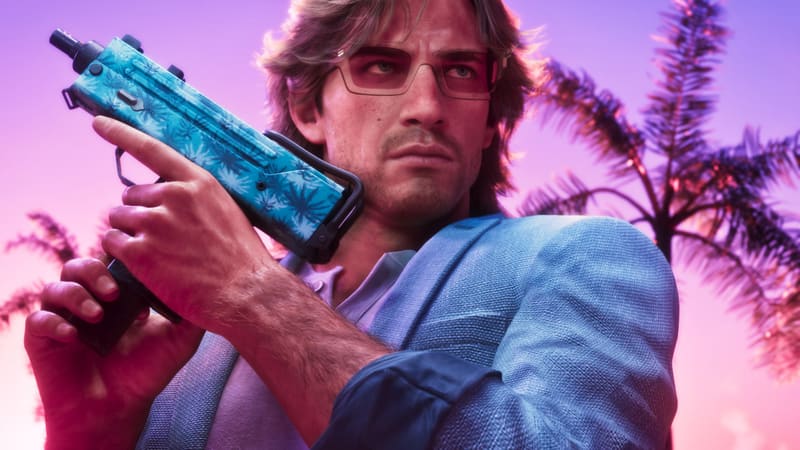
Rockstar publishes broad rules for community-made content
Rockstar Games’ community guidelines for mods and user-created content drew fresh attention this week as players looked ahead to Grand Theft Auto VI. The company’s rules cover content such as combining material from different Rockstar games, importing outside intellectual property, and using real people’s likenesses or voices without permission. Game Developer summarizes the policy as part of Rockstar’s broader effort to define what community projects it will authorize.
The existence of written rules does not by itself establish that every longstanding mod is newly targeted, nor does the page announce a PC version of GTA VI. Coverage has sometimes blurred those points. Creators should read the official terms directly and seek clarification where a project depends on commercial activity, third-party rights, or cross-title assets.
Our view: clear boundaries can help creators understand the difference between tolerated fan work and an authorized product. They also matter to the people whose work and likenesses are reused. Rockstar should explain enforcement and appeal paths just as plainly as prohibited uses, especially for community projects built over many years.
Key Points
- Rockstar’s rules cover mods and user-created content.
- Third-party IP, likenesses, and cross-title assets raise permission questions.
- The announcement does not confirm a PC release for GTA VI.
Bungie says Destiny continues as Marathon changes course
Bungie’s studio update sets out parallel plans for Destiny and Marathon after a difficult stretch for the company. The studio says it is beginning work to bring vaulted Destiny 2 campaigns, destinations, and raids back into the game for all players. It also says Marathon remains a major part of Bungie’s future, while acknowledging that the extraction shooter did not reach as many players as hoped.
For Marathon, the studio describes a continued effort to strengthen combat, world-building, and competitive tension while giving players more ways to engage. This follows Bungie’s earlier revised roadmap, which moved a larger update to December and placed a smaller refresh in October. The statement gives direction, but it is not a complete feature list or a guarantee that every planned change will arrive on a particular date.
Our assessment: maintaining two live games asks the studio to rebuild confidence through delivery. Returning Destiny content addresses a concrete player request; Marathon needs changes that make its identity and long-term support legible. The evidence will be the actual updates and how each game’s community responds.
Key Points
- Bungie says vaulted Destiny 2 content will begin returning.
- The studio acknowledges Marathon fell short of its audience hopes.
- Specific rollout details remain subject to future updates.
Sonic Team says the first film changed Sega’s plans for the franchise
Sonic Team head Takashi Iizuka says Sega leadership once considered ending the Sonic game series during a difficult period, and that he argued to keep it going. In an interview with One More Game, Iizuka described the franchise’s commercial and creative ups and downs and pointed to the 2020 live-action film as a turning point that changed the company’s plans.
Iizuka also discussed Shadow the Hedgehog, saying the character had once been expected to die at the end of Sonic Adventure 2 before fan popularity led to his return in Sonic Heroes. These comments are retrospective accounts from a franchise leader, not a newly announced game or a change to current release plans.
Our view: the story shows how a successful adaptation can renew attention around an established game series. The film did not replace the games; it helped alter the business case for continuing them. That is a useful reminder that cross-media success can create room for a franchise, but the games still need their own reasons for players to return.
Key Points
- Iizuka says Sega once considered ending Sonic games.
- He credits the 2020 film with changing the franchise’s course.
- The comments are historical context, not a new title announcement.
Dear Villagers confirms about 15 layoffs amid owner’s reorganization
French publisher Dear Villagers says a workforce reduction plan is affecting approximately 15 positions as its owner, Plug In Digital, reorganizes operations. The company had about 20 employees before the cuts, according to its statement reported by Game Developer. The process was still ongoing at publication, so the final number had not been confirmed.
Dear Villagers is known for publishing Caravan SandWitch and The Forgotten City. The company told Game Developer it intends to continue publishing and producing games. That commitment is important context, but it does not spell out how staffing changes may affect particular projects, partner support, or release schedules.
Our assessment: a small publisher’s staffing is closely tied to the support it can provide to external teams. Developers working with the label will need direct project-specific updates, while affected workers deserve clarity about timelines and assistance. The report documents another reduction in an industry where publisher capacity is already under pressure.
Key Points
- Approximately 15 roles are affected; final figures were pending.
- Plug In Digital cited an operational reorganization.
- Dear Villagers says it plans to continue publishing games.
Nex Playground touts growth while managing hardware and subscription costs
Nex Playground says its family-focused motion gaming device is expanding into Canada, the UK, and Germany, with Asia in its sights. In a Game Developer interview, international lead Tom Kang said UK sales are beating the company’s internal weekly and monthly targets. Nex previously secured $150 million in financing to support its international expansion, and its subscription library has added licensed games including Sonic Forces and Pac-Man.
Kang described supply-chain challenges and said the company is making hardware in Mexico as well as China to shorten regional lead times. He also said Nex aims to preserve margins on both hardware and software, expects to remain profitable this year, and does not plan to add advertising to the child-focused platform. The subscription attach rate above 80 percent is a company-reported figure, not an independently audited result in the interview.
Our view: Nex’s model depends on keeping a steady flow of playable content while controlling device costs. Automatically offloading games from a 64GB device may help capacity, but discoverability and redownload friction matter. The platform’s next test is whether international sales can sustain both hardware availability and a worthwhile catalog.
Key Points
- Nex says sales in the UK are above internal targets.
- The company is diversifying hardware production locations.
- Reported subscription and profitability figures come from Nex.
Stick It to the Stickman leaves Early Access with its 1.0 release
Free Lives’ physics-driven brawler Stick It to the Stickman is scheduled to reach version 1.0 on September 23, ending its Early Access period. The developer’s August update announced the date and teased additions including new characters and game modes. The premise turns office rivalry into a climb through a corporate tower, using slapstick combat and deliberately absurd workplace satire.
The move to 1.0 is a milestone, but it does not mean development or balance work ends. Players should check the live Steam announcement for the final launch notes and current availability, since the earlier post established a planned date rather than confirming today’s final build details. Early Access feedback has shaped the game, and the full release gives new players a clearer point of entry.
Our assessment: a version number is most useful when it arrives with a transparent account of what changed and what support follows. The game’s comic premise is easy to communicate; the long-term question is whether its combat variety and progression hold up beyond the novelty.
Key Points
- The announced 1.0 date is September 23.
- The August notice previewed new characters and modes.
- Check the live release notes for the final launch contents.
Dune: Awakening reaches consoles with solo play and broader settings
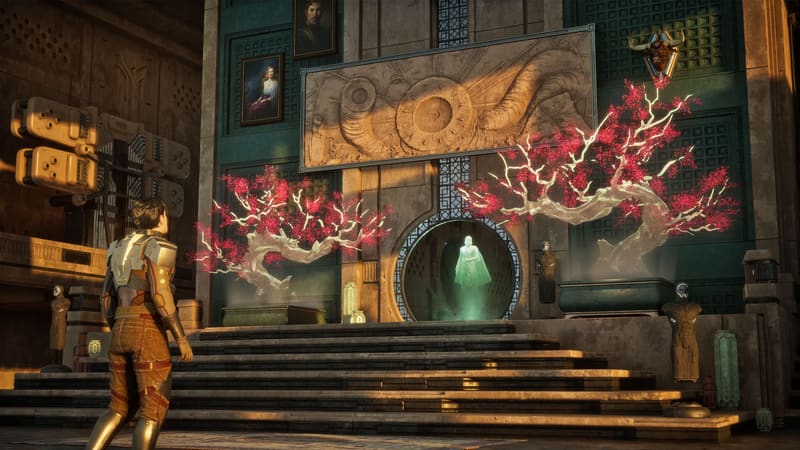
Funcom’s survival game Dune: Awakening launched on PlayStation 5 and Xbox Series X|S on September 22, alongside a major update across platforms. Xbox Wire says the release adds a single-player mode, expanded gameplay customization, and the conclusion to the game’s first story book. Console players receive the accumulated PC improvements, while the update also gives existing players new ways to approach Arrakis.
The solo option is a notable change for a game first framed around shared survival spaces. It gives players more control over pace and social exposure, though it does not automatically make every system identical to a traditional offline campaign. Funcom’s official launch post also lists a time-limited in-game reward for players during the September 17–October 22 window.
Our view: adding solo play alongside console release broadens the audience more meaningfully than a platform port alone. The test will be whether the settings let players shape a satisfying experience without obscuring the game’s progression or server rules.
Key Points
- PS5 and Xbox versions launched September 22.
- The release adds a solo mode and gameplay settings.
- A launch reward is available during a defined event window.
Trover Saves the Universe disappears from major digital stores
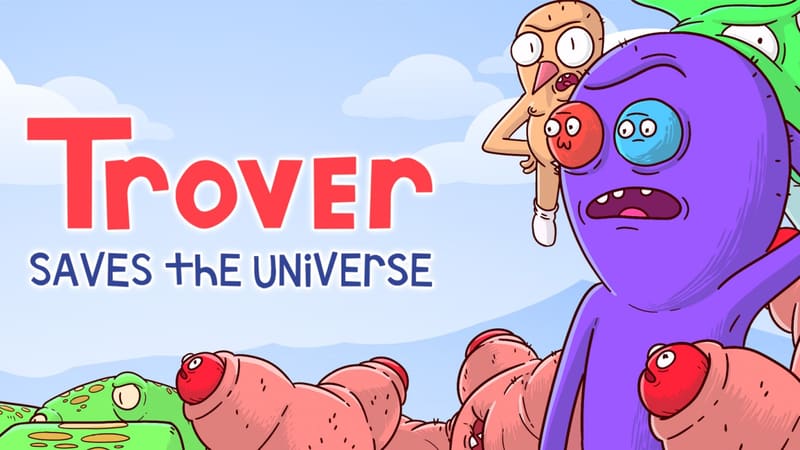
Trover Saves the Universe appears to have been removed from several digital storefronts, according to Video Games Chronicle. The 2019 comedy adventure from Squanch Games was no longer listed for purchase across the stores checked by the outlet. The report does not establish a public reason for the removal, so it should not be attributed to licensing, publisher strategy, or any individual controversy without further confirmation.
Delisting changes the path for new buyers, but existing owners’ access can depend on each platform’s rules and account status. VGC’s report describes store availability; it does not claim that the game has been remotely removed from players’ libraries. Physical copies may also remain available through resale, depending on platform and region.
Our assessment: storefront disappearance is a preservation issue as well as a sales change. Publishers and platform holders should explain whether a title is temporarily unavailable, permanently delisted, or returning in another form. Until the rights holder comments, the reason remains unknown.
Key Points
- VGC found the game unavailable for purchase on multiple stores.
- No official reason for the delisting was established in the report.
- The report does not say existing owners lost access.