Today's Summary
August 26's game conversation is about trust and scale. Roblox is restricting games that reward endless scrolling-style media feeds for younger audiences in Roblox Kids and Select. Schell Games, the studio behind Among Us 3D, reportedly laid off staff. Nvidia announced ray-traced Nanite, native anti-cheat, and DLSS 4.5 for its Gamescom 2026 lineup. Entity raised 5.8 million dollars for a browser-based, console-quality gaming platform, while Thatgamecompany launched a publishing arm to champion emotionally resonant games. Maverick Games signed with Focus Entertainment for debut racing title Clutch. Newzoo sized the global games market at 213.9 billion dollars in 2026, up 6.1 percent, and a new report put the EU industry at 24 billion euros across 6,600 studios. Gamescom Dev's head said smaller studios are the biggest market opportunity, India's game developer association picked 15 studios for its first Supernova cohort, Paradox officially revealed Afterworld, and Discord said it has not yet received a GTA 6 leak subpoena from Take-Two. The through-line: platform policy and headcount news dominate the headlines, but the money and talent signal is aimed squarely at small teams.
Editor's Viewpoint
The two loudest stories today are both about who gets to shape a platform. Roblox is pulling back on reward-driven feeds in its kids and select experiences, a direct response to the same scrutiny that followed a Senate child-safety investigation. Schell Games, a studio that helped define among-us-style play, is reportedly shedding staff. Set those next to a market that Newzoo says will grow 6.1 percent to 213.9 billion dollars, and the contradiction is the story. The industry has more money than ever and less certainty about who keeps a job or what a big platform will allow.
That is why the quieter items matter most. Gamescom Dev's head explicitly says smaller studios represent the biggest opportunity. India is funding 15 studios in its first Supernova cohort. Thatgamecompany is now publishing other people's games. Entity is betting 5.8 million dollars that the browser is the next console. Each one is a wager that the next great games will come from many small, nimble teams rather than a few broad platforms. The business model may be uncertain, but the direction is clear. Trust is being rebuilt at the edges, one small studio at a time.
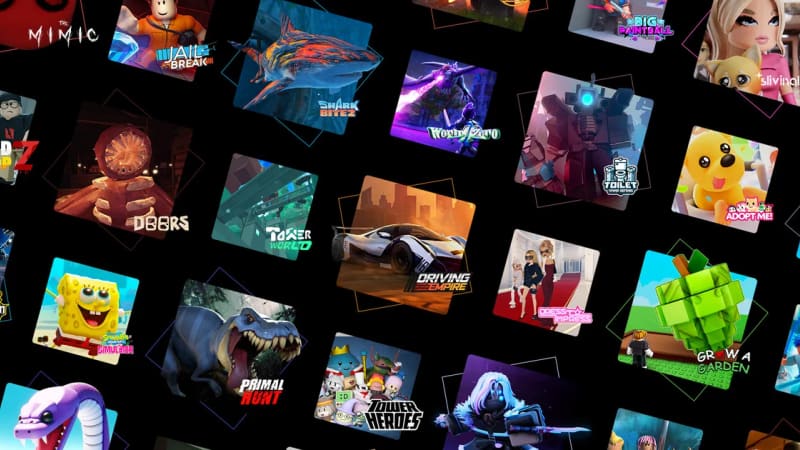
Roblox restricts games with reward-driven media feeds
Roblox is applying restrictions to games that feature reward-driven media feeds, specifically in Roblox Kids and Roblox Select. The change targets a design pattern where players are rewarded for endless scrolling, a mechanic that has drawn criticism for feeling like a TikTok-style engagement loop aimed at children. For a platform betting its future on young creators, the move is a deliberate attempt to draw a line between playful content and manufactured attention.
Creators should read this as a policy signal, not a bug fix. Roblox is actively choosing which incentive systems are acceptable, and reward-driven scrolling is now on the wrong side of that line. If you build or plan to build social-adjacent experiences on the platform, expect tighter definitions around engagement, more scrutiny of reward loops, and less tolerance for mechanics that make money from endless swiping. The era of "anything that keeps kids on the feed" is closing.
Key Points
- Targeted restriction — Reward-driven media feeds are limited in Kids and Select experiences.
- Engagement critique — The pattern mirrors criticism of TikTok-style endless scrolling.
- Platform signal — Roblox is now defining which reward loops are acceptable.
- Creator impact — Social-driven experiences face a tighter policy environment.
Schell Games reportedly lays off staff
Reports are circulating that Schell Games, the Pittsburgh studio known for educational titles and the upcoming Among Us 3D, has laid off staff. The studio has long been held up as an example of a sustainable, mission-driven developer, which makes the news land harder. Even studios with strong brands and a recognized pipeline are not immune to the 2026 contraction.
The pattern is now familiar. Teams that ship, that win awards, that have a memorable IP — they still face headcount decisions. For developers, the takeaway is not cynicism but planning. Reputation does not replace runway. If a studio with Schell's pedigree is trimming staff, every team should be asking harder questions about live-service costs, publisher dependency, and how many projects its current structure can actually carry.
Key Points
- Reported cuts — The studio is facing layoffs despite a strong reputation.
- Among Us 3D context — The cut comes during work on a high-profile franchise title.
- No immunity — Brand and mission do not shield a studio from contraction.
- Planning lesson — Runway and cost structure matter more than prestige.
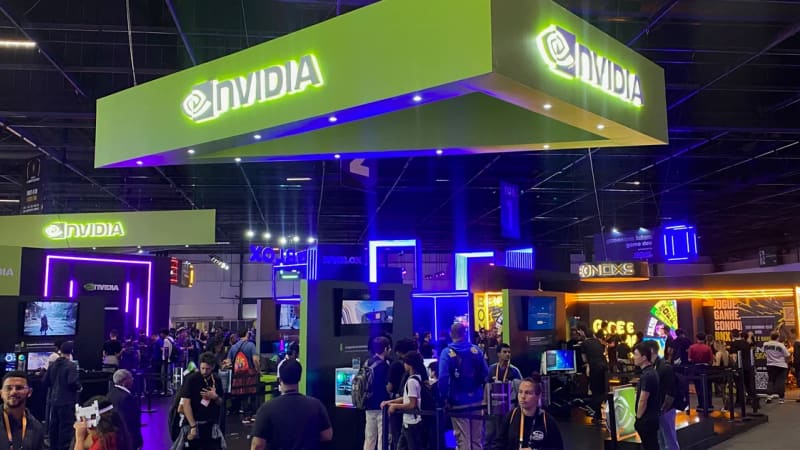
Nvidia brings ray-traced Nanite, native anti-cheat, and DLSS 4.5 to Gamescom
At Gamescom 2026, Nvidia announced a wave of technical upgrades spanning its 2026 lineup: ray-traced Nanite, native anti-cheat integration, and the next version of DLSS, version 4.5. Between the rendering improvements and the anti-cheat push, the announcement is as much about trust as it is about pixels. Anti-cheat is a multiplayer experience problem dressed up as a driver feature.
For developers, the meaningful part is the platform-level assist. Ray-traced Nanite promises higher visual fidelity without the usual asset budget, while native anti-cheat reduces the burden of building detection from scratch. The practical shift is that a lot of what used to be custom engineering — lighting, upscaling, cheat prevention — is becoming a plug-in foundation. That lowers the floor for smaller teams trying to ship competitive multiplayer without a dedicated security team.
Key Points
- Ray-traced Nanite — High-fidelity lighting and geometry coming to the 2026 lineup.
- Native anti-cheat — Platform-level cheat detection reduces studio overhead.
- DLSS 4.5 — The next upscaling generation is rolling out.
- Small-team lever — Complex systems are becoming accessible defaults.

Entity raises $5.8M for a browser-based console-quality platform
Entity has raised 5.8 million dollars to build a browser-based platform that aims to deliver console-quality gaming on the open web. The pitch rejects the app-store bottleneck: no installation, no storefront gatekeeping, just a link that runs a game. As engines and WebGPU mature, the line between native and browser is thinning fast.
This is part of a broader bet that distribution will move toward the web. For indie developers, a browser-first platform could mean a genuinely new channel for instantly playable titles, especially demos and social games. The biggest open question is performance and monetization — whether a browser can convincingly run a full console-scale game, and whether a link-based model can actually convert into revenue. If it works, it reshapes how small teams think about launch.
Key Points
- $5.8M raise — Fresh capital for a browser gaming platform.
- Console-quality goal — The ambition is no-install, near-native performance.
- Distribution shift — The web is being pitched as an alternative to app stores.
- Open question — Performance and monetization will decide if it scales.

Thatgamecompany launches Thatgamepublisher to champion emotional games
Thatgamecompany, the studio behind Journey and Sky, has launched Thatgamepublisher, a publishing arm dedicated to games that "move people through play." Rather than another platform holder, this is a studio with a distinct emotional identity choosing to use its name and experience to champion other people's work. It is a bet that a recognizable aesthetic and curatorial voice can be a publishing advantage.
For small developers, this is a meaningful new lane. A publisher that emphasizes emotional impact and a particular player experience can be more valuable than one that only offers generic distribution and marketing. If Thatgamepublisher can find and elevate games that fit its identity, it could become a real alternative for teams whose work does not fit the usual commercial mold. The question is how much editorial taste it can translate into a repeatable pipeline.
Key Points
- New publishing arm — Thatgamecompany is now publishing other studios' games.
- Curatorial thesis — The focus is on emotionally resonant play.
- Identity leverage — A recognizable studio can offer distinct publishing value.
- New lane — An alternative for teams outside conventional genre boxes.

Maverick Games partners with Focus Entertainment to publish Clutch
Maverick Games has signed a partnership with Focus Entertainment to publish Clutch, the studio's debut racing title. The deal hands the game a publisher with a strong track record in mid-budget, genre-focused releases. For a new studio founded by former Forza Horizon talent, the match is about getting an established distribution and marketing spine behind a first game.
The broader note here is that founding a new studio does not mean going it alone. Experienced teams still want a partner who understands a specific genre's audience. Racing is a genre where polish and feel are everything, and a publisher that can market that to the right players is a real asset. This is another sign that mid-budget, focused games remain a viable path when paired with the right publisher.
Key Points
- Debut title — Clutch is Maverick Games' first racing game.
- Publisher match — Focus Entertainment brings mid-budget racing expertise.
- Studio origin — Founded by former Forza Horizon talent.
- Genre signal — Focused mid-budget games still find publishing support.

Newzoo: global games market to generate $213.9bn in 2026
Newzoo is forecasting the global games market will generate 213.9 billion dollars in 2026, up 6.1 percent year over year. The growth is modest but consistent, and it sits oddly against a year punctuated by layoffs and studio closures. The market is getting bigger while a significant share of the people making games feel less secure.
That gap is worth sitting with. Revenue growth is real, but it is not flowing evenly to the people doing the work. Platform owners, live-service operators, and a shrinking set of blockbuster publishers are capturing much of the upside. For independent developers, the useful reading is that demand is growing even if access is not. The market can grow 6 percent while a studio down the street still announces layoffs.
Key Points
- $213.9bn — Newzoo's 2026 global forecast.
- 6.1% growth — Modest but consistent annual expansion.
- Growth vs. pain — Revenue rises even as layoffs continue.
- Uneven capture — The upside is concentrated, not widely shared.

EU games industry generated €24bn in 2024 across 6,600 studios
A new report puts the European games industry at 24 billion euros in 2024, spanning 6,600 studios and a workforce that exceeded 95,000 people. The numbers offer a rare, concrete picture of a region often described in broad strokes. Europe is not just a market; it is a dense ecosystem of studios of every size, with a deep bench of talent.
The report also invites a harder question about sustainability. A large, fragmented base of studios means a lot of small businesses carrying the sector, and small studios are the most exposed to contraction. For policymakers and investors, the data argues for targeted support for the long tail — funding, distribution, and talent retention — rather than only chasing a few blockbusters.
Key Points
- €24bn — Total EU games revenue in 2024.
- 6,600 studios — A large and fragmented studio base.
- 95,000+ workforce — A substantial regional talent pool.
- Policy signal — Supporting the long tail matters more than chasing hits.

Gamescom Dev lead says smaller studios are the biggest opportunity
Gamescom Dev's head has said that smaller studios represent the biggest opportunity in the games market. The comment reframes a year dominated by layoff headlines. Instead of mourning the contraction of big-budget teams, the argument is that the growth in games is happening in the long tail — where small teams can iterate fast, target niche audiences, and ship without a hundred-person production schedule.
This matters for how we talk about the industry's health. If opportunity is really concentrated in small teams, then support — funding, tooling, distribution, and visibility — should flow there too. The challenge is that small studios are also the most fragile. Opportunity without runway is just a nice idea. The market is telling us where the potential is; the question is whether the rest of the ecosystem will back it up.
Key Points
- Long-tail thesis — Growth is happening among smaller teams.
- Fragility risk — Small studios are also the most exposed to contraction.
- Support question — Funding and visibility must reach the long tail.
- Reframing the market — Opportunity is shifting away from mega-teams.
India's game developer association picks 15 studios for first Supernova cohort
The Game Developer Association of India has selected 15 studios for the first cohort of its Supernova program. The initiative is designed to incubate and elevate emerging Indian game studios, giving them structured support, mentorship, and visibility. It is a concrete attempt to formalize what has been a steadily growing regional scene.
Regional cohorts like this matter beyond the companies themselves. They build the connective tissue that lets a market develop a shared vocabulary, a pipeline of talent, and a track record that publishers and investors can actually evaluate. For developers outside India, the lesson is that ecosystem-building is a deliberate craft — and that the next wave of notable games may come from places that are actively investing in their own long tail.
Key Points
- 15 studios — The first Supernova cohort has been selected.
- Incubation focus — Mentorship, support, and visibility for emerging teams.
- Regional growth — India's game scene is formalizing its pipeline.
- Ecosystem craft — Deliberate support builds the next generation of studios.
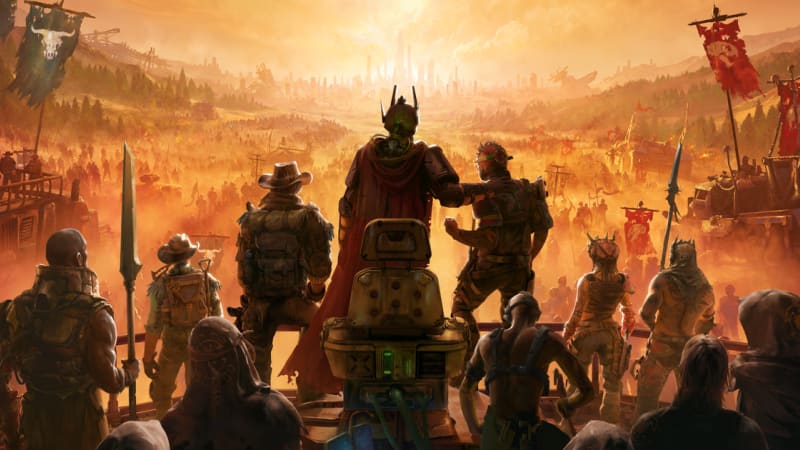
Paradox officially reveals Afterworld, a Fallout-flavoured grand strategy game
Paradox has officially revealed Afterworld, a grand strategy game from the Crusader Kings developers that trades medieval courts for a post-apocalyptic America. The pitch is deliberately absurd and intriguing: you can overrun the country with a cannibal cult. It is the studio's signature mix of deep systems and darkly comic fiction, aimed squarely at the grand strategy audience.
The reveal is a genre signal more than a technical one. Grand strategy is having a moment where experimental settings are getting real budgets, and Paradox is clearly willing to lean into premise-driven design. For developers, the takeaway is that systems games do not have to be about history textbooks. Strong, weird fiction plus player-driven emergent narrative is a durable and increasingly popular combination.
Key Points
- Official reveal — The project is now public.
- Post-apocalyptic setting — A radical departure from Crusader Kings.
- Darkly comic premise — A cannibal cult can overrun America.
- Genre trend — Grand strategy is embracing experimental settings.

Discord says it has not yet received a GTA 6 leak subpoena from Take-Two
Discord has said it has not yet received a subpoena from Take-Two in the GTA 6 leaker hunt, though a marketing director added that the company would evaluate the validity and scope of any such request if it arrives. The statement comes after reports that Take-Two had filed subpoenas seeking platform records to identify leakers.
The careful wording reflects a broader tension. Platforms want to cooperate with legitimate legal requests, but they also sit on enormous amounts of user data and face pressure to protect users and comply with privacy norms. For the industry, this is the beginning of a long legal fight. How platforms respond to leak-related subpoenas will set the precedent for how aggressively rights holders can pursue people who post stolen builds.
Key Points
- No subpoena yet — Discord says it has not received the request.
- Conditional cooperation — It would evaluate the scope if one arrives.
- Platform tension — Data requests sit against privacy norms.
- Legal precedent — The response will shape future leak pursuits.