Daily Brief
April 23 is dominated by Microsoft's dramatic reversal on Game Pass pricing and content strategy, Bethesda's surprise drop of The Elder Scrolls IV: Oblivion Remastered, and the unrelenting wave of layoffs hitting studios from Behaviour Interactive to Iron Galaxy. Meanwhile, crowdfunding records, mobile market strength, and a major live-service pivot add layers to an already dense news day.
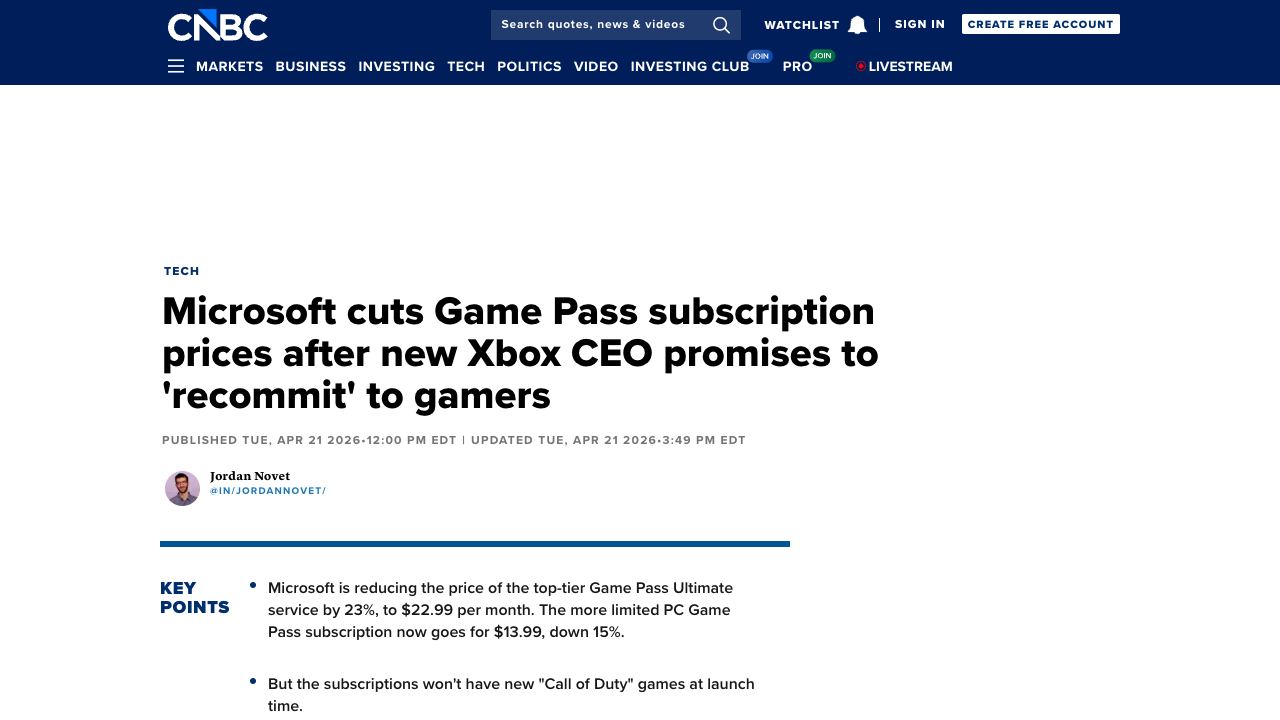
Xbox Game Pass cuts Ultimate to $22.99 but removes Call of Duty day-one access in a dramatic subscription reversal
Microsoft officially rolled back Xbox Game Pass Ultimate pricing from $29.99 to $22.99 per month on April 21, a rare admission from new Gaming CEO Asha Sharma that the service had become "too expensive for players." The price cut, which also reduced PC Game Pass from $16.49 to $13.99, reverses part of the deeply unpopular October 2025 hike that pushed Ultimate up 50 percent.
The trade-off is significant: future Call of Duty titles will no longer launch day-one on Game Pass. Instead, they will arrive roughly a year after release during the following holiday season. Other first-party Xbox games like Fable and Forza Horizon 6 are still expected to debut day-one on Ultimate, but the removal of Activision's flagship franchise marks a fundamental change in how Microsoft values its $69 billion acquisition within the subscription ecosystem.
What changed and why it matters
- Price reality: Microsoft acknowledged that the $29.99 Ultimate tier had hit a ceiling and was driving churn.
- Cod delayed: Removing day-one Call of Duty weakens the subscription's value proposition for shooter fans.
- Strategic signal: The move shows Microsoft prioritizing subscriber retention over using COD as a loss-leader.
The Elder Scrolls IV: Oblivion Remastered launched as a shadow drop on April 22 across PS5, Xbox Series, and PC
Bethesda surprised the industry on April 22 by shadow-dropping The Elder Scrolls IV: Oblivion Remastered with no prior marketing campaign or extended teaser cycle. The remaster, developed in partnership with Virtuos, delivers upgraded visuals, improved combat feel, and quality-of-life updates while preserving the original's open-world structure and quest design.
The release timing is notable for two reasons. First, it arrives just before the Diablo IV: Lord of Hatred expansion on April 28, creating a concentrated RPG window. Second, it demonstrates Microsoft's willingness to use shadow drops for catalog-deepening releases, a tactic more commonly associated with indie publishers and Nintendo Directs than with major Bethesda RPGs. For players, the immediate availability removes the traditional hype-to-wait gap entirely.
Why the shadow drop worked here
- Brand trust: Oblivion's legacy meant it did not need a months-long marketing runway.
- Platform timing: The release filled a quiet mid-week window before the next major expansion wave.
- Game Pass synergy: Day-one availability on Ultimate gave subscribers an instant high-value addition.

Layoffs hit Behaviour Interactive, Iron Galaxy, Piranha Games, and Coffee Stain Malmo across early April
The game industry's workforce crisis deepened through April with multiple confirmed cuts. Behaviour Interactive, developer of Dead by Daylight, announced redundancies on April 22. Iron Galaxy Studios laid off approximately 90 employees on April 17. Piranha Games cut roughly 38 positions on April 3. Coffee Stain Malmo shut down entirely on April 2. The cumulative toll since 2023 has now exceeded 30,000 jobs lost across the sector.
What makes April's wave distinct is its breadth. The cuts span AAA support studios, live-service operators, independent developers, and mobile-focused teams. A March 2026 Skillsearch survey found that 44 percent of games industry professionals have considered leaving the industry entirely, while 22 percent reported being laid off within the past twelve months. The human cost is no longer isolated to post-pandemic correction; it has become a structural feature of the market.
The human cost by the numbers
- 30,000+ jobs: Estimated total layoffs across gaming since 2023.
- 44% considering exit: Nearly half of surveyed professionals have thought about leaving.
- Studio closures: Coffee Stain Malmo is the latest complete shutdown in a growing list.
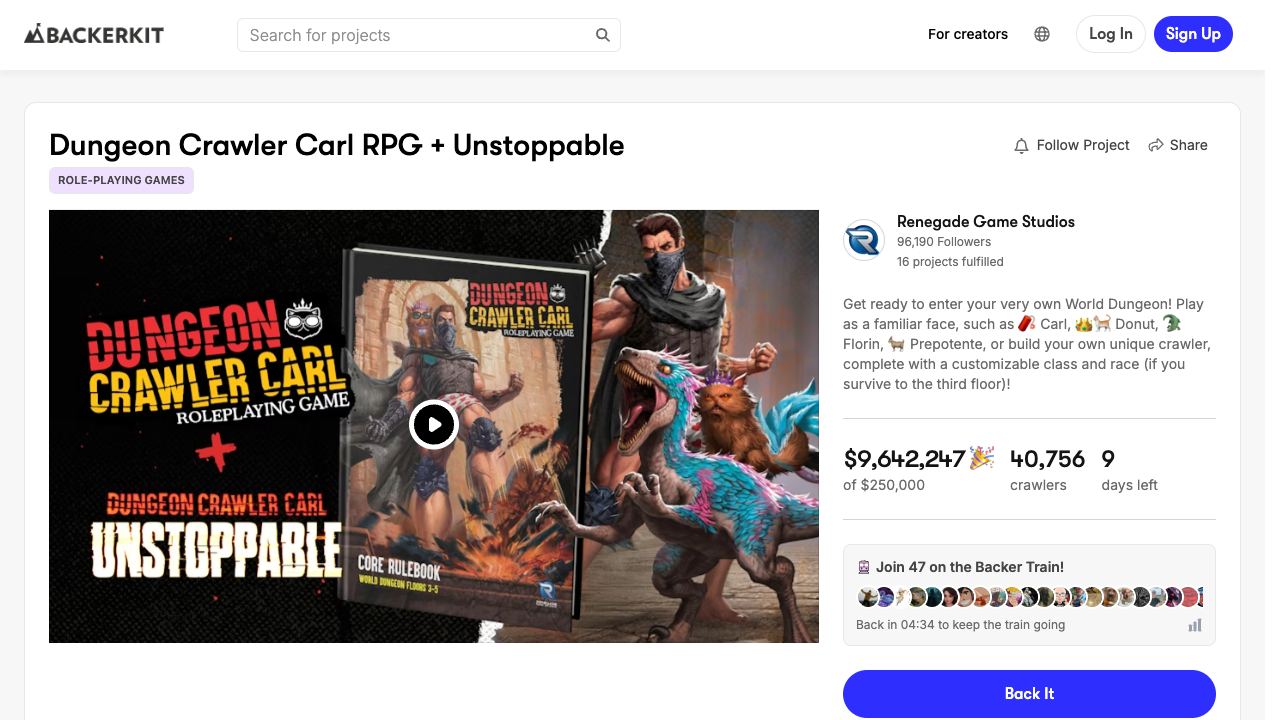
Dungeon Crawler Carl TTRPG raised over $7 million on BackerKit becoming the third-highest TTRPG campaign ever
Renegade Game Studios' Dungeon Crawler Carl TTRPG crowdfunding campaign on BackerKit has become one of the most successful tabletop RPG funding efforts in history. Launched on April 14, the campaign raised over $5 million in its first day and has since surpassed $7 million total, making it the third-highest-grossing TTRPG campaign on the platform behind only Brandon Sanderson's projects.
The campaign features two games: a full skill-based d20 tabletop RPG covering the World Dungeon setting, and Dungeon Crawler Carl: Unstoppable, a solo or two-player card-crafting deckbuilder. With over 65,000 pre-launch followers and a $490 "Loot Box" pledge tier as the most popular option, the project demonstrates the growing crossover power of LitRPG novel audiences into tabletop gaming. The campaign runs until May 15 with planned delivery in October 2026.
Campaign highlights
- $5M in one day: The fastest TTRPG funding surge in BackerKit history.
- Dual product: Core RPG and deckbuilder card game offered together.
- Crossover appeal: Matt Dinniman's novel series provided a built-in audience of millions.

44 percent of game developers have considered leaving the industry amid ongoing redundancies and weak job security
A comprehensive March 2026 survey by Skillsearch has revealed the depth of workforce anxiety gripping the games industry. The study found that 44 percent of games industry professionals have considered leaving the sector entirely as a direct result of ongoing redundancies. An additional 22 percent reported having been laid off within the past twelve months, a figure that underscores how normalized job loss has become.
The survey also highlighted a troubling brain-drain dynamic. Experienced mid-career developers, traditionally the backbone of production teams, are reportedly the most likely to seek exit paths. Many are pivoting to adjacent industries such as software development, film and VFX, or corporate training, taking with them years of specialized knowledge. For studios still hiring, this creates a paradox: salaries for remaining senior roles are rising even as total headcounts shrink.
Key survey findings
- Brain drain risk: Mid-career developers are the most likely to leave for other industries.
- Salary paradox: Fewer available seniors means higher compensation for those who stay.
- GDC 2026 context: The conference was described as unusually heavy with job seekers.
Peter Molyneux returns to the god-game genre with Masters of Albion entering Early Access on April 22
Peter Molyneux's 22cans launched Masters of Albion into Steam Early Access on April 22, marking the designer's return to the god-game genre that defined his early career with titles like Populous, Dungeon Keeper, and Black and White. The game blends town-building, deity-level environmental manipulation, and tactical combat into a single experience.
For industry observers, the launch carries significant symbolic weight. Molyneux's reputation has been complicated by overpromising on previous projects, making Masters of Albion a test of whether Early Access transparency can rebuild trust with a skeptical audience. The initial Steam reception will be closely watched as a bellwether for whether legacy designers can still find footing in a market dominated by live-service and roguelike trends.
What to watch in Early Access
- Trust rebuild: Transparent development updates could counter past overpromise perceptions.
- Genre nostalgia: God games have been underserved since the 1990s and early 2000s peak.
- Steam reception: Player reviews in the first week will shape the project's trajectory.
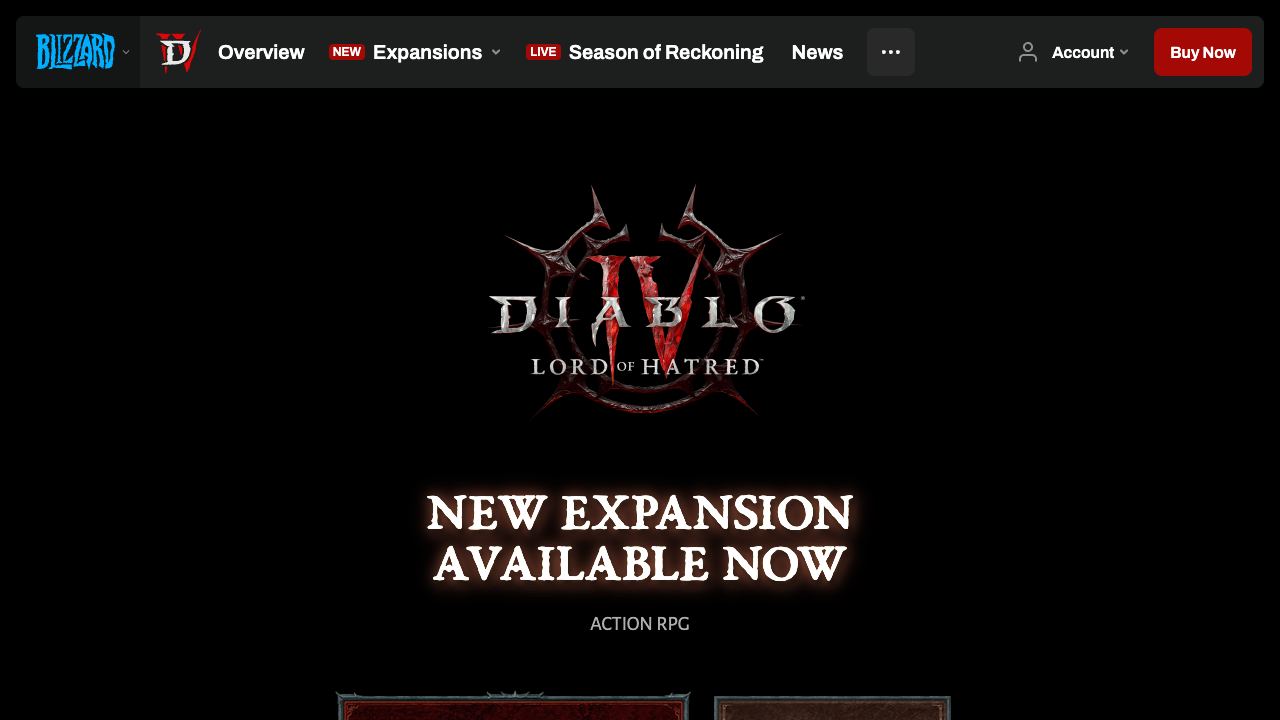
Diablo IV: Lord of Hatred expansion arrives April 28 with Paladin and Warlock classes plus Skovos region
Blizzard's Diablo IV: Lord of Hatred expansion is scheduled to launch on April 28, introducing two new playable classes, the Paladin and Warlock, alongside the Skovos region and a reimagined Horadric Cube system. The expansion represents Blizzard's most significant content drop for the action RPG since the base game's 2023 launch.
The timing matters for the live-service ARPG landscape. Path of Exile 2 continues its extended early access run, Last Epoch has stabilized its post-launch content schedule, and various indie ARPGs are vying for the same player attention. Lord of Hatred's success or failure will influence whether Blizzard accelerates its annual expansion cadence or returns to longer development cycles. Pre-launch community sentiment has been cautiously optimistic following improved seasonal content reception.
Expansion feature set
- New classes: Paladin and Warlock bring fresh build diversity and playstyles.
- Skovos region: A fully new explorable zone with unique enemies and environmental design.
- Horadric Cube: The classic crafting system returns in a modernized form.
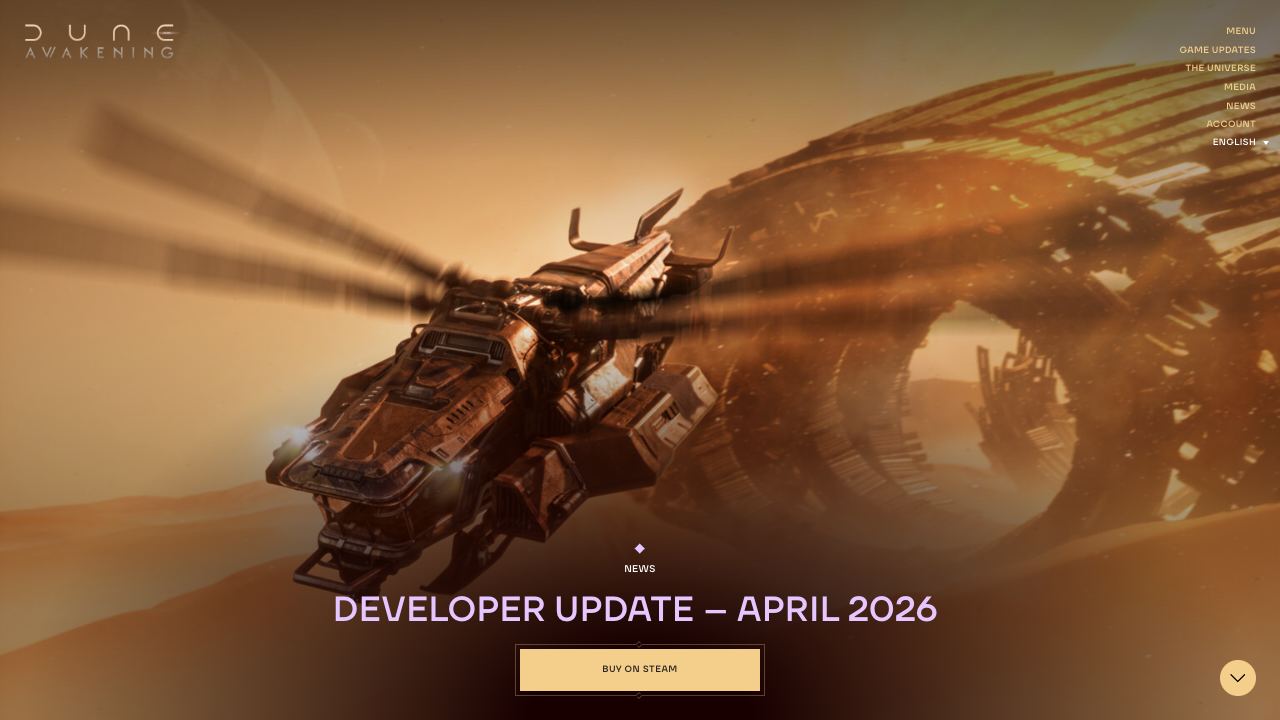
Dune: Awakening pivots to PvE-first gameplay with self-hosted servers coming soon
Funcom announced a major direction change for Dune: Awakening in its April 9 developer update, shifting the survival MMO to a PvE-first model. All PvP zones in the Hagga Basin will be disabled on official servers, with separate Deep Desert instances created for players who still want structured PvP content. The update also confirmed that self-hosted servers are in development, though initial setup will require a Windows Pro PC with Hyper-V.
The pivot reflects a broader industry trend where survival and extraction games are reassessing their PvP-PvE balance based on player retention data. Games like The Division and Fallout 76 have previously made similar adjustments after launch. For Funcom, the move suggests that engagement metrics favored cooperative exploration and base-building over open-world player combat. Self-hosted servers could also extend the game's lifespan by empowering community-driven rule sets and modding.
Why the pivot makes sense
- Retention data: PvE-focused players typically show longer session times in survival MMOs.
- Community servers: Self-hosting opens modding and custom ruleset potential.
- Precedent: Fallout 76 and The Division both saw population gains after PvE shifts.

Nintendo forecasts 15 million Switch 2 unit sales for fiscal 2026 while 33 Chinese publishers earn $2 billion in mobile revenue
Two major market signals emerged on April 23. Nintendo officially forecasted 15 million Switch 2 unit sales for fiscal year 2026, a bullish target that reflects strong early momentum and heavy third-party support including day-and-date multiplatform releases. Meanwhile, SensorTower data showed 33 Chinese publishers ranking in the global top 100 mobile game revenue chart, collectively generating approximately $2 billion in monthly revenue.
The contrast highlights the dual nature of the current games market. On the console side, Nintendo is betting that Switch 2 can replicate and exceed the original Switch's trajectory by securing more third-party parity. On the mobile side, Chinese publishers continue to consolidate their dominance in gacha, strategy, and midcore genres. For developers, the message is that platform strategy increasingly depends on whether your game fits the premium-hardware ecosystem or the free-to-play mobile funnel, with less middle ground than before.
Market takeaways
- Switch 2 forecast: 15 million units signals Nintendo's confidence in early adoption.
- Chinese mobile strength: $2 billion from 33 publishers shows sustained global competitiveness.
- Platform divergence: Premium console and F2P mobile are becoming increasingly separate markets.

The Super Mario Galaxy movie surpassed $755 million globally becoming the highest-grossing film of 2026
Nintendo and Illumination's Super Mario Galaxy movie has crossed $755 million in global box office receipts, making it the highest-grossing film of 2026 and the highest-grossing debut of the year in the United States. The milestone extends Nintendo's successful transmedia strategy that began with 2023's The Super Mario Bros. Movie and continues to prove that game franchises can drive theatrical audiences at blockbuster scale.
For the broader industry, the success reinforces the value of IP expansion beyond traditional game sales. It also comes alongside other transmedia developments this month, including the official scheduling of an Elden Ring movie for March 3, 2028, and new director attachments for the long-in-development Metal Gear Solid adaptation. Nintendo's ability to translate game worlds into cinematic experiences without losing their core identity has become a template other publishers are studying closely.
Transmedia momentum
- Box office leader: $755M makes it 2026's top film worldwide.
- IP expansion: Nintendo's cinematic strategy continues to diversify revenue streams.
- Industry template: Other publishers are studying Nintendo's transmedia approach.