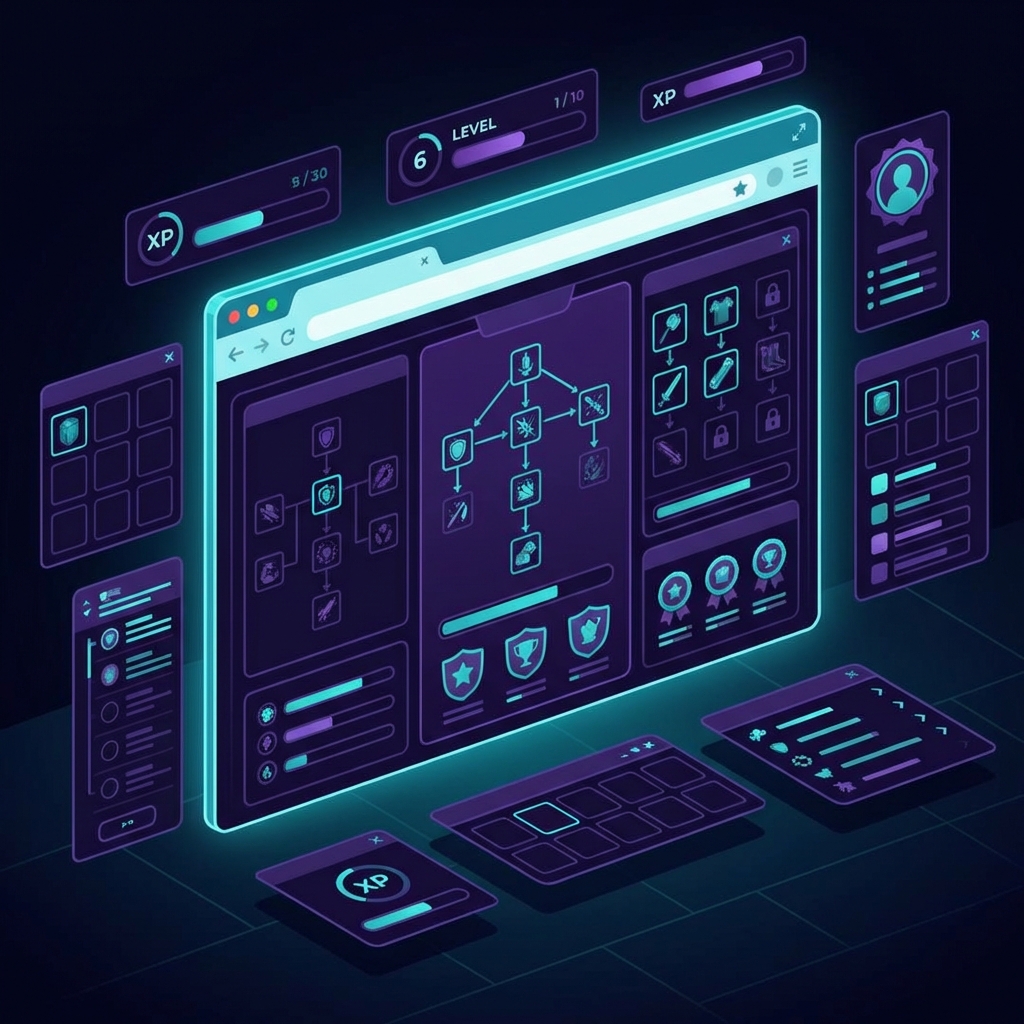
For nearly a decade, the browser game market was synonymous with one term: Hyper-Casual.
We all know the formula. Simple mechanics (tap to jump), zero progression, aggressive ad placements every 30 seconds, and a lifecycle of about three days before the player deleted the shortcut or closed the tab forever. It was a volume business—churn and burn.
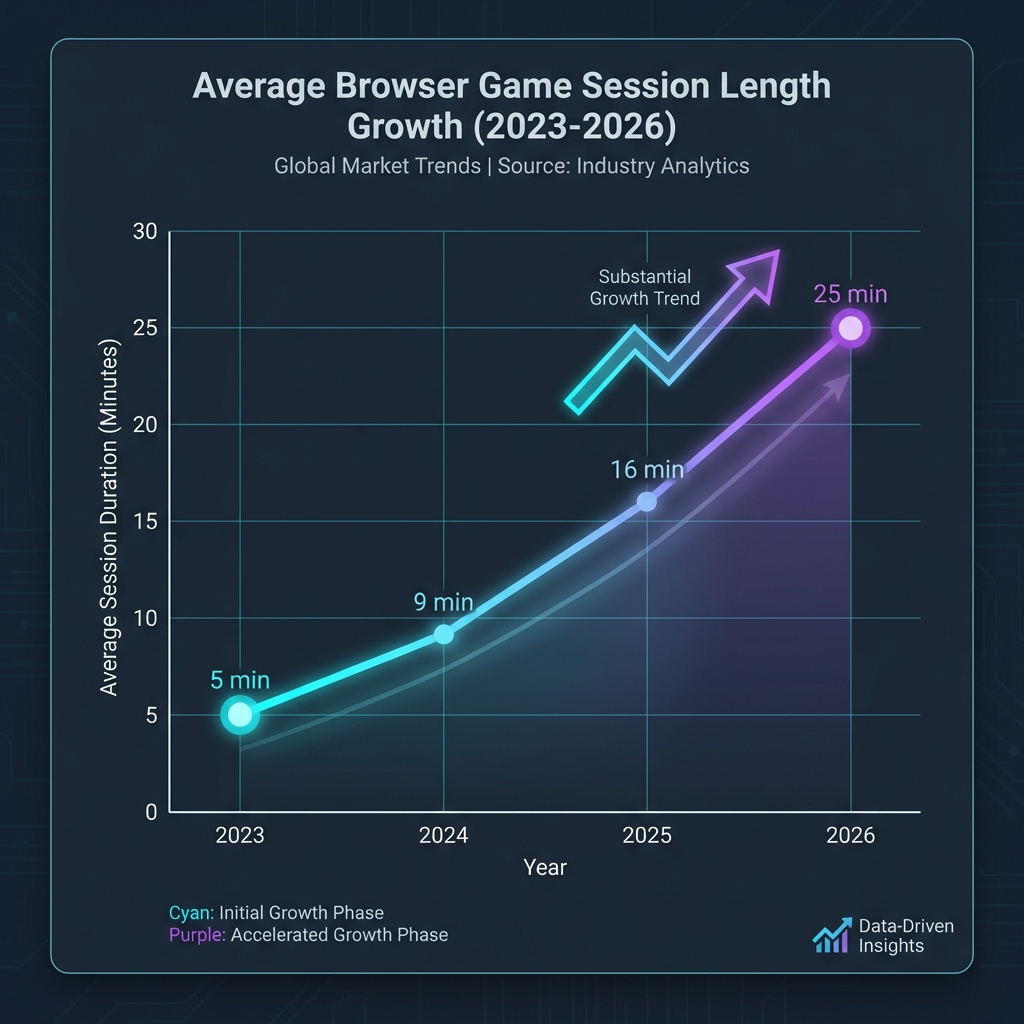
But in late 2025, the data started to shift. The "churn and burn" model collapsed. Ad revenues for low-retention games plummeted as advertisers stopped paying for low-quality impressions. Meanwhile, a new breed of browser game began to dominate the charts—games with save files, complex skill trees, and playtimes measuring in hours, not minutes.
This is the dawn of the Web Mid-Core era. And for indie developers, it represents the single biggest opportunity since the App Store boom of 2008.
1. The Crash of the "Clone" Economy
Why did Hyper-Casual die? Three factors converged in a "perfect storm":
The AI Slop Flood
Generative AI made creating bad games essentially free. In 2025, portals were flooded with thousands of identical Flappy Bird clones generated by scripts. This massive oversupply devalued the entire genre. Players learned that "simple graphics" usually meant "AI-generated trash," creating a stigma against low-effort visual styles.
The eCPM Collapse
Advertisers got smart. They realized that a user watching an ad in a Hyper-Casual game rarely converted to a high-value customer. Consequently, the eCPM (effective cost per mille - revenue per 1,000 impressions) for this genre dropped by nearly 60% year-over-year. You now need 3x the traffic to make the same money you made in 2023.
Player Maturity
The "iPad Kids" grew up. The generation raised on browser games is now looking for substance. They want the accessibility of the web (no downloads) but the depth of a Steam game.
2. Defining "Web Mid-Core"
So, what exactly is "Web Mid-Core"? It sits in the sweet spot between the accessibility of Agar.io and the depth of Hollow Knight.
The Mid-Core Checklist
- Persistent Progression: The game saves automatically (IndexedDB/Cloud). You come back tomorrow, and your character is stronger.
- Strategic Depth: Success requires thinking and planning, not just reflex tapping. Meta-gaming (builds, synergies) is essential.
- Session Flexibility: Can be played for 5 minutes or 5 hours.
- No Download: It still launches in < 5 seconds.
3. Case Study: The "PokeRogue" Phenomenon — A Mid-Core Browser Games Success Story
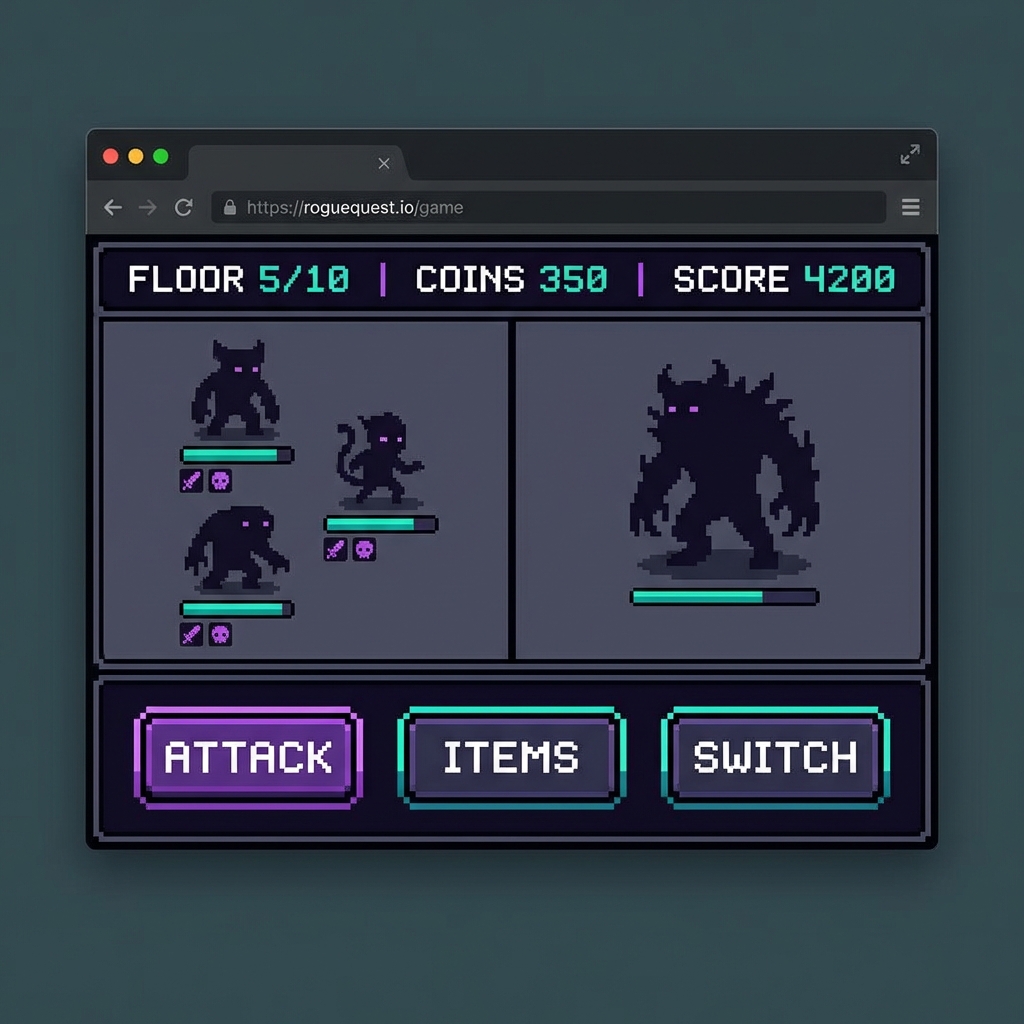
If one game exemplifies the power of mid-core browser games, it is PokeRogue. This browser-based, rogue-lite Pokémon fangame didn't just succeed—it dominated. Since its March 2024 launch, the game has achieved staggering metrics that prove browser players are ready for depth.
The Numbers That Redefined Browser Gaming
- 🎮1 Billion+ battles won within months of launch
- 👥40,000 peak concurrent players (browser-only!)
- 📈1 Million+ registered users
- 📺Its own Twitch category with top streamers playing daily
Why it Worked
- Instant Cross-Device Access: Players could start a run on their phone during a commute and continue on their PC at home. Zero friction, zero installs.
- The "One More Run" Loop: By blending the familiar collection mechanics of Pokémon with the addictive loop of a Roguelike (like Slay the Spire), it created hundreds of hours of replayability.
- Community-Driven Retention: The game's complexity spawned a massive Wiki, Discord server, and active Reddit community. Players discuss optimal builds, team compositions, and strategies for hours. Community = Retention.
- Persistent Meta-Progression: Even when a run fails, players unlock new starters and bonuses. This creates investment that keeps them coming back.
"PokeRogue proved that browser players aren't 'casuals.' They are just 'gamers without an install button.'" — Industry Analyst, 2026
4. Designing for Depth on a Budget
How do you build a 20-hour game that fits in a 50MB browser payload? You don't use high-res textures; you use Systems.
4.1 Procedural Generation is King
Hand-crafting 100 levels takes months. Writing a script to generate infinite levels takes weeks. Mid-core web games rely heavily on procedural generation (Roguelikes, Survival, Simulation) because code is lighter than assets. A complex algorithm that generates a unique world costs almost 0MB in download size.
4.2 The "Idle" Hybrid
A sub-genre seeing massive success is "Active Idle." Games like Melvor Idle or Cookie Clicker started this, but 2026 iterations are more visual. They respect the player's time by allowing progress while the tab is closed, but offer deep strategic choices when the player is active.
4.3 Social Asymmetry
True multiplayer is hard (server costs, lag). Asynchronous Multiplayer is the Mid-Core secret weapon. Leaderboards, "Ghost" replays (like in Polytrack), or sharing challenge seeds allow players to compete without you needing to netcode a real-time physics simulation.
5. The Monetization Pivot: From "Ads" to "Support"
Hyper-Casual relied on forcing players to watch ads. Mid-Core relies on players wanting to support the game.
The "Gamer" Revenue Model
- Rewarded Ads (High Value): "Watch an ad to reroll your loot drop." Players willingly watch these because it helps their strategy. Completion rates are near 100%.
- Cosmetic Microtransactions: Selling skins or UI themes. Since players invest hours into their save file, they care about how it looks.
- Ko-fi / Patreon Integration: Because Mid-Core games build a connection with the player, "Buy me a coffee" links actually convert. Players want the developer to keep updating the game.
6. The WebGPU Revolution: Console-Quality Mid-Core Browser Games
The technology enabling this mid-core browser games revolution deserves attention. WebGPU, the successor to WebGL, is fundamentally changing what's possible in browser gaming.
What WebGPU Unlocks
- Compute Shaders: Use the GPU for complex physics, AI, and procedural generation—not just rendering. This enables sophisticated game mechanics without server costs.
- Console-Quality Graphics: WebGPU provides low-level GPU access similar to DirectX 12 and Vulkan, enabling visual fidelity previously impossible in browsers.
- Reduced CPU Overhead: More efficient communication between JavaScript and the GPU means smoother gameplay even on mid-range hardware.
By 2026, Chrome, Edge, and Safari all support WebGPU. This means mid-core developers can build games with:
- Fully animated 3D environments
- Advanced particle systems and lighting
- Complex AI-driven NPCs
- Physics simulations running entirely client-side
The technology gap between "browser game" and "real game" is effectively closed. The only question is whether developers will seize this opportunity.
Conclusion: The Future of Mid-Core Browser Games
The browser is no longer the "dumping ground" for failed prototypes. It is a powerful distribution platform with unique advantages that Steam and app stores cannot match.
The developers winning in 2026 aren't trying to make "Unity tutorials." They are building rich, complex systems—mid-core browser games—that respect the player's intelligence. They understand that a player on a Chromebook wants to escape into a world just as much as a player on a PS5.
Key Takeaways for Indie Devs:
- ✅ Build for depth, not breadth. Retention beats virality.
- ✅ Embrace procedural generation and systems over hand-crafted assets.
- ✅ Leverage WebGPU for console-quality experiences.
- ✅ Create communities, not just games. Discord + Wiki = Retention engine.
- ✅ Monetize through value, not interruption. Rewarded ads and cosmetics outperform forced interstitials.
Stop building for the 30-second attention span. Build for the 30-hour obsession. The WebGPU technology is ready. The audience is waiting. The era of mid-core browser games is here.
Further Reading & Resources
- Design Theory: The Rise of Mid-Core on Mobile (Historical Context)
- Tech Stack: PokeRogue Source Code (Educational Use)
- Market Data: GameAnalytics Mobile & Web Reports


Leave a Comment
Share your thoughts with the community