
We are living in an era where 'graphics inflation' is at its peak. Ray tracing, 8K textures, billions of polygons... major studios are spending staggering budgets to create cinematic visual feasts. However, against this backdrop, a low-poly racing game named Polytrack has quietly gone viral, sparking a full-scale trend across social media, speedrun communities, and office breaks.
As indie developers, we must ponder a core question: in an age where visual effects are already so sophisticated, why are players still willing to buy into a game that looks almost 'primitive'? This article will conduct a deep-dive review of Polytrack's success logic from four dimensions: core mechanics, psychology, technical implementation, and community ecosystem, providing actionable insights for indie game developers.
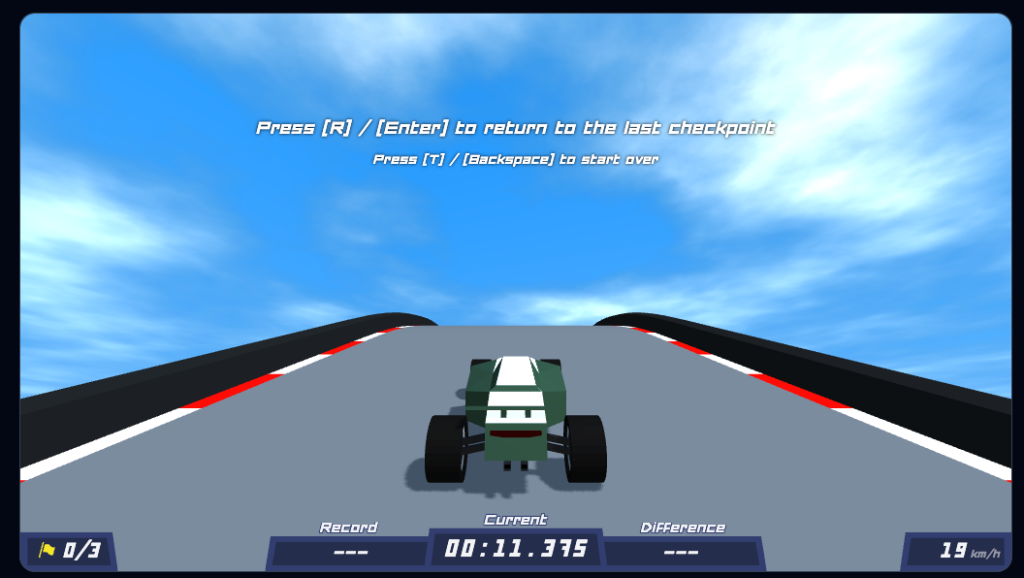
1. The Psychology of Visual Downgrading: Why Less is More?
Many developers mistakenly believe that Low-Poly is just a 'suboptimal alternative' when budgets are low. But in Polytrack, minimalism is a highly functional strategic choice.
A. Release of Cognitive Load
In ultra-high-definition realistic racing games, the player's visual system needs to process a massive amount of information: the graininess of the road, real-time reflections by the roadside, complex tree shadows... while beautiful, these details subconsciously increase the player's cognitive load. Polytrack removes these interference items. Solid color blocks identify the road surface, and sharp edges define collision volumes. This 'information simplification' allows the player's focus to reach an unprecedented breadth, enabling precise judgments even at high speeds.
B. The 'Imagination Filling' Principle of Low Fidelity
There is a concept in psychology called 'Gestalt Completion.' When a visual image is abstract enough, the brain automatically participates in the process of perfecting the image. This abstraction not only provides a unique sense of style but also makes the player feel an extreme sense of control, akin to 'driving on a blueprint.' In the aesthetic trends of 2024-2025, this style represents an attitude of life that detaches from redundancy and returns to purity.
Dev Insight: Visual Strategy
Don't try to mimic AAA graphics. The visual competitiveness of indie games lies in 'unique recognition' rather than 'absolute clarity.' A highly stylized palette is far more likely to stay in a player's memory than millions of polygons.
2. The Resilience of the Core Loop: Soul Given by High-Fidelity Physics
If visuals are the skin, then Polytrack's true 'ace in the hole' is its hardcore physics engine hidden under the minimalist surface.
A. The Depth of Momentum Management
Polytrack borrows the essence of Trackmania: high-tolerance controls combined with extremely low-tolerance 'Best Lines.' The friction between wheels and road, the downforce generated by aerodynamics, and even the energy rebound after hitting a wall are all handled with extreme realism. This contrast of 'simple appearance, profound core' gives players a huge sense of surprise.
B. The 50-Millisecond Gamble
Polytrack levels are usually very short. It is this fast-paced rhythm that makes players try again and again to save that 50ms of error. This high-frequency, instant-feedback psychological pleasure is something no big production can replace. 'Just one more try' has become the game's most core mantra.
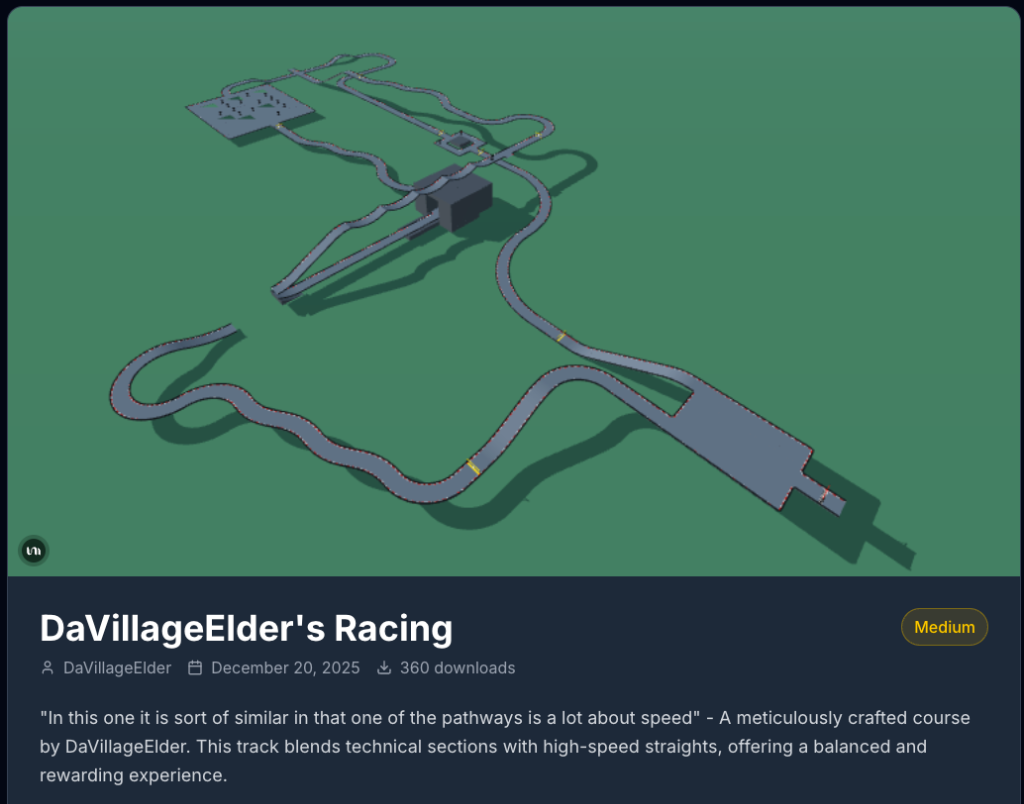
Every ramp's curvature is physically verified to ensure speed transmission aligns with physical intuition.
3. UGC: From 'One Man's Game' to 'A Playground for Millions'
The biggest headache for indie developers is often: I spent six months making content, and players finished it in three days. Polytrack solves this perfectly: it hands the power of level design to the players.
A. 'Low Barrier, High Ceiling' Track Editor
Polytrack's editor is so intuitive it doesn't even need a tutorial. Through simple dragging and clicking, any player can create their own track in 5 minutes. But to create an amazing 'Mega Factory,' it takes dozens of hours of deep cultivation. This graded design gives the game an unlimited reserve of content.
B. The Currency of Social Sharing: Track Codes
The track code mechanism is key to Polytrack's viral spread. A simple string of characters represents an entire elaborately designed world. The cost of sharing is extremely low, making it easy to create a ripple effect on Twitter, Discord, and more. The emergence of community hubs like PolytrackCodes has elevated this UGC to an ecosystem level.
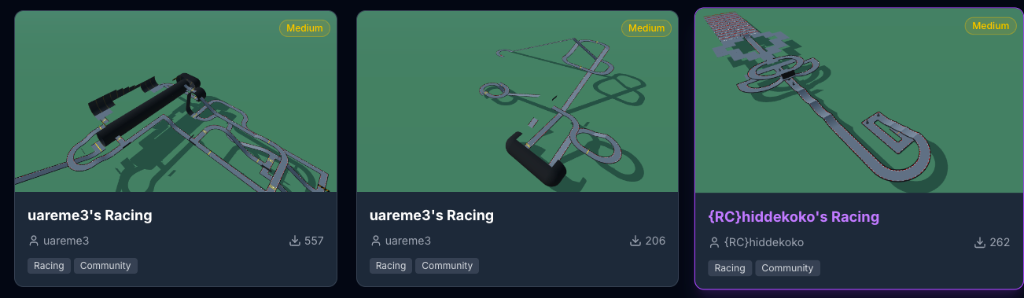
The massive community library on PolytrackCodes.com ensures endless replayability.
C. The Editor Experience
Unlike complex 3D modeling tools, the Polytrack editor uses a grid-based system that feels like playing with digital LEGOs.
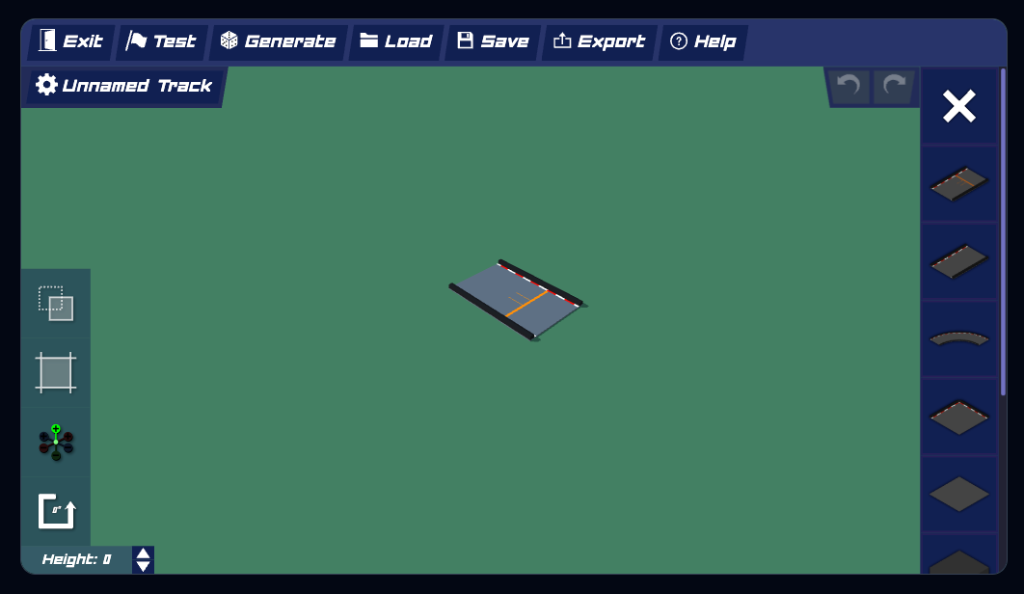
A clean, focused UI that prioritizes creation over technical complexity.
4. Zero Friction Entry: The Winning Point of Web Technology
A. Zero Loading, Zero Installation
Polytrack utilizes modern browser WebGL2 and WebAssembly technologies. Players click a link and enter the game in 1 second, no registration, no 50GB download. This 'reachability' greatly reduces the exit rate of the conversion funnel. During office breaks or school intervals, it becomes the only choice.
B. Excellent Hardware Adaptability
Thanks to the Low-Poly style, the game stays stable at 60FPS on everything from a school Chromebook to a top-tier Alienware. This 'universal playability' is the foundation of its popularity.
5. Five Lessons for Indie Developers
- Focus on Core Fun: Strip away all unnecessary systems. If you're making a racing game, do the driving feel to the extreme, don't worry about gacha mechanics for car parts.
- Leverage 'Code as World': Provide an extremely easy way for players to share their creations. The simpler the sharing, the faster the spread.
- Choose the Right Rendering Scale: If your team is only 1-3 people, trying for realistic graphics is a dead end. Find 'premium feel' within Low-Poly or Pixel Art.
- Feedback over Presentation: Screen shakes when hitting walls and excellent haptic/audio feedback are more important than high-res textures.
- Find Your Niche: Polytrack isn't trying to challenge Forza. It's filling the 'fragmented, instant-gratification' niche.
Conclusion
Polytrack's popularity is not accidental, but a perfect fit of product manager logic and passion-driven development. It tells us: as long as your core mechanics are solid, even if a polygon has only 10 facets, players will still feel your craftsmanship. In an intensive era, returning to the essence of fun might be the only 'way out' for indie games.
If you want to join this carnival of physics and speed, or look for your own design inspiration,
Visit the Polytrack Code Hub.




Leave a Comment
Share your thoughts with the community