HTML5 has revolutionized browser gaming, breaking free from the constraints of Flash and ushering in an era of cross-platform, instantly accessible games. For indie developers and established studios alike, the burning question remains: where should you submit your HTML5 game to maximize reach, revenue, and player engagement?
This comprehensive guide explores the best platforms for HTML5 game distribution in 2025, covering everything from major portals with millions of monthly players to niche marketplaces for licensing deals. Whether you're seeking passive ad revenue, upfront licensing fees, or a combination of both, understanding your options is the first step toward building a sustainable career in web game development.
Why HTML5 Game Distribution Matters in 2025
The web gaming landscape has evolved dramatically. Unlike the app stores dominated by Apple and Google—where discoverability is a nightmare and a 30% revenue cut is standard—HTML5 game portals offer developers unique advantages:
- Instant Playability: No downloads, no installs, no waiting. Players click and play immediately.
- Cross-Platform Reach: A single build works on desktop, mobile, and tablet browsers.
- Lower Competition: Compared to millions of mobile apps, web games face less crowded markets on many portals.
- Multiple Revenue Streams: Developers can pursue ad revenue, licensing deals, in-game purchases, and exclusive sponsorship contracts.
- Retain More Control: Unlike app stores, many HTML5 platforms offer non-exclusive deals, letting you distribute the same game across multiple channels.
With some top developers on platforms like Poki earning over €100,000 annually, the opportunity is real—if you know where to submit and how to position your game.
Top HTML5 Game Portals for Direct Submission
The most straightforward path to getting your game in front of players is submitting directly to major gaming portals. These platforms handle hosting, distribution, and monetization, often providing SDKs that seamlessly integrate ads into your gameplay experience.
1. CrazyGames
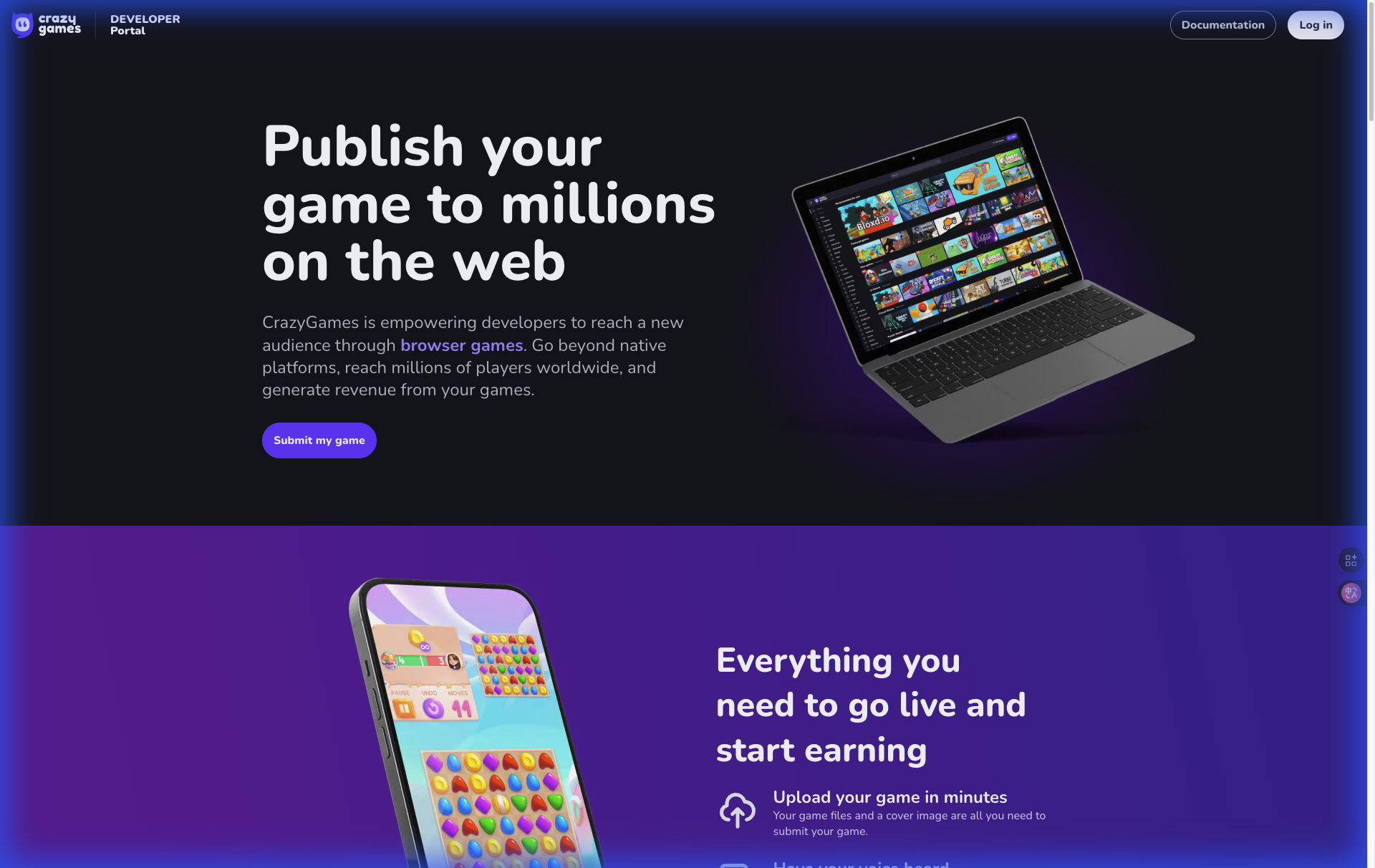
The CrazyGames Developer Portal provides a streamlined path for web game distribution.
CrazyGames has earned its reputation as one of the most developer-friendly platforms in the HTML5 space. With over 20 million monthly players and a streamlined developer portal, it's an excellent starting point for any web game developer.
Key Features:
- Revenue Share: Competitive ad revenue sharing for games implementing the CrazyGames SDK.
- SDK Integration: Their SDK enables monetization, analytics, user accounts, and in-game purchases via Xsolla.
- Developer Support: Dedicated guidance to help optimize your game for their audience.
- Engine Support: Works with Unity WebGL, Phaser, Construct, Cocos, Godot, and native JavaScript.
Submission Requirements:
- Initial download size ≤ 50MB (≤ 20MB for mobile homepage eligibility)
- Total file size ≤ 250MB with SDK or ≤ 50MB without
- File count ≤ 1500
- English language support mandatory
- PEGI 12 compliant content
- Landscape mode support for desktop
- Sitelock implementation recommended
CrazyGames offers two launch tiers: Basic Launch (fewer requirements, less promotion) and Full Launch (full SDK integration, maximum visibility). For developers serious about monetization, Full Launch is the way to go.
Pro Tip
Implement sitelocking to prevent unauthorized embedding. Check if your game's origin ends with crazygames.com to ensure your game only runs on their platform, protecting your revenue and analytics data.
2. Poki
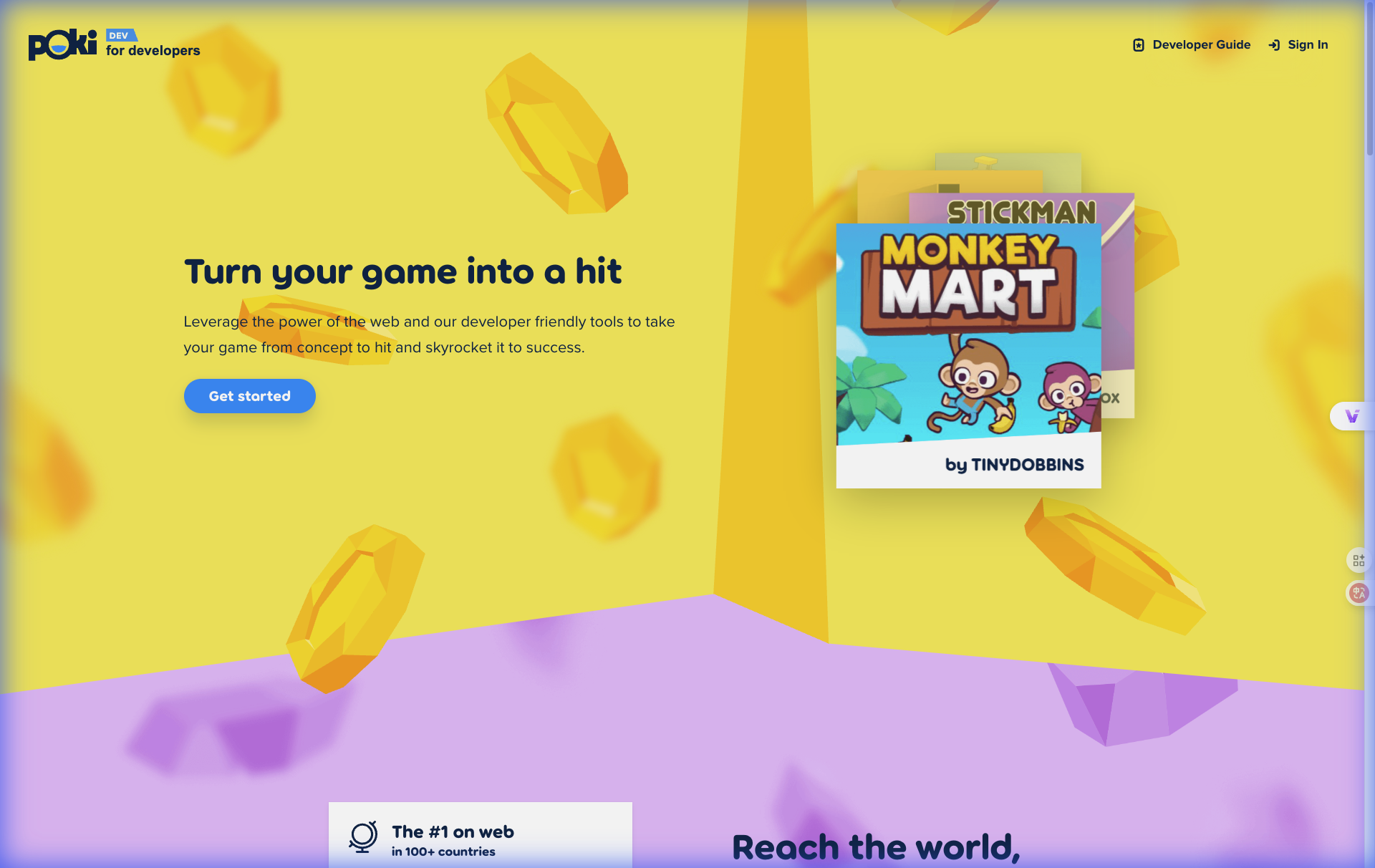
Poki offers massive reach with over 90 million monthly players.
Poki is the heavyweight champion of HTML5 game distribution, reaching a staggering 90 million monthly players. Their curated approach means higher quality standards but also significantly greater potential reach for accepted games.
Key Features:
- Massive Audience: Top-performing games see 5+ million monthly players.
- Developer-First Approach: Comprehensive QA, in-house testing, and player acquisition support.
- Revenue Potential: Active developers report earnings exceeding €100,000 annually.
- Seamless Monetization: Poki handles all advertising; no third-party ads allowed.
Submission Requirements:
- Mandatory support for desktop, mobile, and tablet
- 16:9 aspect ratio with responsive scaling
- Must work in incognito mode
- All external requests blocked by default (third-party services require approval)
- No branding, splash screens, or outgoing links
- Poki SDK integration required
- Web exclusivity on the open web (Steam/mobile apps permitted)
Poki's requirements are stringent, but the payoff is substantial. Their editorial team works closely with developers to optimize games for their audience, making acceptance a collaborative process rather than a gatekeeping exercise.
3. GamePix
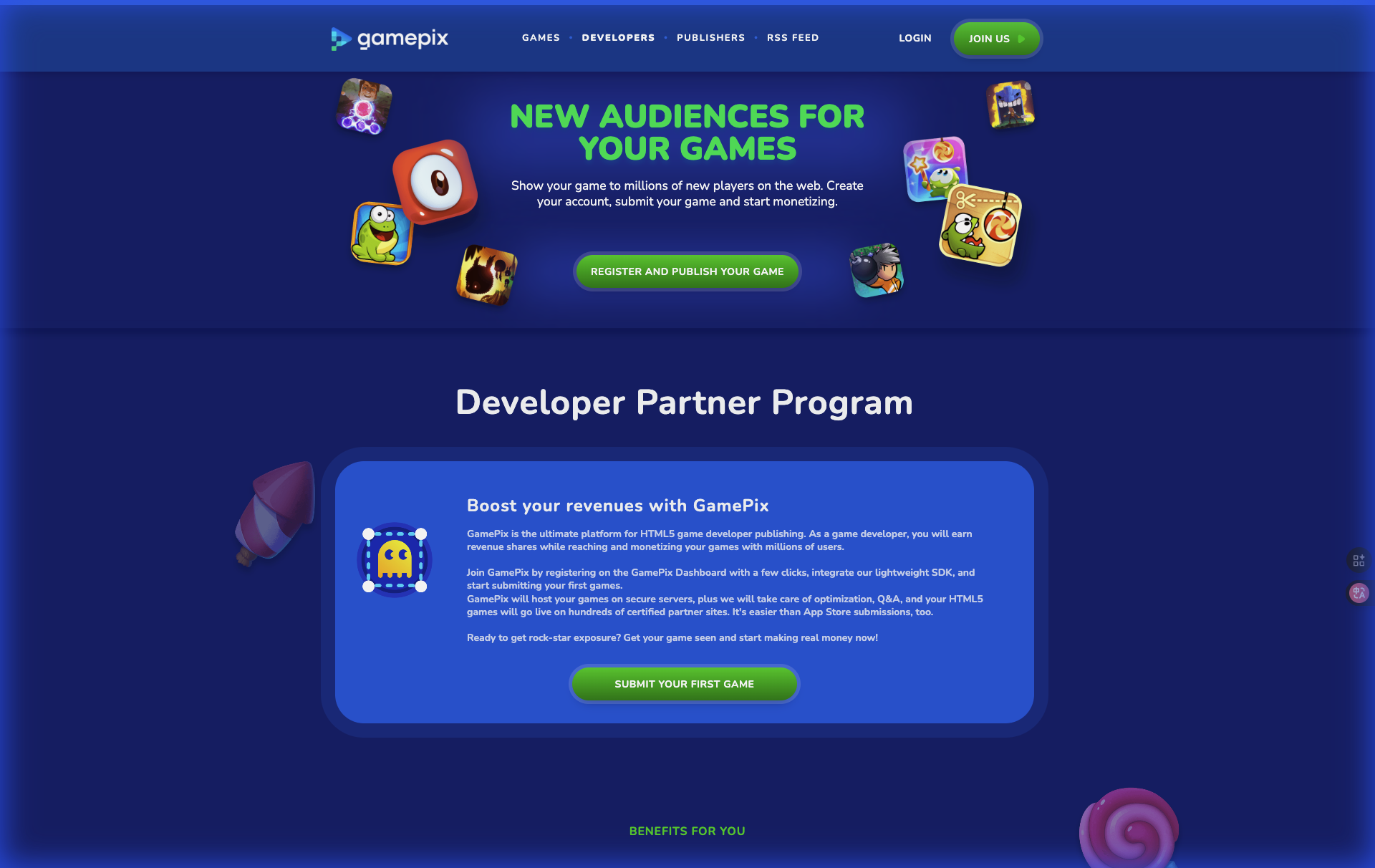
GamePix connects your games to a global network of publishers and operators.
GamePix positions itself as a unified distribution channel, routing your game to thousands of websites, apps, and mobile carriers through a single submission point.
Key Features:
- Broad Distribution: Games reach hundreds of certified partner sites after submission.
- Revenue Share: Explicit 45% revenue share for developers.
- Hosting and Optimization: GamePix hosts your game on secure servers and handles technical optimization.
- Simpler Than App Stores: Less friction than iOS/Android submission processes.
For developers looking to maximize distribution with minimal per-platform effort, GamePix's one-to-many approach is compelling. The 45% revenue share is clearly documented, providing transparency often lacking on other platforms.
4. Softgames
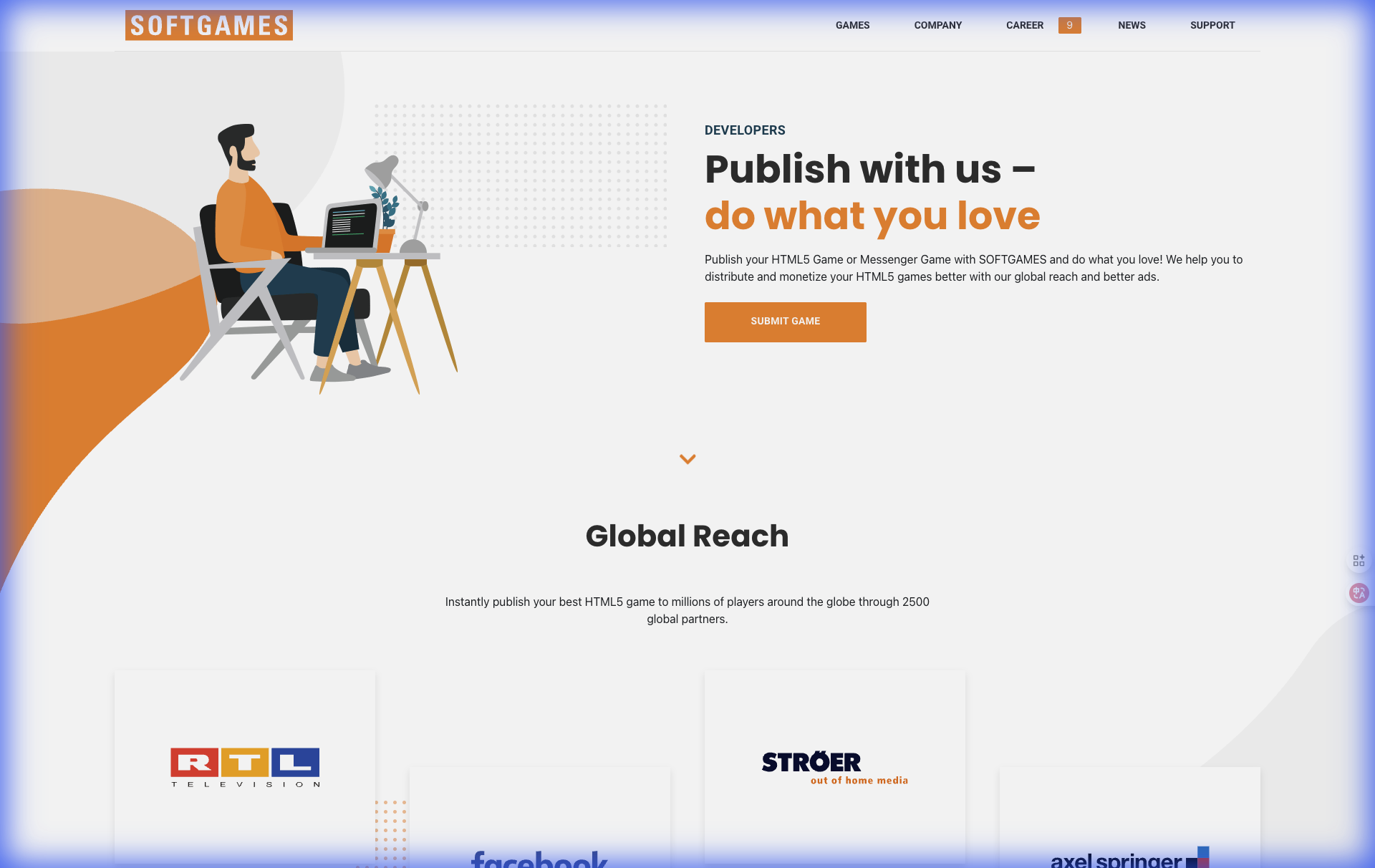
Softgames focuses on quality HTML5 content for a global audience.
With over 10 million monthly active users and partnerships with 2,500+ global publishers, Softgames is a powerhouse in the HTML5 space—particularly for developers interested in white-label licensing and B2B distribution.
Key Features:
- Multiple Monetization Models: Instant cash sponsorships, long-term revenue shares, or hybrid deals.
- White-Label Services: Games can be branded and distributed by partners worldwide.
- Developer Support: High-level QA, localization, and legal assistance.
- Enterprise Focus: Works with major publishers and mobile carriers.
Softgames is ideal for developers with polished, high-quality games seeking significant revenue through licensing deals rather than (or in addition to) ad-based monetization.
5. GameDistribution (by Azerion)
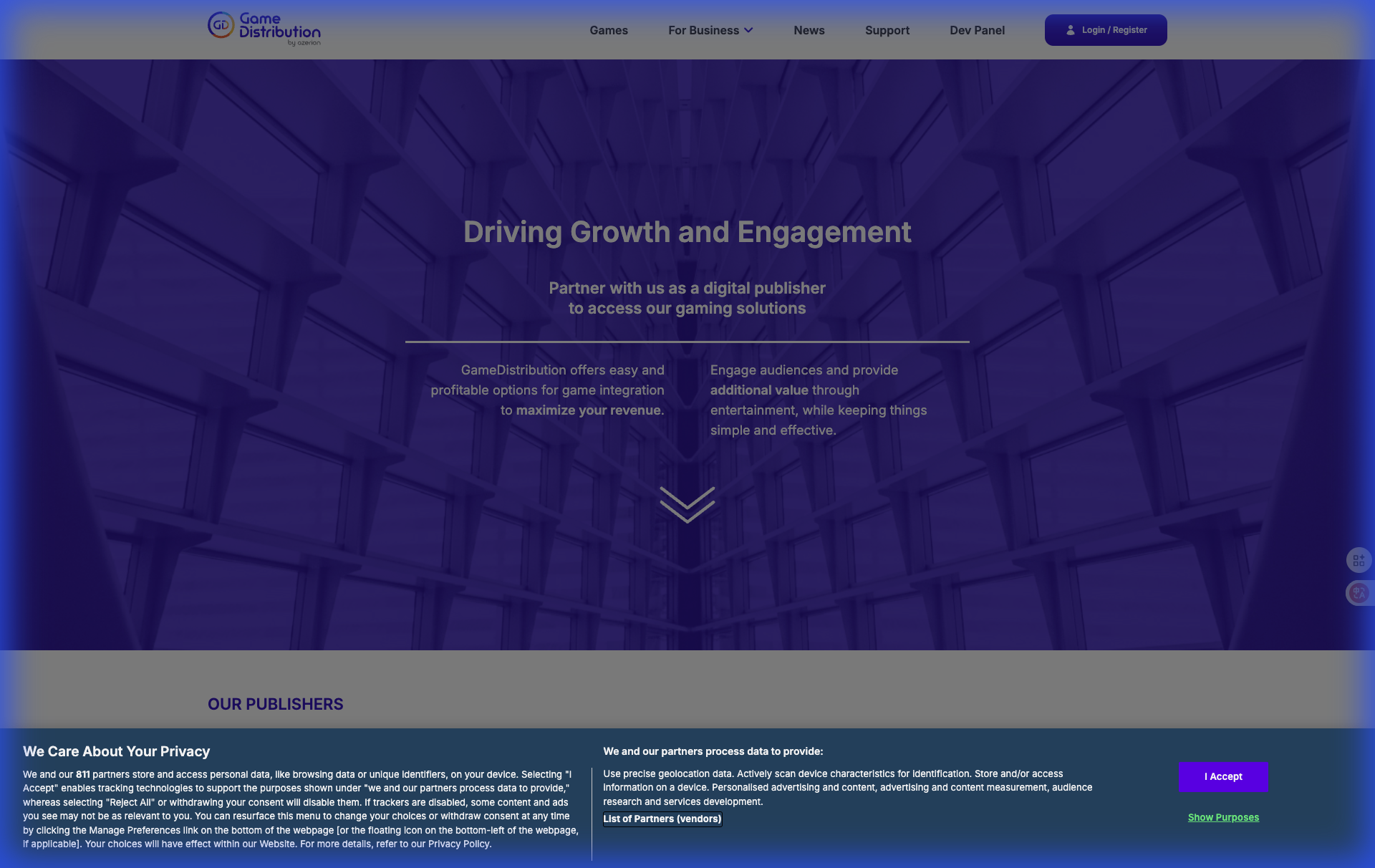
GameDistribution provides powerful tools for developers to distribute their games.
GameDistribution focuses on B2B distribution, providing HTML5 and WebGL content to digital publishers. With over 1,400 PvP titles and extensive publisher network, it's a strong choice for competitive and multiplayer games.
Key Features:
- SDK Integration: Required for monetization; games must display ads only as immediate reactions to user input.
- Quality Assurance: Games undergo verification for ad display, stability, and performance.
- Publisher Portfolio: Extensive network of digital publishers seeking content.
Submission Checklist:
- Game can be paused and resumed correctly
- Supports targeted web and mobile operating systems
- Loading and progress indicators function properly
- Sound and language preferences persist across sessions
- Stable FPS without crashes or freezes
- No duplicate content in their catalog
- No IP violations
6. itch.io
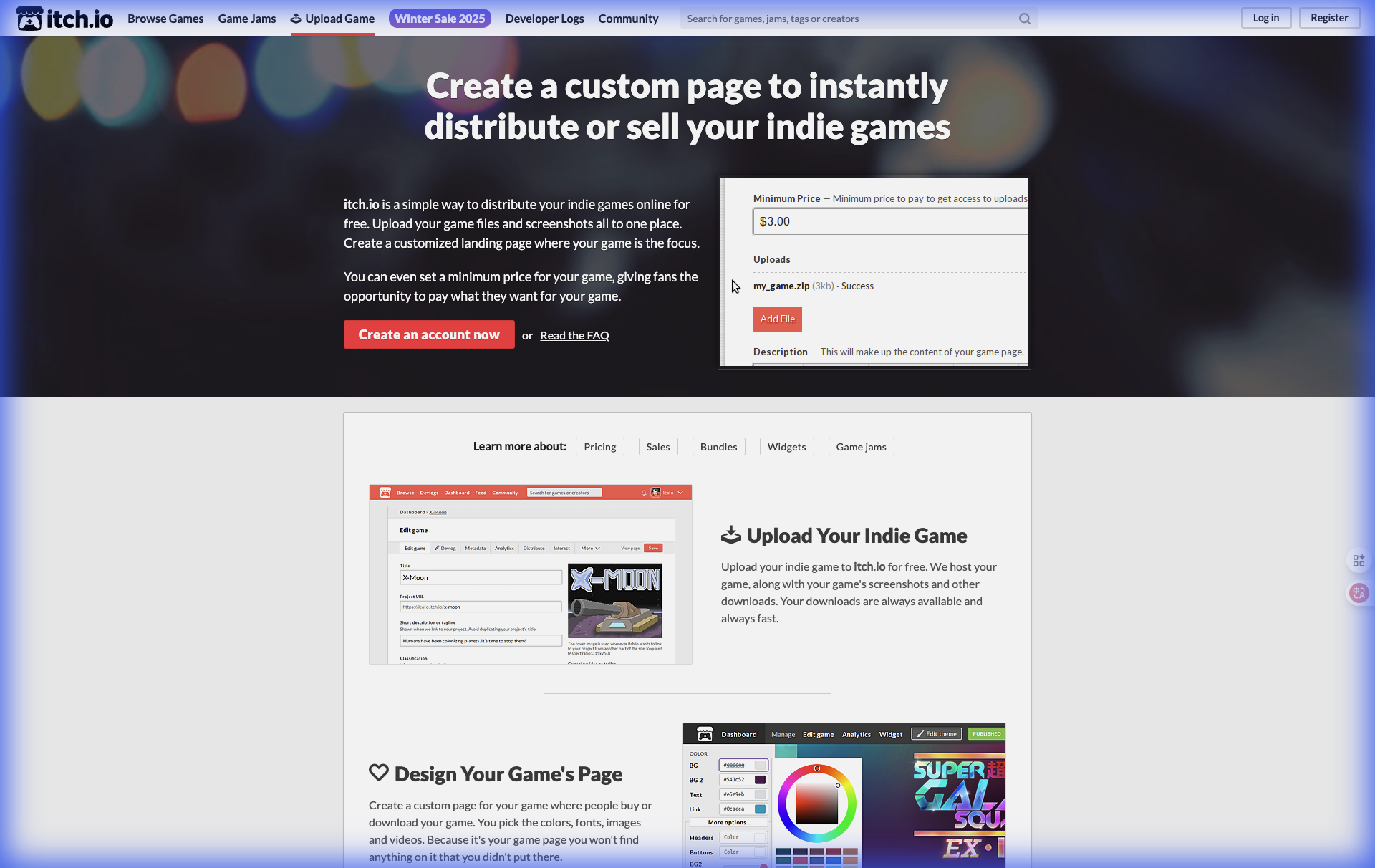
itch.io is the premiere platform for independent creators.
itch.io occupies a unique niche as the leading indie game platform, beloved for its flexibility, community focus, and developer-first philosophy.
Key Features:
- Zero Barriers: No strict quality requirements; anyone can publish.
- Flexible Revenue Share: Developers choose their contribution percentage (can be 0%).
- Community Engagement: Active forums, game jams, and organic discovery.
- Direct Browser Play: HTML5 games run directly in the browser from your game page.
- Full Control: Custom page styling, pricing, and distribution terms.
Submission Process:
- Upload a ZIP file containing all project files
- Include an
index.htmlfile as the entry point - itch.io hosts all assets
- Customize your page with screenshots, GIFs, and descriptions
While itch.io doesn't provide built-in monetization through ads, it's an excellent platform for building your reputation, gathering player feedback, and driving wishlists for premium versions on other stores.
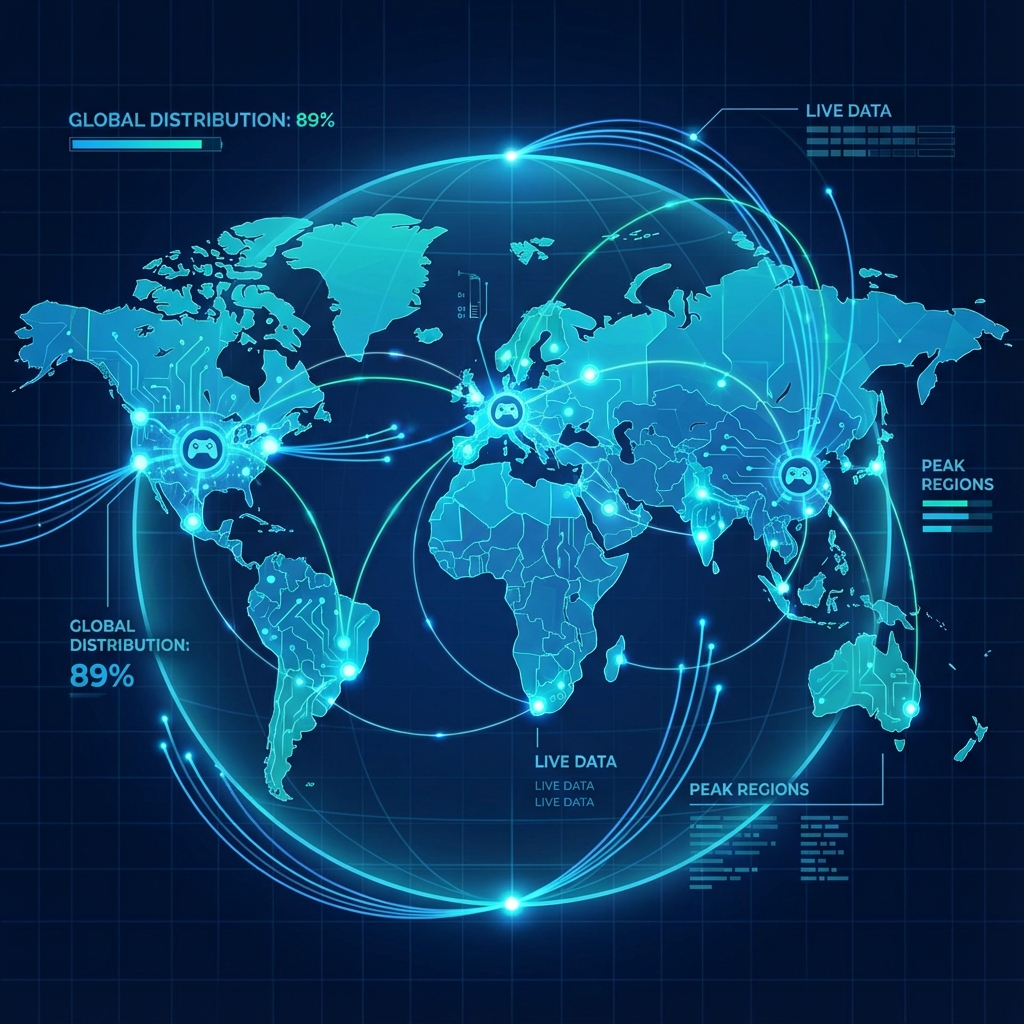
The global reach of HTML5 gaming distribution in 2025
Licensing Platforms: Selling Your Game to Publishers
Beyond direct submission to player-facing portals, licensing your HTML5 games to publishers and B2B clients offers an alternative (or complementary) revenue stream.

Core monetization pillars for modern web games
Monetization Strategies for HTML5 Games
Understanding Licensing Models
HTML5 game licensing typically falls into several categories:
| License Type | Description | Typical Payout |
|---|---|---|
| Non-Exclusive | Sell to multiple buyers; retain rights to distribute elsewhere | $50 - $500+ |
| Exclusive | Single buyer gets sole distribution rights | $500 - $3,000+ |
| Revenue Share | Earn percentage of ongoing ad/IAP revenue | 30% - 70% of revenue |
| White-Label | Buyers rebrand game as their own | Varies widely |
| Subscription-Based | Games licensed as part of a subscription library | Steady recurring payments |
Top Licensing Marketplaces
- MarketJS: A dedicated hub for buying and selling HTML5 game licenses, offering customization features for easy integration.
- Genieee: Positions itself as a trusted source for HTML5 licensing, with case studies showing developers earning significant amounts through non-exclusive deals.
- GameFlare: Allows developers to upload games and earn revenue share from ads, while also distributing to numerous gaming publishers.
- Famobi (Buy.html5games.com): Established provider for purchasing premium HTML5 game licenses.
Monetization Strategies for HTML5 Games
Choosing where to submit is only half the equation. Maximizing your earnings requires understanding the monetization options available within the HTML5 ecosystem.
Advertising
Ads remain the primary revenue source for most browser games. Key formats include:
- Banner Ads: Static ads at screen edges. Non-intrusive but low revenue (lowest eCPM).
- Interstitial Ads: Full-screen ads between levels or at natural breaks. Higher revenue, potentially disruptive if overused.
- Rewarded Video Ads: Players choose to watch ads in exchange for in-game rewards. Highest engagement and eCPM rates; player-friendly when implemented well.
Ad Networks for HTML5 Games:
- Google AdSense/Ad Manager: Familiar, widely supported, straightforward integration.
- AdinPlay: Leading ad platform specifically for HTML5 game publishers.
- AppLixir: Specializes in rewarded video monetization for web games.
- Venatus: Direct advertiser relationships in the gaming sector.
- PlayWire: Enterprise-grade ad stack for larger publishers.
Best Practice: Natural Ad Placement
Display ads only during natural pauses—between levels, after game over screens, or when players voluntarily trigger them. Interrupting active gameplay destroys player experience and long-term retention.
In-App Purchases (IAPs)
Selling virtual goods, currency, skins, or premium content can generate significant revenue—particularly for games with strong player engagement.
Key considerations:
- Never create pay-to-win mechanics that alienate players.
- Focus on cosmetic items and quality-of-life improvements.
- Players who invest time are more likely to invest money.
- Some platforms (like CrazyGames via Xsolla) provide built-in payment infrastructure.
Subscription Models
For games with evolving content or strong communities, offering premium tiers (ad-free experience, exclusive levels, early access) through subscriptions can provide steady, predictable income.
Sponsorship and Exclusive Deals
Brands may sponsor games or pay for exclusive distribution rights. Platforms like Softgames specialize in connecting developers with publishers for upfront payments plus ongoing revenue shares.
Choosing the Right Platform: A Decision Framework
With so many options, how do you decide where to submit? Consider these factors:
1. Game Quality and Polish
- Highly Polished Games: Target Poki (massive audience, high standards) or pursue exclusive licensing deals with Softgames.
- Good but Not Perfect: CrazyGames and GamePix offer excellent reach with more forgiving requirements.
- Experimental/Prototype: itch.io welcomes all levels of polish and provides invaluable player feedback.
2. Monetization Goals
- Maximize Ad Revenue: Poki (if accepted) and CrazyGames (with SDK integration) offer the strongest ad-based returns.
- Upfront Cash: Licensing marketplaces (MarketJS, Genieee) or Softgames sponsorship deals.
- Building Audience: itch.io (building reputation) or non-exclusive licensing (wide exposure).
3. Exclusivity Preferences
- Want Maximum Distribution: Non-exclusive licensing + multiple portal submissions (itch.io, GameFlare, etc.).
- Willing to Commit: Poki's web exclusivity or exclusive licensing deals for higher per-platform returns.
4. Technical Capabilities
- Can Implement SDKs: CrazyGames, Poki, and GameDistribution offer the best monetization when SDKs are properly integrated.
- Prefer Simplicity: itch.io requires no SDK; GamePix handles much of the technical heavy lifting.
Optimizing Your Game for Submission
Before submitting anywhere, ensure your game meets common standards across platforms:
Technical Optimization
- File Size: Keep initial download under 20MB for mobile eligibility; total under 50MB for best compatibility.
- Loading Speed: Optimize assets, use compression, lazy-load non-critical resources.
- Cross-Browser Testing: Test thoroughly on Chrome, Edge, Firefox, and Safari.
- Responsive Design: Support multiple aspect ratios (16:9 ideal) and orientations.
- Mobile Compatibility: Touch controls, screen-filling layouts, performance optimization for weaker devices.
- Incognito Mode: Ensure your game works without cookies or local storage (required for Poki).
Gameplay Polish
- Instant Engagement: Minimize load screens and menus; get players into action immediately.
- Clear Tutorials: Teach mechanics quickly without lengthy text dumps.
- Replay Value: Include progression systems, high scores, or procedural content to encourage return visits.
- Localization: English is essential; additional languages expand your potential audience.
Content Guidelines
- Age Appropriateness: Most major portals target all ages or teen audiences (PEGI 12).
- IP Respect: Original assets and names only; avoid copyrighted characters or trademarks.
- Remove External Branding: Most platforms prohibit developer splash screens, logos, or outgoing links.
The Multi-Platform Strategy
Most successful HTML5 developers don't rely on a single platform. A diversified approach maximizes both reach and revenue:
- Start with itch.io: Build your portfolio, gather feedback, and establish a following.
- Submit to CrazyGames: Implement their SDK for monetization, reach millions of players.
- Pursue Poki (if quality is high): The effort required to meet their standards pays off with massive exposure.
- License Non-Exclusively: Sell licenses through MarketJS or Genieee while your game earns ad revenue elsewhere.
- Explore B2B Opportunities: Approach Softgames or GameDistribution for enterprise-level distribution.
Common Pitfalls to Avoid
- Ignoring Mobile: In 2025, most web gaming traffic comes from mobile devices. A desktop-only game misses the majority of players.
- Too Many Ads: Aggressive ad placement destroys player experience and long-term retention.
- Neglecting Analytics: Without data on player behavior, you can't optimize your game for engagement or monetization.
- Single-Platform Dependence: Platforms change policies, algorithms, and revenue shares. Diversification protects your income.
- Poor Performance: Games that stutter, crash, or take forever to load get rejected or hidden by algorithms.
- Skipping Sitelock: Without protection, your game gets embedded on unauthorized sites, stealing your traffic and revenue.
The Future of HTML5 Game Distribution
Looking ahead, several trends are shaping the landscape:
- WebGPU: The successor to WebGL promises significantly better graphics performance, enabling more complex games in browsers.
- Progressive Web Apps (PWAs): Games can be "installed" on devices while remaining web-based, blurring the line between browser and native apps.
- Cloud Gaming Integration: As platforms like Xbox Cloud Gaming mature, HTML5 games may integrate with larger gaming ecosystems.
- Blockchain and Web3: Some platforms are exploring NFT integration and play-to-earn models, though industry reception remains mixed.
- AI-Generated Content: Procedural generation powered by AI could enable smaller teams to create more expansive games.
Conclusion: Your Path to HTML5 Success
The HTML5 game distribution ecosystem offers unprecedented opportunities for developers willing to navigate its complexity. From the massive audiences of Poki and CrazyGames to the indie-friendly flexibility of itch.io, from ad-based revenue sharing to upfront licensing deals, the options are diverse and increasingly lucrative.
Success requires more than a great game. It demands understanding where your game fits, optimizing for platform-specific requirements, and building a sustainable presence across multiple channels. Start where the barriers are lowest, prove your concept, then expand strategically as your games and reputation grow.
The players are waiting. The platforms are ready. Your next HTML5 hit could be just one submission away.
Ready to Start Playing HTML5 Games?
Experience the best browser games while you develop your own masterpiece.
EXPLORE OUR GAME LIBRARY

Leave a Comment
Share your thoughts with the community