
8 Ball Pool stands as one of the most popular online pool games ever created, attracting millions of players worldwide with its accessible gameplay and surprising depth. While the basic rules are simple—pocket all your balls then the 8 ball—the path to consistent victory requires understanding physics, geometry, and strategy that separates casual players from serious competitors. This comprehensive guide will elevate your game from random potting to calculated precision.
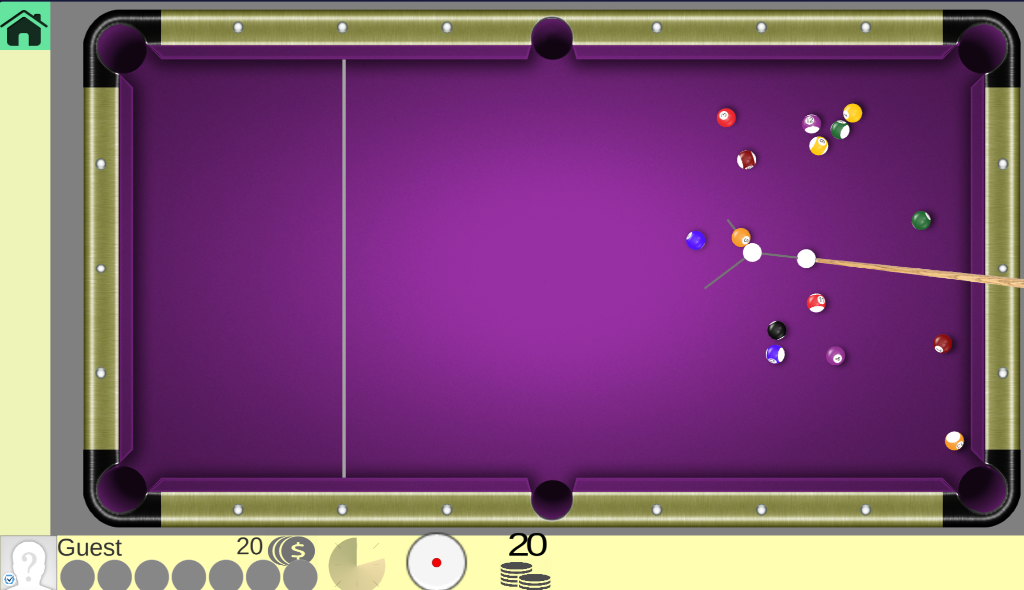
1. Understanding 8 Ball Pool: Rules and Fundamentals
Before mastering advanced techniques, ensure you understand the core rules that govern the game:
The Basic Rules
- Breaking: The game starts with a break shot. The breaker must hit the rack and either pocket a ball or drive at least four balls to the rails.
- Ball Assignment: The first legally pocketed ball after the break determines your set—solids (1-7) or stripes (9-15).
- Legal Shots: You must hit your designated balls first. Failure to do so is a foul.
- The 8 Ball: Only pocket the 8 ball after clearing all your assigned balls. Pocketing it early loses the game.
- Calling Pockets: In many versions, you must call which pocket you're aiming for on the 8 ball shot.
Common Fouls
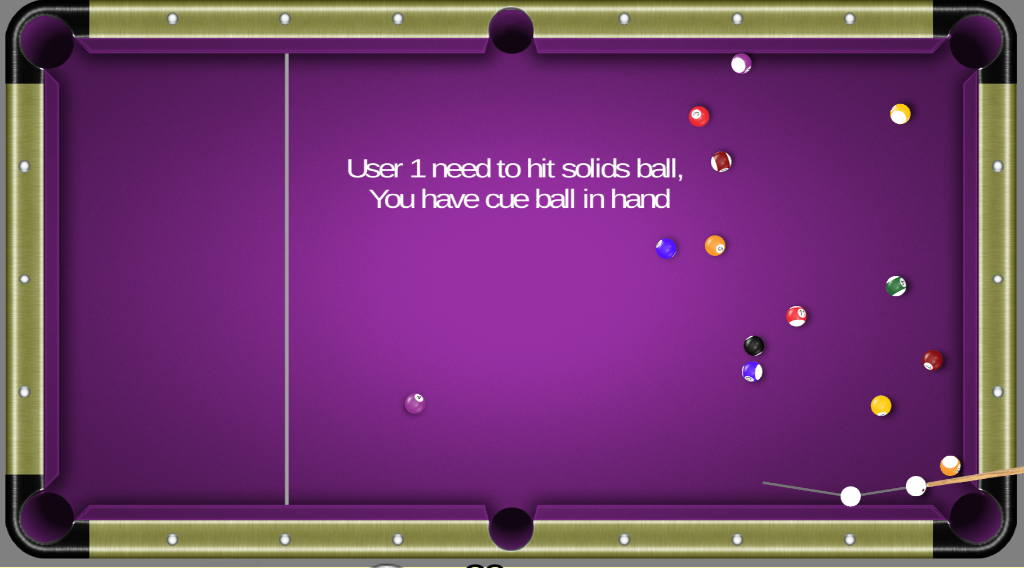
- Scratch: Pocketing the cue ball gives your opponent ball-in-hand.
- Wrong Ball First: Hitting opponent's ball (or 8 ball) before your own is a foul.
- No Rail: After contact, at least one ball must touch a rail (unless a ball is pocketed).
- Jumping Off Table: Any ball leaving the table is a foul.
Win Conditions
- Pocket all your assigned balls, then legally pocket the 8 ball
- Your opponent commits a foul while shooting at the 8 ball (scratching on 8, sinking 8 in wrong pocket)
Strategic Principle
Advanced players don't just think about pocketing the current ball—they plan 2-3 shots ahead. Every shot should set up the next one.
2. Mastering the Aim: Precision Shot-Making
Accurate aiming is the foundation of pool. Here's how to improve your precision:
The Contact Point System
Every shot requires hitting the object ball at a specific "contact point" to send it in the desired direction. Visualize an imaginary line from the center of the pocket, through the center of the target ball, and extending backward. Where that line exits the back of the object ball is your contact point—where the cue ball needs to make contact.
Common Contact Points:
- Full Ball: Cue ball hits object ball dead center (contact point directly opposite the pocket)
- Half Ball: Cue ball's edge aligns with object ball's center (approximately 30° cut angle)
- Quarter Ball: Minimal overlap (approximately 50° cut angle, thin cut shots)
The Ghost Ball Method
Imagine a "ghost ball" sitting at the contact point—perfectly positioned to send the object ball into the pocket. Your job is to roll the cue ball to exactly where that ghost ball sits. This visualization technique helps beginners develop intuition for cut angles.
Using the Aim Line
Most online pool games provide an aim line showing where the cue ball will travel. Skilled use involves:
- Extended Lines: Mentally extend the line to see where the object ball will go after contact
- Line Limits: The guide line may not show the full path—learn to project trajectories beyond it
- Width Awareness: Remember that balls have width; account for this when aiming near pockets
Cut Shot Angles
Cut shots—hitting the object ball at an angle rather than straight on—require precision:
Cut Angle Reference
| Shot Type | Angle | Difficulty |
|---|---|---|
| Straight-in | 0° | Easy (position dependent) |
| Slight Cut | 15-25° | Easy-Medium |
| Half Ball | 30° | Medium |
| Three-Quarter Cut | 45° | Medium-Hard |
| Thin Cut | 60-80° | Hard (high skill required) |
3. Cue Ball Control: English and Spin
Pocketing balls is only half the game. Controlling where the cue ball ends up after the shot is what separates good players from great ones.
Understanding Spin Types
Top Spin (Follow)
Hit the cue ball above center. After contact with the object ball, the cue ball continues forward. Uses:
- Following the object ball toward the pocket
- Moving the cue ball further down the table
- Avoiding scratches that would occur with center-ball hits
Bottom Spin (Draw/Backspin)
Hit the cue ball below center. After contact, the cue ball reverses direction. Uses:
- Pulling back from the object ball after pocketing
- Positioning for shots on the opposite side of the table
- The dramatic "draw shot" that impresses opponents
Left and Right English (Side Spin)
Hit the cue ball to the side of center. This spins the cue ball on its vertical axis. Uses:
- Adjusting cue ball path after rail contact
- Opening up angles that seem impossible without spin
- Correcting position when center-ball doesn't work
Combining Spins
Advanced players combine vertical and horizontal spin:
- High-Left: Forward movement with left deflection off rails
- Low-Right: Backspin combined with right-side rail effects
Warning: Spin Deflection
Side spin causes "squirt" or deflection—the cue ball curves slightly opposite to the spin direction immediately after being struck. Experienced players adjust their aim to compensate.
Power Control
Shot power affects more than just ball speed:
- Soft Shots: More spin effect, tighter angles, less run-out distance
- Hard Shots: Less spin effect (spin "slides" off), longer run-out, more rail bounce
- Medium Power: Best balance for position play—neither extreme
4. Bank Shots and Kicks: Using the Rails
Sometimes direct shots aren't possible. Rail shots become essential:
Bank Shot Basics
A bank shot bounces the object ball off one or more rails into a pocket. The key principle: angle of incidence equals angle of reflection—like a mirror.
Calculating Bank Shots:
- Identify the target pocket
- Visualize a line from the pocket perpendicular to the rail
- Find where this line meets the rail (the "contact point")
- Aim the object ball at that contact point
One-Rail Banks
The simplest bank shot uses one rail. Practice these regularly:
- Cross-Corner Banks: Ball near side rail, bank to opposite corner pocket
- Short Rails: Ball near corner, bank off short rail to side pocket
Two-Rail Banks
More complex but sometimes necessary. The ball contacts two rails before pocketing. Requires excellent visualization and is best reserved for when no easier shot exists.
Kick Shots
Kick shots use rails for the CUE ball rather than the object ball. When your ball is blocked, kick the cue ball off a rail to reach it. Same angle physics apply.
5. Break Strategy: Starting Strong
A powerful, controlled break sets the tone for the entire game:
Break Fundamentals
- Cue Ball Position: Most players place it slightly off-center to create angle into the rack
- Hit Point: Aim to hit the front ball (the 1 ball) as full as possible
- Power: Use significant power—the goal is to spread the rack and pocket balls
- Follow-Through: Smooth acceleration through the ball, not a jerky punch
Break Outcomes to Seek
- Pocketing the 8 Ball on Break: Instant win in most game modes!
- Pocketing Multiple Balls: Gives you choice of solids or stripes based on table layout
- Good Spread: Balls scattered for easier runout potential
- Cue Ball Control: The cue should end up near the center of the table
Common Break Mistakes
- Scratching: Hitting too hard with improper aim causes cue ball to fly
- Weak Break: Rack doesn't spread, leaving clusters
- Off-Center Hit: Glancing blow wastes energy and causes poor spread
Break Tip
A controlled 75% power break often outperforms a wild 100% power break. Accuracy matters more than raw strength—a solid hit on the 1-ball at moderate speed beats a glancing blow at maximum power.
6. Pattern Play: Thinking Ahead
Elite players don't shoot randomly. They execute a planned sequence—a "runout"—that clears the table systematically.
Planning Your Pattern
Before shooting, scan the table and identify:
- Problem Balls: Balls that are clustered, blocked, or difficult to pocket
- Key Balls: Balls whose position matters most for subsequent shots
- Natural Sequence: An order that allows smooth position from shot to shot
- The 8 Ball: Always know where the 8 is and how you'll approach it
The Three-Ball Rule
At minimum, always plan three balls ahead:
- Current shot: Which ball to pocket, which pocket
- Next shot: Where the cue ball needs to land for the following ball
- Third shot: Confirm the sequence works without impossible positions
Breaking Clusters
Clustered balls (touching or nearly touching) can't be pocketed cleanly. Plan to break them early:
- Use a ball you're pocketing to split clusters as the cue ball travels
- Sometimes sacrifice position to break a cluster—it's worth it
- If opponent's balls are clustered, consider leaving them that way
Safety Play
Not every turn should attempt a pocket. Safety play—intentionally leaving your opponent with no good shot—is a valid strategy:
- Place the cue ball behind your balls, blocking their shots
- Leave long distances between cue ball and any pocketable ball
- Use safeties when no good offensive shot exists rather than missing and giving ball-in-hand
7. Common Shot Types and How to Execute Them
The Stop Shot
Hit the cue ball center with medium power on a straight-in shot. The cue ball stops dead where it contacts the object ball. Essential for precise positioning.
The Follow Shot
Hit above center. The cue ball follows the object ball's path after contact. The harder you hit and higher on the cue ball, the more it follows.
The Draw Shot
Hit below center with a smooth, accelerating stroke. The cue ball returns toward you after contact. Requires practice—hit lower than you think necessary.
The Massé (Curve Shot)
Extreme downward angle on the cue ball causes it to curve around obstacles. Very difficult; rarely necessary in standard play. Looks impressive but risky.
The Jump Shot
Elevated cue angle causes the cue ball to hop over blocking balls. Not available in all game versions. When allowed, use sparingly—difficult to control.
8. Table Reading and Adaptation
Different game situations require different approaches:
When You're Winning
- Play conservatively—don't take unnecessary risks
- Use the whole table for position play
- If in doubt, play safe rather than force a difficult pot
When You're Losing
- Calculated aggression becomes necessary
- Force opponent errors through tight safety play
- Take on shots you might normally avoid
Reading Your Opponent
- Watch their shot selection—do they attempt low-percentage shots?
- Notice their cue ball control—do they plan ahead or shoot randomly?
- Identify weaknesses and exploit them with safety play
9. Practice Drills for Improvement
Structured practice beats random play for skill development:
Drill 1: Line Shots
Set up balls in a straight line from cue ball to pocket. Practice pocketing each at different distances. Focus on eliminating misses before adding complexity.
Drill 2: The "L" Drill
Place balls along two perpendicular lines forming an "L." Practice running the pattern in order. Develops position play and cut shot accuracy.
Drill 3: Stop Shot Practice
Straight-in shot from various distances. Goal: cue ball stops perfectly on contact spot. Trains center-ball striking essential for control.
Drill 4: Draw Shot Development
Straight-in shot with low hit. Start close and gradually increase distance. The cue ball should return past its starting position on a good draw.
Drill 5: Bank Shot Accuracy
Set up identical bank shots and repeat until making them consistently. Each angle has its own "feel"—repetition builds that intuition.
10. Mental Game and Match Psychology
Pool is as much mental as physical:
Staying Focused
- Take your time—rushed shots become missed shots
- Block out distractions during your turn
- Visualize success before shooting
Handling Pressure
- Breathe deeply before clutch shots
- Trust your practice—you've made this shot before
- Focus on process (good stroke) not outcome (making the ball)
After a Miss
- Analyze why you missed (aim? speed? nerves?) without dwelling
- Reset mentally for your next turn
- Don't compound errors with frustration-driven risky play
11. FAQ: Common Questions Answered
Q: Why do I keep scratching on the 8 ball?
A: 8 ball scratches usually come from too much power or incorrect spin prediction. Practice lower-power 8 ball shots with controlled draw or stun. Plan the cue ball's path as carefully as you plan pocketing the 8.
Q: How do I improve my bank shots?
A: Banks require geometry intuition developed through repetition. Practice the same bank shot 20 times in a row. Your brain will internalize the angle relationship far better than studying diagrams.
Q: Should I always go for the difficult shot?
A: No! If a shot has less than 70% success chance AND leaves your opponent well-positioned if you miss, consider a safety play instead. Giving up the table is better than giving up ball-in-hand.
Q: How important is the break?
A: Very important for starting position but not game-deciding. A weak break can be overcome with good play; a great break means nothing if you miss your first shot. Focus on controlled consistency over maximum power.
Q: Why does English/spin seem to not work for me?
A: Spin effects are most visible at moderate speeds. Too hard and the spin "skids" off; too soft and there's not enough energy. Also, ensure you're actually hitting off-center—many beginners think they're applying spin when they're hitting center.
12. Conclusion: The Path to Pool Mastery
8 Ball Pool rewards the patient student. Each game teaches something new about angles, spin, and strategy. Unlike games of pure reflex, pool improvement is gradual and measurable—you'll notice yourself making shots that seemed impossible months ago.
Focus your practice on fundamentals: straight aiming, center-ball stroking, and pattern planning. Add spin and advanced techniques only after basics are solid. Many players hurt their game by attempting fancy shots before mastering simple ones.
Remember that pool is ultimately about decision-making as much as execution. The player who chooses the right shot beats the player who can only execute difficult ones. Think before you shoot, plan ahead, and you'll find yourself winning matches not through miraculous pots but through superior strategy.
Now rack 'em up and get practicing. The table is waiting.
Ready to Dominate the Table?
Put your new skills to the test in a game of 8 Ball Pool.
PLAY 8 BALL POOL NOW



Leave a Comment
Share your thoughts with the community