Late March 2026 did not produce a single headline that instantly redefined indie game development. Instead, it produced something more valuable: a cluster of signals that, taken together, show where the business is actually heading. Steam improved its tools for developers. Xbox tried to remove more friction from publishing. Godot and Unity kept smoothing out production realities. Festivals and showcases posted fresh reminders that discovery is increasingly curated, competitive, and global. If you are building games independently in 2026, this is what the environment looks like now.
That is why this week matters. It was not about one giant announcement. It was about the shape of the market becoming clearer. The practical barriers to building and distributing games are easing in some important ways. The commercial barriers to getting attention are not. In fact, they are hardening.
That split has been visible for a while, but late March made it unusually easy to read. Steam's developer-facing updates improved analytics and pricing decisions. Microsoft framed Xbox as a platform that should feel less intimidating to smaller studios. Godot and Unity both delivered the kind of technical progress that chips away at production pain. At the same time, PAX, IndieCade, Tokyo Indie Games Summit, Seattle Indies, and gamescom latam all reinforced the same harder truth: more teams are chasing the same windows of visibility, and success increasingly depends on getting through curated gates.
What late March 2026 clarified
- Steam is giving indie teams better commercial tooling, not just a place to sell games.
- Xbox is pushing harder to look practical and welcoming for smaller studios.
- Engine improvements still matter because reliability saves real production time.
- Festivals and showcases are becoming more structurally important, not less.
- Community organizations are still doing real business work for indie developers.
- Discovery is no longer a side problem that teams can solve after the game is finished.
The week in 12 signals
- Steam refreshed pricing conversion tools on March 27.
- Steam highlighted a new Wishlist Data API with country and language-level data.
- Steam promoted an April 21 Next Fest developer Q&A session.
- PAX East ran March 26-29 with PAX Rising and PAX Together featured on the official site.
- PAX Together added Demo Days and developer accessibility office hours.
- IndieCade's April 27 festival deadline is already in view.
- Seattle Indies used its March update to bridge local community work and major events.
- Tokyo Indie Games Summit ran with a business-day and public-day split.
- gamescom latam's BIG Festival finalists came from 966 submissions across 75 countries.
- Godot pushed more OpenXR and setup improvements in its March XR update.
- Unity shipped 6000.4.0f1 with WebGL, stability, and platform-facing fixes.
- Microsoft used GDC-week messaging to reduce perceived Xbox publishing friction and expand the PlayFab story.
Shipping Friction Is Falling
The easiest trend to miss in games is often the most useful one: quiet improvement. Small teams do not always need dramatic platform revolutions. They need fewer hidden traps, better visibility into performance, and less friction between "we have something worth showing" and "we can ship it in a serious way." That is exactly where several late-March updates landed.
Steam's refreshed pricing conversion tools are a good example. Regional pricing has become more sensitive, more political, and more commercially consequential. For indies, it is not just a localization detail. It affects accessibility, goodwill, and conversion. When Valve updates the logic or options around pricing conversion, it gives developers more control over how their game lands in very different economic contexts. That matters most to small teams because they do not have the margin to waste a launch on lazy pricing decisions.
The new Wishlist Data API matters for the same reason. Wishlists are no longer just a reassuring vanity metric. If developers can see wishlist behavior by country and language, they can make better decisions about where to localize first, where to spend creator outreach effort, and where marketing energy is simply not paying off. This is the kind of information that turns intuition into planning.
Steam's renewed push around a Next Fest developer Q&A session also reveals how central demo strategy has become. Demos are not fringe extras anymore. For many indies, they are one of the best ways to learn whether their messaging is working, whether the first twenty minutes of the game are good enough, and whether the store page promise matches the actual feel of play. The best modern demo is not just a taste of the product. It is part marketing test, part design test, and part conversion funnel.
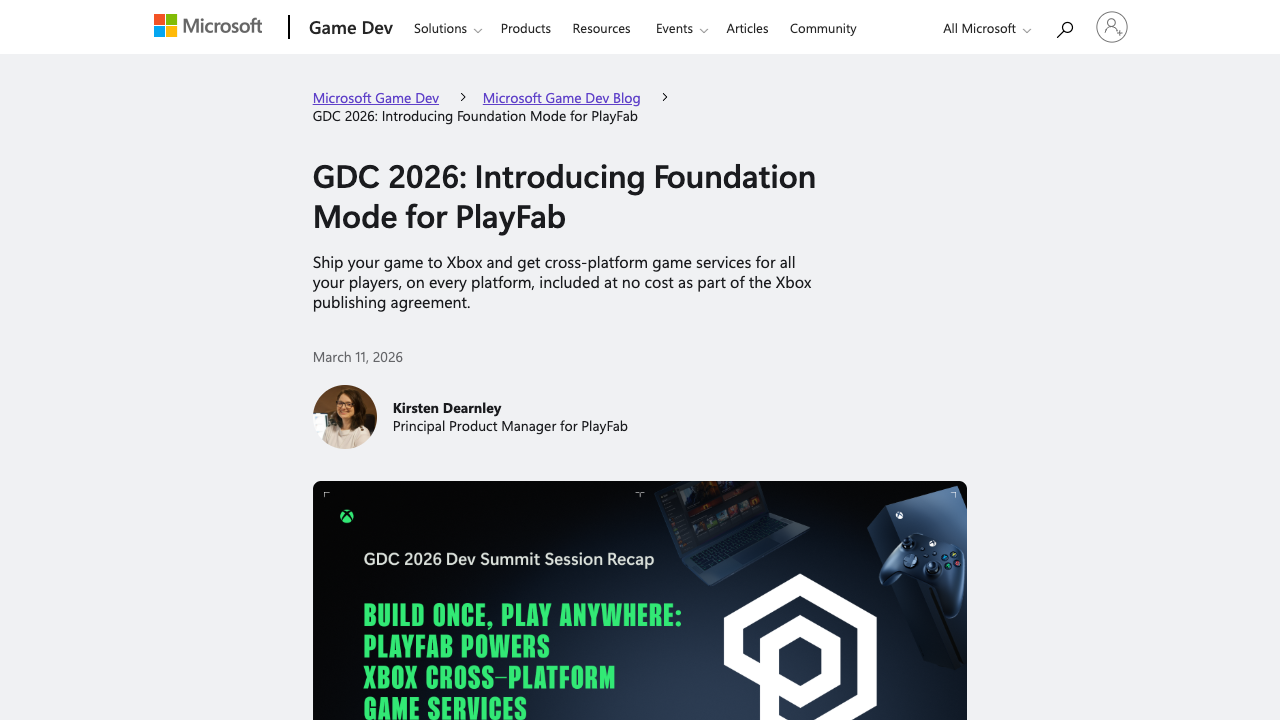
Microsoft's GDC-week posts land in the same broader category. The company's message was not only "publish on Xbox." It was "this should be easier than you think." Faster onboarding, more open access to documentation, and stronger language around included services all help shrink the psychological and operational distance between a small studio and a console release plan. Foundation Mode for PlayFab is especially important here. Bundled service support reduces a category of backend cost and complexity that smaller teams often postpone until too late.
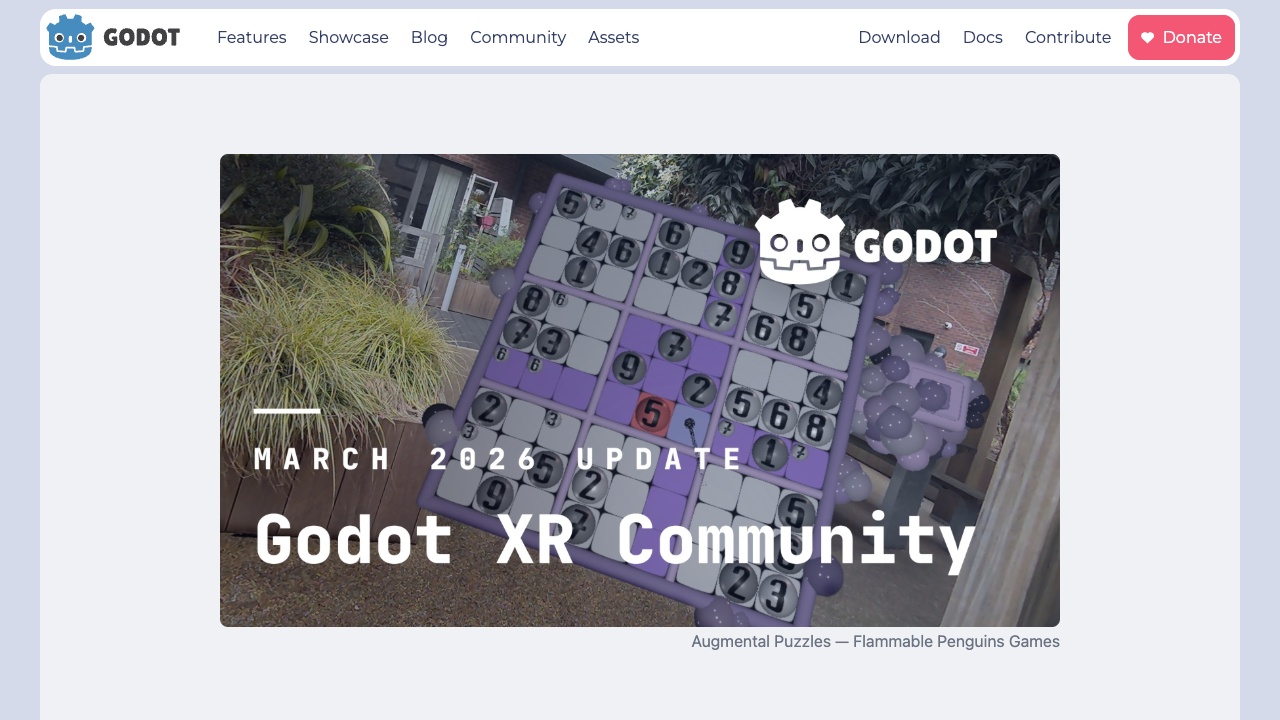
Even engine-side news fits the same pattern. Godot's March XR update added more OpenXR support and a clearer setup path, while Unity's 6000.4.0f1 continued the less glamorous but deeply useful work of improving stability and platform support. Neither item is explosive on its own. Together, they point to an ecosystem where more developers can choose tools based on fit and risk tolerance rather than pure survival.
The most important technical trend of late March was simple: more of the industry's infrastructure is being optimized for "small team practicality" rather than prestige.
Discovery Is the Hard Part Now
If the shipping side of indie development is getting friendlier, the visibility side is going the other way. The field is getting busier, more global, and more dependent on selective programs that filter what gets attention. That is the real pressure point running through late March.
PAX East is one example. Its official pages made space not only for the main event but for PAX Rising and the expanded PAX Together programming. The practical meaning is straightforward: structured discovery still matters. Events remain one of the few places where smaller teams can get concentrated player attention, media interest, and peer feedback inside the same window. But those opportunities are not casual anymore. They are shaped by eligibility rules, curated lineups, and limited slots.
PAX Together's Demo Days deserve special attention. The wording on the official page makes clear that these are designed to give BIPOC developers more visible opportunities on the floor, backed by accessibility support. This is not secondary programming. It is a recognition that access, representation, and discoverability are all tied together in very practical ways. Visibility infrastructure is becoming more intentional.
IndieCade tells a slightly different version of the same story. By late March, the deadlines are close enough that teams should already be working backward from them. In other words, festival strategy belongs in production planning, not in a last-minute marketing spreadsheet. A project that wants visibility in the second half of 2026 has to think about curation calendars now.
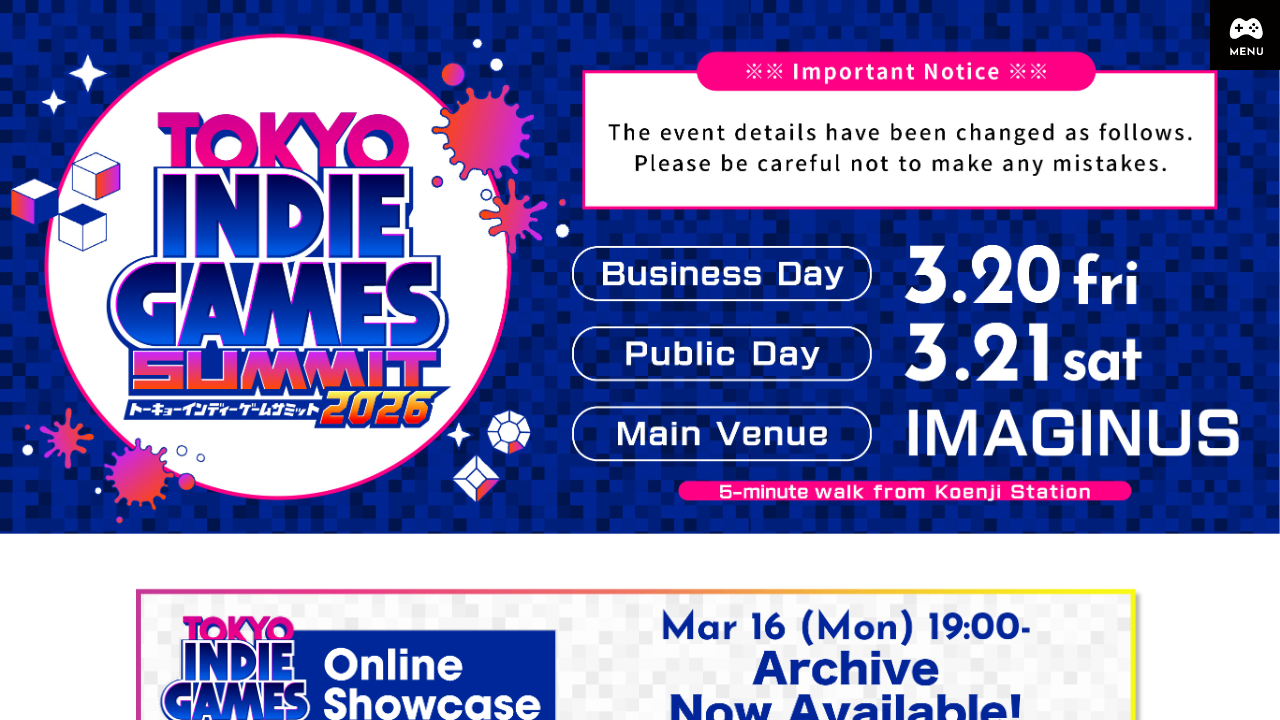
Tokyo Indie Games Summit sharpened the picture further. A business-day/public-day split says a lot about where indie events are headed. They are not just celebrations of creative work. They are increasingly hybrid spaces where developer meetings, partner conversations, audience testing, and public visibility happen side by side. That makes them more valuable, but also more demanding. Teams now need sharper materials, better scheduling discipline, and a clearer sense of what kind of outcome they actually want.
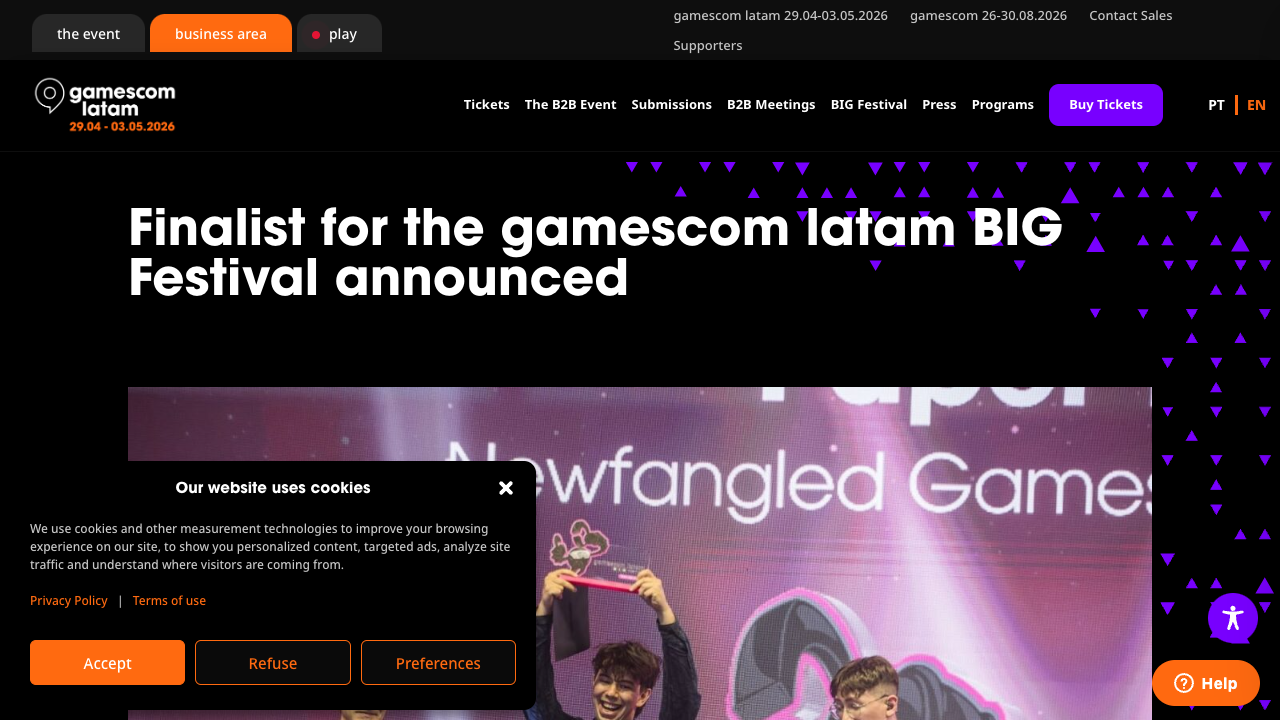
The most blunt signal came from gamescom latam's BIG Festival finalists. Eighty-one selected games from 966 submissions across 75 countries is a useful statistic because it strips away wishful thinking. There is no shortage of games. There is no shortage of talent. There is a shortage of attention. Every showcase slot is being contested by more teams, from more places, with more ambition.
Community Is Still Infrastructure
One mistake people still make when talking about indie development is treating community groups as if they exist outside the "real" business. Late March offered another reminder that this is wrong. Local groups and scene organizations still function as practical infrastructure, especially for early-stage teams that do not already have platform contacts or publisher pipelines.
Seattle Indies' March post is useful not because it was dramatic, but because it showed how this support really works. The organization linked local activity, GDC participation, live meetups, and upcoming events such as PAX East into the same ecosystem. That is what scene support looks like when it is doing its job. It helps developers stay in motion. It shortens the path between making work, showing work, and meeting the people who can amplify it.
This matters because the biggest challenge for many small teams is not just a lack of money. It is a lack of repeated, structured opportunity. Communities create repetition. They create more chances to test a build, rehearse a pitch, meet collaborators, hear warnings early, and get introduced to the next event instead of discovering it too late. For indies, that can be the difference between drifting in isolation and building momentum that compounds.
The Deeper Business Lesson
The most important thing to understand about this week is that indie development in 2026 increasingly rewards teams that think like compact publishing operations. Making the game is still the center of the work, but it is not the whole work. Teams now need a release plan, a pricing plan, a wishlist-reading plan, a demo plan, a festival plan, and a relationship plan. None of that is glamorous. All of it matters.
What late March showed is that platforms are getting better at enabling this behavior. Steam wants developers to make better pricing and market decisions. Xbox wants smaller teams to think its ecosystem is manageable. Engines are becoming more forgiving of smaller budgets and narrower pipelines. The support structure is improving.
But that support structure does not solve the harder problem. A better toolset does not create audience demand on its own. Easier onboarding does not guarantee attention. A more stable engine does not get you shortlisted for a showcase. That is why discovery feels like the real bottleneck now. It sits after the point where many technical problems have already been reduced.
In practical terms, that means the most resilient indie teams in 2026 are likely to be the ones that do four things well at once:
- They build with tools that reduce wasted production effort.
- They measure interest early instead of guessing too late.
- They treat demos, festivals, and showcases as part of development, not an afterthought.
- They stay close to communities and programs that create repeated visibility opportunities.
This is not a cynical conclusion. It is actually a useful one. The old indie myth said that a great game would somehow force its own attention. The late-March reality is more demanding, but more honest: a great game still matters most, yet the teams that break through are increasingly the ones that combine creative quality with clearer commercial discipline.
That is the new indie reality. Better tools. More support. More routes to ship. And a much tougher fight for the right to be noticed.
Sources
- Steamworks Development
- NEW: Steamworks Wishlist Data API
- Next Fest Developer Q&A Session
- Godot XR update — March 2026
- Unity 6000.4.0f1 release notes
- PAX East
- PAX Together
- IndieCade
- Seattle Indies March 2026 Update
- TOKYO INDIE GAMES SUMMIT 2026
- gamescom latam BIG Festival finalists
- What's Changed in Xbox Development
- Foundation Mode for PlayFab
- Meet the developers of this year's featured ID@Xbox games