If you search for Xbox Cloud Gaming 1440p in late March 2026, you are usually trying to answer one of three practical questions. First: what exactly did Xbox change? Second: do you need the most expensive Game Pass plan to get it? Third: does this upgrade actually make cloud play feel more worthwhile, or is it just another resolution bullet point that sounds better than it plays? Those are useful questions, because cloud gaming only becomes interesting when it meaningfully changes how you decide to try, buy, and stick with games.
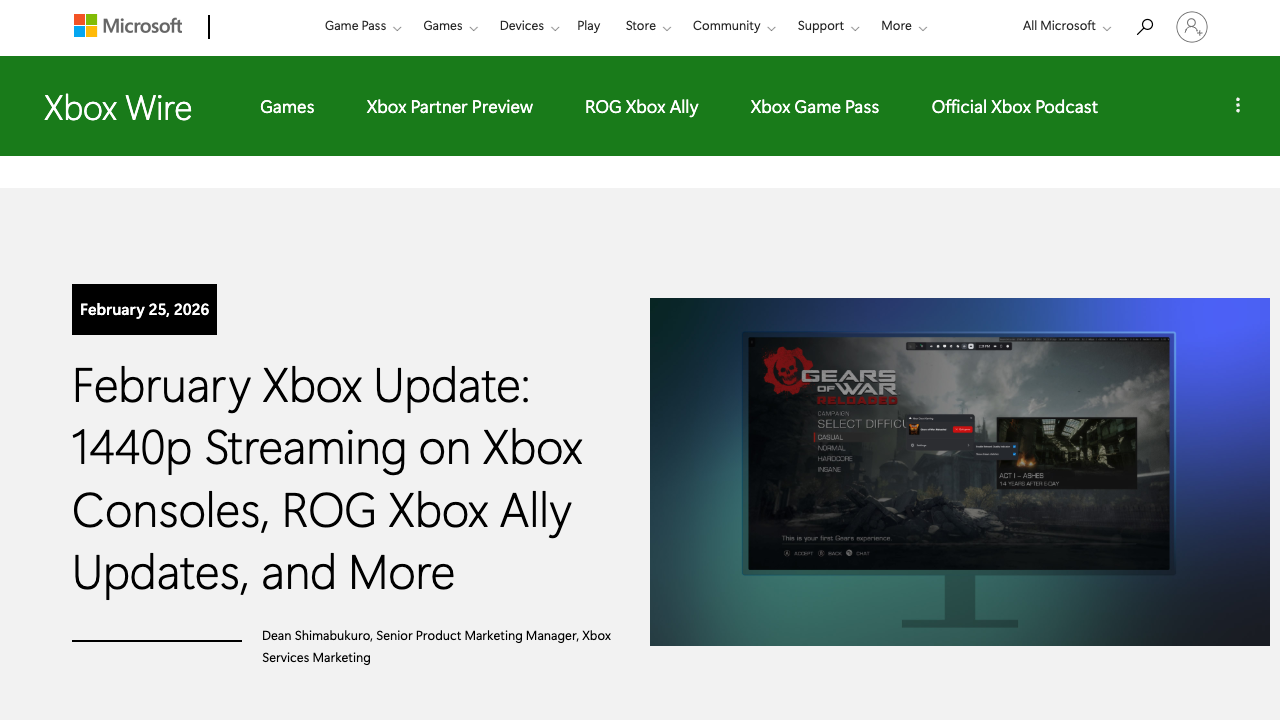
Xbox gave the clearest starting point on February 25, 2026, when Xbox Wire said cloud gaming on Xbox consoles was rolling out at up to 1440p with higher bitrate streaming for Game Pass Ultimate members in supported regions and supported titles. That announcement matters because it pushes cloud play on consoles closer to being a serious default option for sampling big games, not just a backup convenience when you do not want to wait on a download. It also arrived at a good moment. Less than a week later, Xbox announced a new Game Pass wave that included Cyberpunk 2077, Planet of Lana II: Children of the Leaf, and Hollow Knight: Silksong, exactly the kind of lineup that makes people rethink whether they need to install everything first.
The most useful way to read this update is not as a race against local hardware. It is as a quality jump for a very specific habit: trying games quickly, across devices, with less friction. That is why this keyword has real staying power. People are not only searching for the update itself. They are searching for the decision that follows it: is Xbox cloud gaming finally good enough to change how I use Game Pass?
What matters most
- Xbox said on February 25, 2026 that cloud streaming on Xbox consoles was rolling out at up to 1440p with higher bitrate streaming.
- That specific console upgrade was announced for Game Pass Ultimate members in supported regions and titles.
- Xbox's own cloud gaming and compare pages also show that cloud access overall now depends on plan, device, region, and game availability.
- The biggest real-world benefit is not bragging rights. It is better game sampling, faster access, and a stronger reason to test large Game Pass releases before committing local storage.
What Actually Changed on February 25, 2026
Xbox did not describe this as an abstract visual refresh. The company tied it to a specific use case and a specific platform. In the February Xbox update post, Xbox Wire said cloud gaming on Xbox consoles was rolling out at up to 1440p with higher bitrate streaming for Game Pass Ultimate members. That wording matters. It makes three things clear. First, this was not announced as a universal cloud gaming improvement everywhere at once. Second, it was targeted at Xbox consoles rather than every cloud-enabled screen. Third, Xbox framed it as part of the Ultimate tier experience.
Why does higher bitrate matter alongside resolution? Because cloud gaming quality is never just about the number of pixels. A stream can technically hit a higher resolution and still look muddy if motion, compression, or scene complexity breaks down image clarity. By pairing 1440p with higher bitrate language, Xbox signaled that this was meant to look materially cleaner, not just numerically better. For players using larger TVs or monitors with a console, that is the difference between a cloud stream that feels like a stopgap and one that feels good enough to keep playing.
The update is important because it makes cloud gaming on console feel less like a compromise you accept and more like a first-pass way to evaluate a game.
That is especially relevant for Game Pass behavior. Subscription libraries encourage curiosity. People install titles they are not sure they will love, try them for an hour, then decide whether to keep going. Better streaming quality shortens the distance between “that looks interesting” and “I am already playing.” The more painless that jump becomes, the more valuable the subscription feels.
Where Xbox Cloud Gaming Fits in the Bigger Game Pass Picture
Xbox's broader cloud gaming page helps explain why this keyword pulls in more than one kind of searcher. The message there is straightforward: stream and play games on your favorite screens with Xbox Game Pass via cloud gaming. That promise is bigger than consoles. It covers the idea of moving play across devices, keeping friction low, and treating cloud as part of the ecosystem rather than a side feature. For search intent, that is important. Some readers want to know about image quality on console. Others are trying to understand whether Xbox cloud access now matters on phones, TVs, browsers, handhelds, or devices they already own.
Xbox's compare pages make the situation slightly more nuanced, not less useful. As of March 28, 2026, Xbox's official compare experience lists multiple plans, including Ultimate, Premium, Essential, and PC Game Pass. The cloud gaming footnote says Xbox Cloud Gaming requires an Xbox Game Pass subscription and supported device, and that cloud-playable games not included in Game Pass are sold separately. It also says streaming can happen directly on Xbox consoles, in the app, or at xbox.com/play on supported devices. In other words, there is a difference between the headline 1440p console update and the broader idea of who gets some level of cloud access.
That distinction is exactly why this topic works as a long-tail keyword. Users are confused, and the official pages themselves create a layered answer. If the question is, “Who got the 1440p console update announced on February 25?” the answer is Game Pass Ultimate members, in supported regions and supported games. If the question is, “Who gets cloud gaming somewhere in the Xbox ecosystem?” the answer becomes broader and depends on plan details, supported devices, and what content is included in that plan at that time.
Which Game Pass Plan Makes the Most Sense for Cloud-Heavy Players
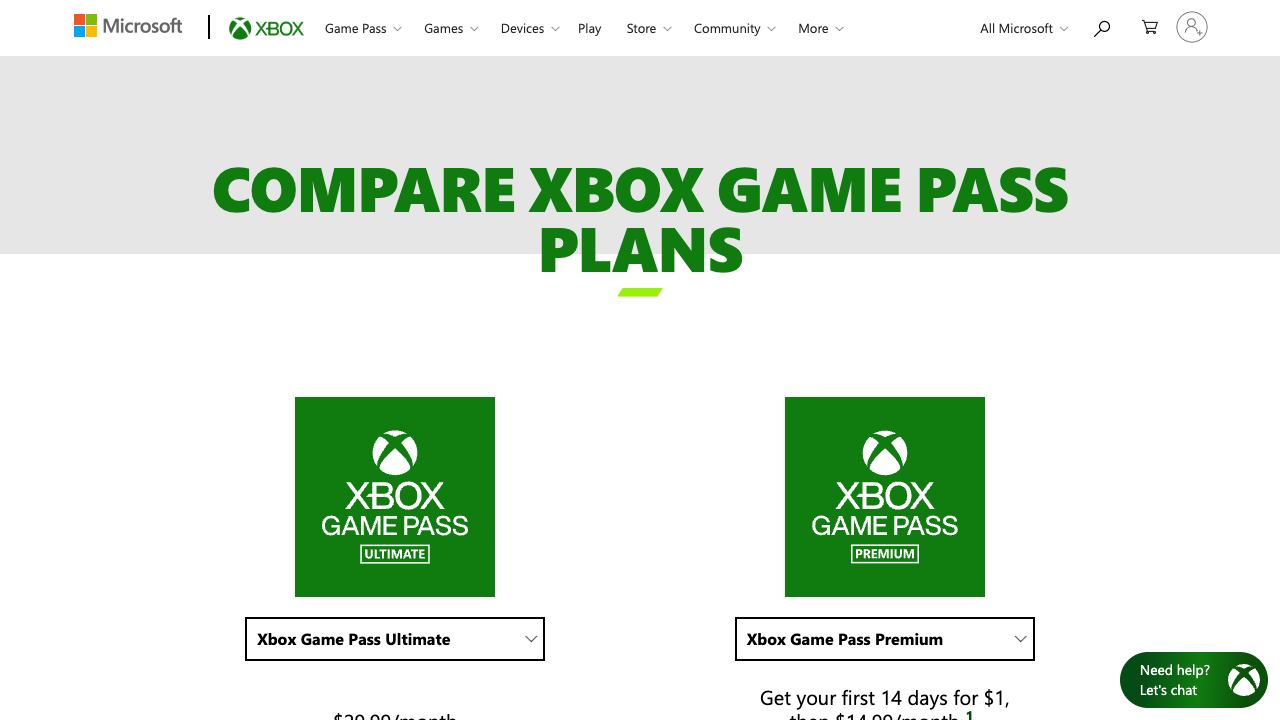
For players who use cloud gaming often, Xbox's own positioning still points toward Game Pass Ultimate as the cleanest choice. The compare page frames Ultimate as the top-end plan, and the in-game benefits page says Ultimate streams games at the company's best quality with the shortest wait times, including select games you own. That wording matters because it shifts the discussion from simple catalog access to experience quality. If your habit is to bounce into large games for short sessions, or try several titles before deciding what deserves a full install, Ultimate is still the tier most clearly aligned with that behavior.
Premium is not meaningless here. Xbox's official pages now present Premium as a substantial cloud-aware tier rather than a stripped-down middle option. But the moment your search specifically becomes Xbox Cloud Gaming 1440p, the official February 25 post pulls the focus back to Ultimate. That is why the keyword has commercial value. It naturally filters readers toward a purchase decision, not just a feature explanation.
That is also why this update matters more on console than it first sounds. On mobile or browser screens, cloud gaming can already feel functionally good enough for many people. On a living-room display or desktop monitor attached to a console, image quality weaknesses stand out faster. A 1440p and higher-bitrate push is exactly the kind of improvement that can make sampling a big game feel credible on the screen where people are most likely to notice softness.
Why the March 3, 2026 Game Pass Wave Made the Update Feel More Important
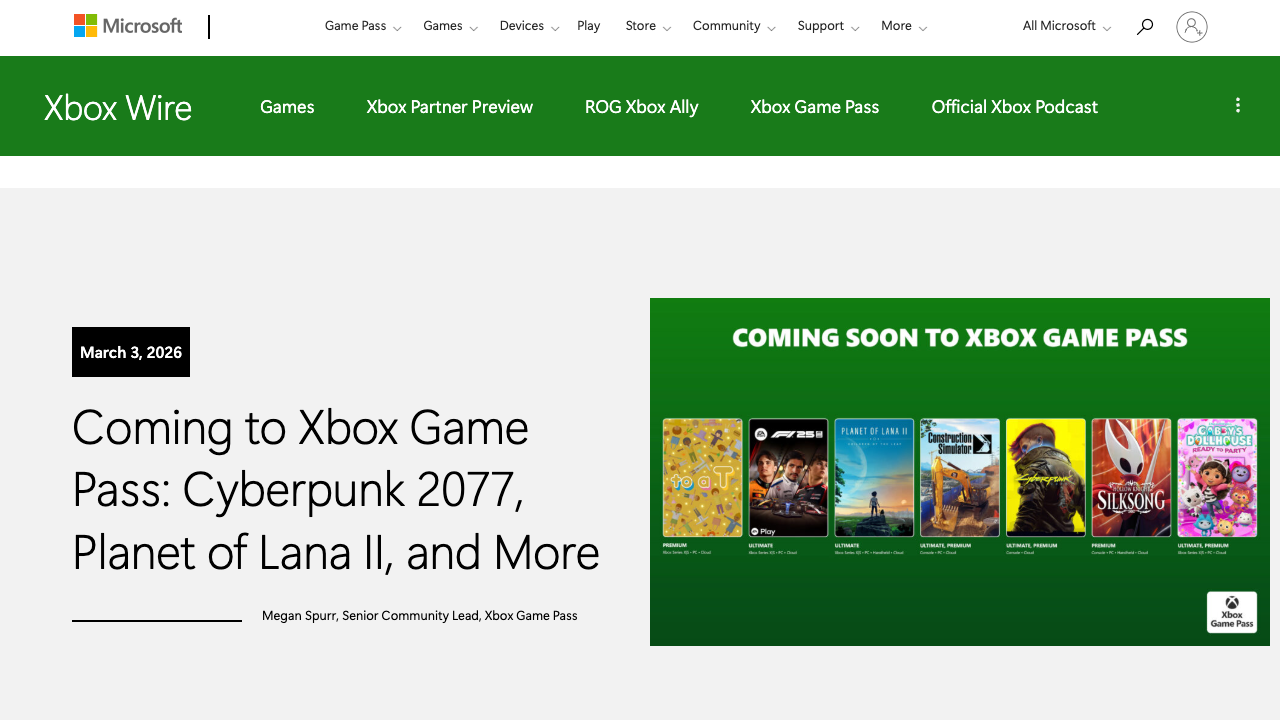
The keyword would still matter if it were just a platform update, but the March 3 Game Pass wave gave it immediate context. Xbox Wire announced a lineup that included Cyberpunk 2077 on March 10 for Game Pass Ultimate and Game Pass Premium, Planet of Lana II: Children of the Leaf on March 5 for Game Pass Ultimate and PC Game Pass, and Hollow Knight: Silksong on March 12, joining Ultimate and PC Game Pass while also being available through Premium. That is exactly the sort of lineup that rewards frictionless trying rather than deliberate library management.
Cyberpunk 2077 is the clearest example. It is a big, famous game with a strong visual identity and a player base full of people who are curious even if they are not fully committed. Better cloud quality makes it easier to answer a simple question: do I want to spend time in Night City right now, or just test the mood for thirty minutes first? For a subscription service, that is powerful. It makes large catalog additions more immediately usable.
Planet of Lana II and Silksong make the same point from another angle. Day-one or near-day-one additions often get attention fast, but many players do not know whether those games will fit their schedule or taste. Cloud gaming lowers the commitment threshold. A better stream lowers it further. When a service can say, “this big or newly released game is playable now, without a lengthy install, and looks better than before,” that is not just a technical upgrade. It is a retention upgrade.
What This Update Improves, and What It Still Does Not Solve
There are two easy mistakes in cloud gaming coverage. One is to pretend every quality bump changes everything. The other is to dismiss every update because local installs still exist. The better answer is in the middle. Xbox's 1440p console update matters because it improves the kind of moments where cloud gaming already wins: instant access, quick comparisons, low-friction sampling, and resuming play without waiting through full downloads.
It does not erase the limits that have always defined cloud play. Connection quality still matters. Region support still matters. Not every game is available the same way across every plan. Some players will still prefer a local install for long sessions, competitive play, or the simple comfort of knowing performance does not depend on network conditions. The update raises the ceiling of cloud gaming's usefulness. It does not remove the floor created by internet quality and service availability.
That is why the smartest framing is practical rather than ideological. If you install everything locally and rarely jump between devices, this update may be a nice extra and not much more. If you use Game Pass like a discovery engine, it matters a lot. The improvement is strongest for people who value optionality over ownership routines: try now, decide later, move screens, keep momentum.
Why “Xbox Cloud Gaming 1440p” Is a Good Long-Tail Search Term
This term works because it sits at the intersection of news, product research, and subscription intent. Someone searching it is not casually browsing. They want clarity around what changed, how to get it, and whether it is worth paying for. That is why the term has more value than a broad phrase like “Xbox cloud gaming.” Broad phrases bring curiosity. Long-tail phrases bring a purchase or usage question.
It is also durable. Even after the February 25 update ages out of the news cycle, the question remains. Players will keep asking whether cloud gaming on Xbox is good enough, which Game Pass tier does the most for them, and whether new catalog drops feel better through the cloud. As long as Xbox keeps adding major titles and refining the service, this keyword stays alive.
Final Take
As of March 28, 2026, the clearest reason to care about Xbox Cloud Gaming 1440p is not that it beats local installs. It is that it makes cloud gaming on console more believable as a first choice for discovery. Xbox's official February 25 announcement tied the 1440p and higher-bitrate rollout to Game Pass Ultimate members on Xbox consoles, and the company's broader cloud and compare pages show a larger ecosystem where cloud access, device support, and plan value now overlap more than they used to.
If you use Game Pass to explore, especially around big additions like Cyberpunk 2077 or day-one releases, this update matters. It lowers the quality penalty for starting fast. That is the real upgrade. Not a prettier bullet point, but a stronger reason to press play before you press download.
FAQ
When did Xbox announce 1440p cloud streaming on consoles?
Xbox announced it on February 25, 2026 through its monthly Xbox update post on Xbox Wire.
Do all Game Pass plans get the same cloud gaming quality?
No. Xbox's official pages show that cloud access and benefits vary by plan, and the specific 1440p console rollout was announced for Game Pass Ultimate members.
Why is this update useful for Game Pass players?
Because it makes it easier to try large games quickly, avoid long installs, and decide faster which titles deserve more of your time and storage.
Does cloud gaming make local installs unnecessary?
No. Cloud gaming is strongest for convenience and discovery. Local installs still matter for the most stable long sessions and for players who do not want to rely on stream quality.