
The playbook for building a profitable gaming tool website has fundamentally changed. Where it once took a team of developers weeks to ship a useful game guide site, AI coding tools now let a single person — with or without programming experience — build a fully functional, SEO-optimized gaming tool website in under a week. The players who figure this out early are quietly banking passive income through Google AdSense while everyone else is still debating which framework to learn.
This is not theoretical. The combination of AI coding tools like Cursor and Claude Code, modern SEO keyword research methodology, and Google's increasingly accessible AdSense platform has created a genuine window of opportunity. Gaming is a colossal search category — hundreds of millions of queries per month — and the long-tail niche sub-markets within it remain surprisingly uncrowded. A single well-executed AI gaming tool website targeting the right keywords can capture meaningful organic traffic within weeks of launch and sustain it for years.
This guide walks through every stage of that process: choosing your AI coding partner, finding high-value gaming keywords, picking the right site type, building fast, surviving the AdSense review, and then optimizing your revenue once you're live. Think of it as the operational manual for the niche gaming site side project that actually pays.
Choosing Your AI Coding Partner: Cursor, Claude Code, and GitHub Copilot Compared
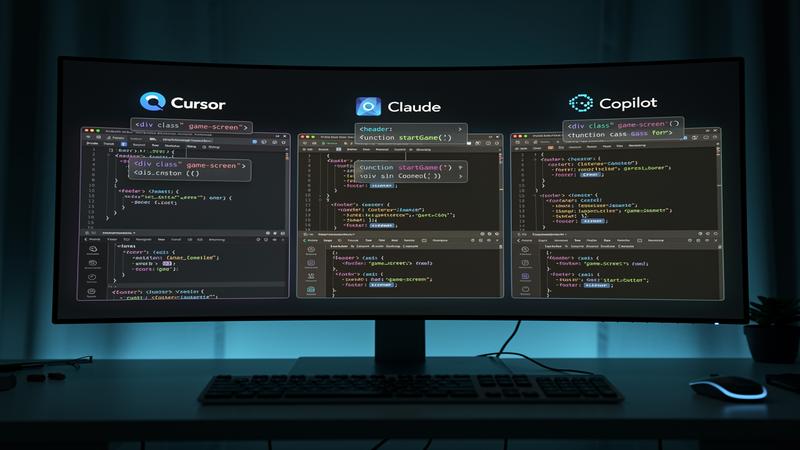
The AI coding tools landscape in 2026 is more competitive than ever, with a recent survey showing that 73% of developers now rely on AI coding assistants, up from 45% in 2023 (Ryz Labs, 2026). For the purpose of building a gaming tool website fast, three tools stand out above the rest.
Cursor
AI-native IDE built for multi-file editing and rapid frontend iteration. Ideal for building complete game tool sites with its Composer mode.
Claude Code
Terminal-based agent that excels at complex refactoring across large codebases. Best for building APIs, databases, and structured data pipelines.
GitHub Copilot
Most widely adopted AI assistant. Works inside VS Code and JetBrains. Now has a free tier and Agent Mode for automated code changes.
Cursor has become the go-to tool for frontend web development. Its Composer mode allows natural language instructions to generate complete React components, refactor entire file structures, and deploy HTML/CSS layouts without manual boilerplate. For building game calculators, tier list interfaces, and guide pages — all primarily frontend work — Cursor's fluid edit-review loop is unmatched. At $20/month for the Pro tier, it pays for itself within hours of productive use.
"For developers who have used all three tools: Copilot feels like a fast autocomplete. Cursor feels like a smart collaborator inside your editor. Claude Code feels like handing a task to a colleague and getting it back done."
— Ryz Labs Technical Review, January 2026
Claude Code, Anthropic's terminal-based AI agent, shines when your game tool site needs a backend: a damage formula engine, a build optimizer that queries a JSON database, or a dynamic tier list system that pulls from an API. It handles large, multi-file tasks autonomously — you describe the goal, it figures out which files to touch and how. A popular strategy among solo founders in 2026 is to use Cursor for frontend and Claude Code for backend logic, then connect them through a simple REST API.
GitHub Copilot remains the safe, familiar choice — particularly for developers already embedded in the GitHub ecosystem. It now supports multiple models including Claude 3 Sonnet and Gemini 2.5 Pro, and its Agent Mode can automate code changes across files with a single prompt. The free tier makes it the lowest-friction entry point for developers new to AI-assisted coding. For simple game guide sites — primarily static HTML and CSS — Copilot is often sufficient.
The key insight that separates successful gaming site builders from those who spin their wheels: don't pick one tool religiously. Stack them. Use Copilot for inline autocomplete, Cursor for component generation and full-page layouts, and Claude Code for any data processing or automation scripts. Each tool covers a different failure mode of the others.
SEO Keyword Research: Finding High-Value Gaming Niches Before Your Competition
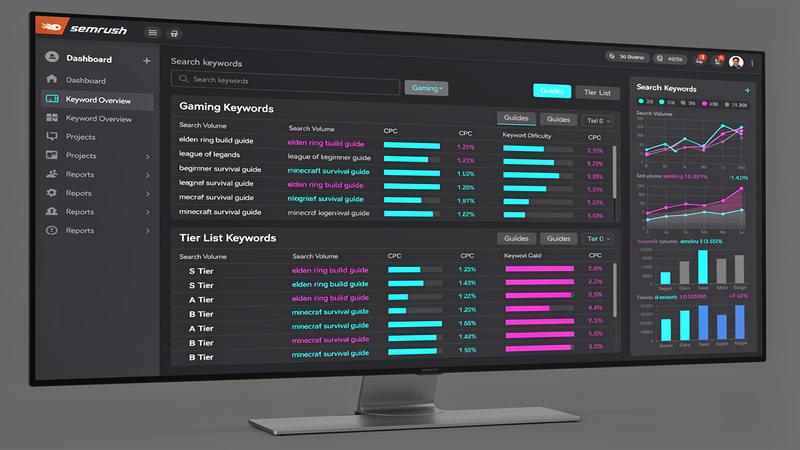
Keyword research is where most gaming site projects succeed or fail before a single line of code gets written. The gaming category generates enormous search volume, but the most obvious keywords — "best games 2026," "how to play Minecraft" — are owned by outlets with decade-long authority. Your goal is not to compete with IGN. Your goal is to find the narrow, high-intent searches where a focused tool site can rank on page one within three months.
The Three-Layer Keyword Stack
Effective gaming SEO keyword research in 2026 operates in three layers. The first layer is your primary keyword — the single term that defines your site (e.g., "Elden Ring build calculator"). The second layer is your long-tail cluster: 20–50 variations with lower competition that the same player might search (e.g., "best Elden Ring faith build 2026," "Elden Ring arcane scaling calculator"). The third layer is LSI (latent semantic indexing) keywords — conceptually related terms that signal topical authority to Google (e.g., "Elden Ring stat requirements," "Tarnished starting class comparison").
The power of a gaming tool site is that it naturally produces content that satisfies all three layers simultaneously. A single interactive damage calculator page can rank for dozens of long-tail queries simply because it contains the exact numbers players are searching for.
Tools That Work
For tool discovery and validation, the most effective stack in 2026 combines free and paid resources. Google Trends identifies which games are gaining momentum before the competition catches on — a new game going viral is a keyword gold rush for the first site to publish a comprehensive guide. Semrush's Keyword Magic Tool gives you search volume, keyword difficulty, and CPC data at scale, with its Personal Keyword Difficulty (PKD%) feature calibrated to your specific domain's existing authority. For pure low-competition discovery, LowFruits — a niche keyword tool — analyzes SERPs to find positions where the existing results are weak or thin, exactly where a new tool site can break in quickly (Marketer Milk, 2026).
High-Opportunity Gaming Keyword Patterns
- [Game] + damage calculator — High intent, computationally specific, players will bookmark and return
- [Game] + tier list [season/patch] — Evergreen with recurring update opportunities; huge social sharing
- [Game] + interactive map — Extremely sticky; users spend 5–15 minutes per session
- [Game] + best build [class/character] — Captures early-game players; high time-on-page
- [Game] + codes [month year] — Fast indexing, recurring traffic; essential for live-service games
- [Game] + wiki alternative — Users who find Fandom/Gamepedia cluttered actively seek cleaner options
One case study documented by Niche Informer showed a gaming site getting clicks and impressions in Google Search Console within 24 hours of publishing — far faster than the typical two-week indexing lag — by targeting a specific game mechanic that had no dedicated page in the top 50 results. Zero-volume keywords (those too new for tools to track yet) can be identified by monitoring game patch notes, official Discord servers, and subreddit discussions. The developer who publishes the first clean calculator for a newly shipped mechanic often captures traffic for months before competitors notice.
The 7 Most Profitable Game Tool Site Types
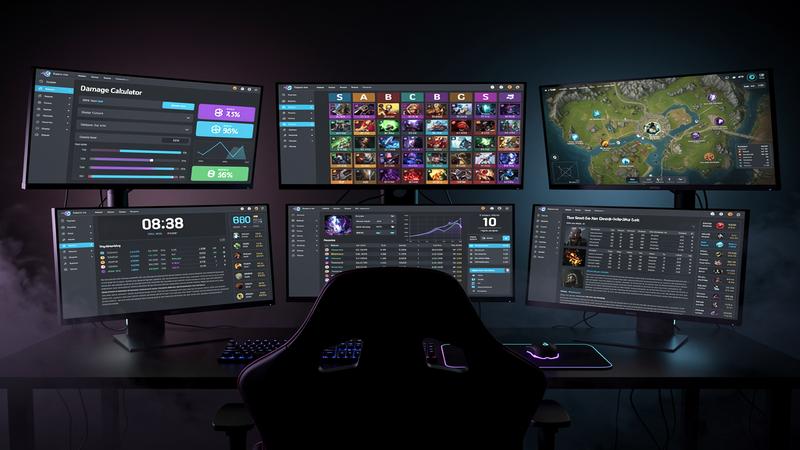
Not all gaming tool sites are created equal. The type you build determines your traffic ceiling, user retention, and ultimately how much AdSense revenue you generate. After analyzing dozens of successful gaming niche sites, seven formats consistently outperform the field in organic reach and monetization.
- Damage & Stat Calculators — The single highest-intent gaming tool format. Players searching for exact damage numbers or stat breakpoints are at peak engagement. A well-built calculator keeps users on-page for 5–20 minutes, dramatically boosting your average session duration and reducing AdSense display duration requirements. Build these for RPGs, MOBAs, and any game with complex scaling systems.
- Tier Lists — Perhaps the most searched gaming content format on the internet. Every competitive game spawns a constant stream of tier list queries after each balance patch. Sites like TierMaker have proven the model at scale. The opportunity for a focused site is to go deeper: patch-specific analysis, role-specific rankings, tournament meta versus casual meta. Update frequency is your moat — a tier list site that updates within 24 hours of every patch captures the peak traffic window.
- Interactive Game Maps — Exceptionally sticky content. Players exploring open-world games return repeatedly to cross-reference collectible locations, boss positions, and hidden secrets. An interactive map built in Leaflet.js or a similar lightweight library can be generated with AI assistance in a day. The challenge is data collection — scraping or manually compiling map coordinates — but that data becomes a durable, hard-to-replicate competitive advantage.
- Build Guides & Optimizers — Character build optimization is a universal need across RPGs, strategy games, and shooters. A site that offers curated builds with explanations ("why this works, not just what it is") attracts both beginners and experienced players. Build guides also pair naturally with YouTube content, creating a cross-platform traffic loop.
- Active Code Directories — For live-service games that distribute free in-game items through promotional codes, a regularly updated code page is arguably the fastest path to consistent Google traffic. The search volume for "[Game] codes [current month]" is massive and recurring. The site is easy to build, but the value is in the curation discipline — codes expire, and players need reliable, up-to-date sources.
- Speedrun Databases & Timers — A smaller but extremely engaged audience. Speedrunning communities are intensely active, generate significant discussion and linking, and are underserved by general gaming sites. A dedicated speedrun wiki with embedded leaderboards and route documentation can become the authoritative community resource for a specific game.
- Game Wiki Alternatives — Fandom wikis are notoriously slow and ad-heavy. Players actively search for cleaner alternatives, especially for newer or indie games where the Fandom wiki is thin or outdated. A lean, fast, well-organized wiki-style site built on a simple static site generator can genuinely displace the incumbent for long-tail searches within a specific game community.
"The best gaming tool site isn't the one with the most content. It's the one that answers a specific question faster and more precisely than every other page on the internet."
Building Your Site in Days: The AI-Accelerated Workflow
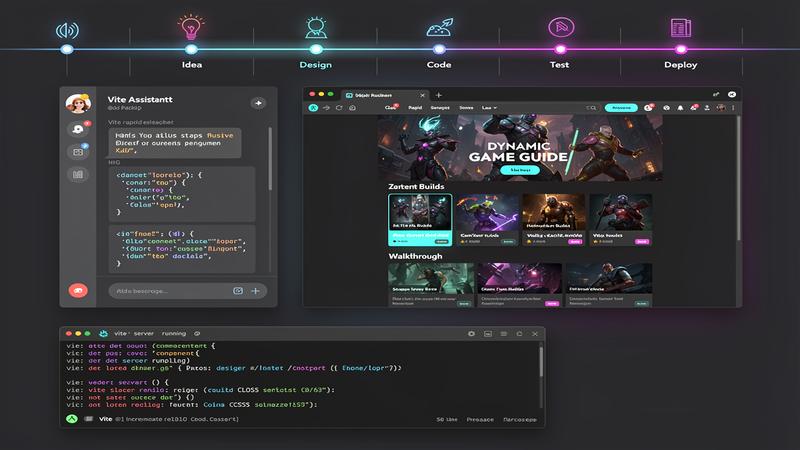
The "vibe coding" paradigm that exploded from Andrej Karpathy's 2025 concept into a $4.7 billion market (Wix Blog, 2026) has made the technical barrier to building a game tool site effectively zero. You describe what you want in plain English. The AI writes the code. You review, iterate, and refine. Developers report transitioning to full-stack capability "within minutes, not months" when working inside Cursor with a clear project brief.
A realistic 7-day build timeline for a gaming tool site looks like this:
- Day 1 — Keyword Validation: Run Google Trends for your target game. Use Semrush or LowFruits to confirm there are 10+ low-competition long-tail keywords with 500–5,000 monthly searches. If the numbers don't exist, pivot the game choice before writing a single line of code.
- Day 2 — Domain and Stack Setup: Register a domain ($10–12/year on Namecheap or Cloudflare Registrar). Buy a Vercel or Cloudflare Pages hosting plan (free tiers are sufficient to start). Set up a basic Vite + vanilla HTML/JS project — Cursor can scaffold this in under 5 minutes with a single prompt.
- Day 3–4 — Core Tool Build: Open Cursor. In the Composer panel, describe your core tool: "Build a damage calculator for [Game]. It should take [Stat A], [Stat B], and [Enemy Type] as inputs, apply the formula [X], and display the result with a breakdown table." Cursor generates the initial implementation. Iterate with follow-up prompts: "Add a share button that saves the current inputs to the URL hash" or "Show a comparison mode for two builds side by side."
- Day 5 — Content Pages: Use Claude Code or direct AI writing to generate 15–20 supporting articles: build guides, patch notes summaries, beginner FAQs. Each page should be 1,000–1,500 words, original, and target a specific long-tail keyword. These content pages satisfy AdSense's content depth requirement and build topical authority with Google.
- Day 6 — Technical SEO: Generate and submit a sitemap.xml (Cursor can write the sitemap generator script in minutes). Add JSON-LD structured data to every page. Enable HTTPS. Add About, Privacy Policy, and Contact pages — these are mandatory for AdSense approval. Run Google Search Console's URL Inspection tool on your homepage.
- Day 7 — Launch and Submit: Deploy to Vercel or Cloudflare Pages. Submit sitemap to Google Search Console and Bing Webmaster Tools. Post in the relevant game subreddit and Discord — not as spam, but as a genuine tool announcement. If the tool genuinely helps players, the community response will generate your first backlinks organically.
For developers exploring this approach, our gaming content strategy articles document how established game guide sites structure their content to maximize both SEO performance and user engagement. The technical patterns they use — shallow content hierarchies, tool-first page design, aggressive internal linking — translate directly to the AI-built gaming tool site format.
Monetizing with Google AdSense: From Approval to Optimized Revenue
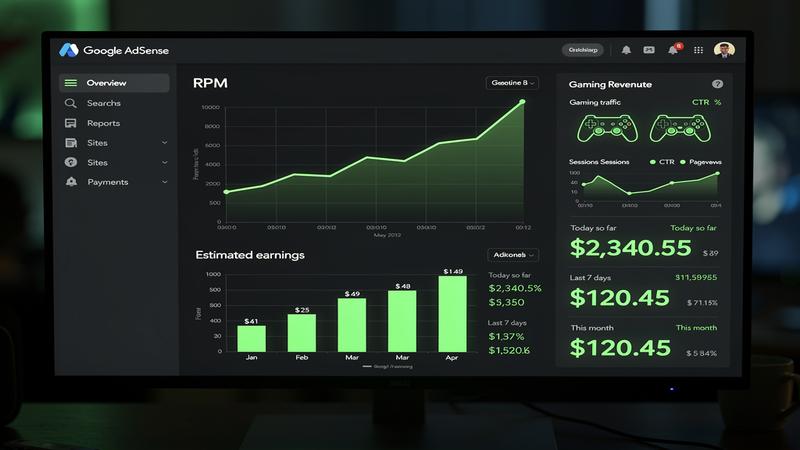
Google AdSense is not the highest-paying ad network available, but it is the most accessible and the most forgiving for sites in their early months. For a gaming tool site just crossing 10,000 monthly visitors, it is the correct starting point. The gaming vertical typically earns $3–$10 RPM (revenue per thousand impressions), meaning a site at 50,000 monthly pageviews from Tier-1 countries (US, UK, Canada, Australia) should generate $150–$500 per month from display ads alone (Ranktracker, 2026). That number scales linearly with traffic — and with the right tools, gaming traffic scales fast.
Getting Through the AdSense Review
AdSense approval in 2026 is significantly stricter than it was five years ago. Google's automated systems combined with human reviewers now scrutinize every application for content authenticity and site professionalism. The gaming niche faces additional scrutiny because the category has historically attracted low-quality churn sites. The following requirements are non-negotiable:
AdSense Approval Checklist for Gaming Sites
- Minimum 15–25 high-quality original articles (1,500+ words each), not AI-generated without human review
- Domain age: at least 3–6 months before applying
- HTTPS enabled on all pages
- About, Privacy Policy, and Contact pages present and complete
- Mobile-responsive design that loads in under 3 seconds
- XML sitemap submitted to Google Search Console
- No piracy content, adult content, or gambling content targeting unauthorized regions
- Traffic must be primarily organic — no paid traffic at application time
One commonly misunderstood point: AdSense approval is primarily about site quality, not traffic volume. Google explicitly states there is no minimum traffic threshold (AdPushup, 2026). A site with 500 monthly visitors and genuinely excellent, original content will be approved faster than a site with 10,000 visitors built on thin, templated articles. The AI tools used to build the site should be used to accelerate the creation of human-reviewed, high-quality content — not to generate and publish raw AI output without editing.
"Google's team now thoroughly analyzes every blog application using sophisticated AI and human reviewers, and they're looking for genuine, long-term projects rather than quick money-making schemes."
— AdPushup AdSense Guide, 2026
Maximizing RPM After Approval
Once approved, ad placement is the single biggest lever on revenue. According to publisher data, good versus poor ad placement with the same traffic can differ by 30–50% in earnings (Ranktracker, 2026). For gaming tool sites specifically, the highest-performing placements are: a 728×90 leaderboard immediately above the tool interface (where users look first), a 300×250 rectangle immediately below the tool results (dwell time is high while players analyze output), and a sticky 320×50 mobile banner at the bottom of the screen on mobile devices.
Geographic traffic mix matters enormously. US traffic is worth 5–10x the same volume from Southeast Asia in CPM terms (BetterLink Blog, 2026). This means keyword selection strategy directly impacts RPM: English-language gaming content targeting US, UK, Canadian, and Australian audiences — particularly for console and PC gaming genres dominant in those markets — will consistently outperform content targeting emerging gaming markets, even at lower traffic volumes.
As your site grows past 50,000 monthly sessions, consider graduating from AdSense to header bidding networks like Ezoic or Mediavine (which requires 50,000 sessions/month as its entry threshold). These platforms can increase display ad revenue by 20–70% over standard AdSense for gaming sites with engaged audiences, primarily through auction-based competition that standard AdSense doesn't offer.
Conclusion: The Window Is Open, But Not Forever
The convergence of AI coding tools, accessible SEO infrastructure, and Google's ad platform has created one of the most compelling opportunities for solo developers and indie founders in the gaming space. A gaming tool website built around targeted SEO keywords — whether a damage calculator for a trending RPG, a weekly-updated tier list for a competitive shooter, or an interactive map for an indie open-world title — can generate genuine passive income through Google AdSense within 90 days of launch. The work to get there, compressed by AI coding tools like Cursor and Claude Code, fits comfortably within a month of evenings and weekends.
What this guide cannot do is guarantee results for a site built on bad keyword research, thin content, or a game that's already overserved by established properties. The strategy works when the specific game, the specific tool type, and the specific search queries align around a genuine gap in what currently exists. That gap-finding work — the keyword research, the community listening, the honest assessment of what a player actually needs — is the one part of the process that AI tools cannot yet fully automate. It requires human judgment, gaming domain knowledge, and the ability to think like the player searching at 11pm before a ranked session.
For developers who already operate in the gaming space — building games, writing guides, or running communities on sites like Best-Games.io — the path to a parallel tool site income stream is shorter than it has ever been. The tools exist. The search demand exists. The AdSense approval process, while stricter, is predictable. What remains is the decision to start, and the discipline to ship.
Frequently Asked Questions
How long does it take to build a gaming tool website with AI?
Using AI coding tools like Cursor or Claude Code, an experienced developer can build a functional gaming tool site in 3–7 days. A complete beginner with no coding background may take 2–4 weeks, depending on the complexity of the tools offered. The "vibe coding" methodology allows non-coders to generate working JavaScript calculators and HTML interfaces through natural language prompts alone.
How much can a gaming tool website earn with Google AdSense?
Gaming sites typically earn $3–$10 RPM (revenue per thousand impressions). A site receiving 50,000 monthly pageviews from Tier-1 countries (US, UK, Canada) can realistically generate $300–$800/month through AdSense. Well-optimized ad placements — particularly above and below the core tool — can push that figure higher, and graduating to header bidding networks like Mediavine at 50,000 sessions/month can increase revenue by an additional 20–70%.
What is the best type of gaming tool site for SEO traffic?
Damage calculators, tier lists, and interactive game maps consistently earn the most organic SEO traffic because they target high-intent search queries with sessions averaging 5–20 minutes. Active code directories (for live-service games) offer the fastest path to initial traffic. The best choice depends on your target game and which tool type has the weakest existing competition in the search results.
Do I need coding experience to use AI coding tools for a gaming site?
No. The vibe coding paradigm that emerged in 2025 allows complete beginners to describe desired functionality in plain English and have AI tools like Cursor generate working code. Basic familiarity with HTML concepts helps for reviewing the output, but strict programming skills are no longer required to ship a functional game tool website. Dozens of Udemy and Coursera courses now teach this workflow explicitly for beginners.
How long does Google AdSense approval take for a gaming website?
AdSense approval typically takes 2–14 days. Gaming sites should have at least 15–25 high-quality original articles (1,500+ words each), a domain at least 3–6 months old, HTTPS enabled, and all required pages (About, Privacy Policy, Contact) present before applying. Content quality is weighted more heavily than traffic volume — a low-traffic site with excellent content often approves faster than a high-traffic site with thin content.